
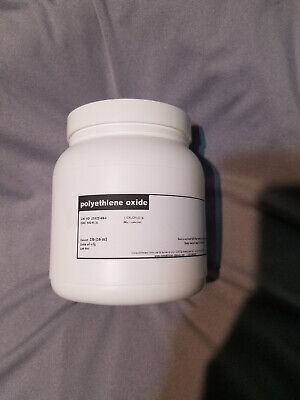
Description
The Versatile World of Polyethylene Oxide (PEO): From Shampoo to Advanced Batteries
Polyethylene oxide (PEO), also known as polyethylene glycol (PEG) when referring to lower molecular weight versions, is a fascinating and incredibly versatile polymer that finds applications in a surprisingly wide range of industries. From the mundane to the cutting-edge, PEO’s unique properties make it a valuable ingredient and a key component in many technologies.
What is Polyethylene Oxide?
At its core, PEO is a synthetic polymer composed of repeating ethylene oxide units. Its chemical formula is (C₂H₄O)n, where ‘n’ represents the number of repeating units and determines the polymer’s molecular weight. This molecular weight is a critical factor influencing PEO’s properties, dictating whether it exists as a liquid, wax, or solid at room temperature.
PEO’s defining characteristic is its water solubility. This is due to the presence of oxygen atoms in the polymer chain, which allows it to readily form hydrogen bonds with water molecules. This solubility, combined with its non-toxicity and biocompatibility, makes it a popular choice in many applications.
A Wide Spectrum of Applications:
PEO’s versatility stems from its ability to be tailored to specific needs based on its molecular weight and modification. Here’s a glimpse into its diverse applications:
- Personal Care Products: PEO is a common ingredient in shampoos, lotions, and cosmetics. It acts as a thickener, emulsifier, and humectant, contributing to the texture and moisturizing properties of these products.
- Pharmaceuticals: In the pharmaceutical industry, PEO (often in its lower molecular weight PEG form) is used as a tablet binder, a solubilizer for poorly soluble drugs, and as a coating for drug delivery systems. “PEGylation” is a technique used to attach PEG molecules to therapeutic proteins, increasing their stability, reducing their immunogenicity, and prolonging their circulation time in the body.
- Industrial Applications: PEO finds use as a lubricant, binder, and dispersant in various industrial processes. It can be found in textile processing, paper manufacturing, and as a component in some adhesives.
- Biomedical Engineering: PEO’s biocompatibility makes it an attractive material for biomedical applications. It’s used in hydrogels for tissue engineering, as a coating for medical implants to reduce protein adsorption and prevent rejection, and in drug delivery systems.
- Advanced Batteries: Perhaps one of the most exciting emerging applications of PEO lies in solid-state batteries. PEO-based polymer electrolytes offer the potential for higher energy density, improved safety, and greater flexibility compared to traditional liquid electrolytes. While research is ongoing to overcome challenges like ionic conductivity, PEO is a promising material for the next generation of battery technology.
- Other Applications: PEO is also used in:
- Agriculture: As a controlled-release agent for fertilizers and pesticides.
- Mining: As a flocculant to separate minerals from ore.
- Plastics: As a processing aid to improve the flow and moldability of certain polymers.
Advantages and Drawbacks:
PEO offers several advantages that contribute to its widespread use:
- Water solubility: Allows for easy incorporation into aqueous solutions and formulations.
- Biocompatibility: Minimizes adverse reactions in biomedical applications.
- Non-toxicity: Makes it safe for use in personal care and pharmaceutical products.
- Versatility: Can be tailored to specific needs by adjusting molecular weight and functionality.
However, PEO also has some drawbacks:
- Sensitivity to Oxidation: Can degrade in the presence of oxygen and light.
- Lower Ionic Conductivity (in battery applications): Requires further research and modification to improve its performance as a solid electrolyte.
- Potential for Immunogenicity (in some PEGylated proteins): Although rare, PEGylation can sometimes trigger an immune response in certain individuals.
The Future of PEO:
Research and development involving PEO are constantly evolving. Scientists are exploring new ways to leverage its properties for even more advanced applications. From improved drug delivery systems and tissue engineering scaffolds to high-performance solid-state batteries, PEO’s potential is far from exhausted. As we continue to seek innovative solutions in various fields, PEO’s unique combination of properties will likely ensure its continued importance for years to come.
In conclusion, Polyethylene Oxide is a remarkable polymer with a diverse range of applications stemming from its unique properties. Its versatility and biocompatibility make it a valuable ingredient in products we use every day and a key component in cutting-edge technologies shaping the future.



Reviews
There are no reviews yet.