
Description
What is Platinum Black
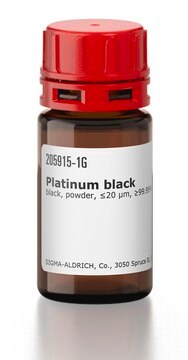
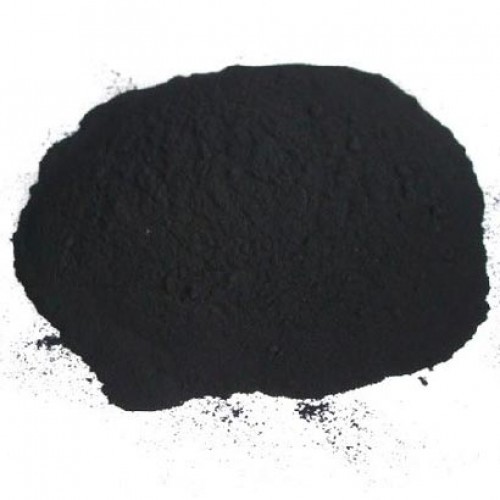
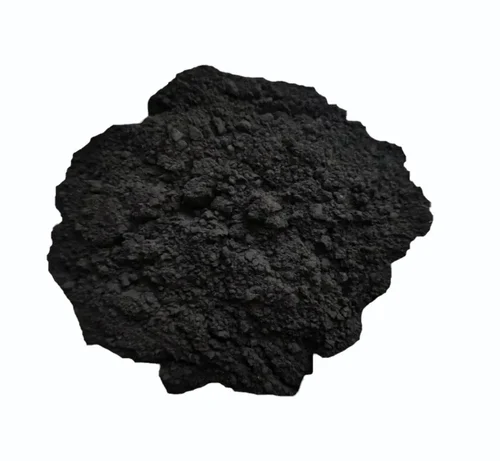
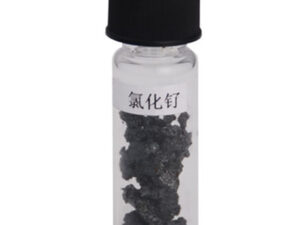
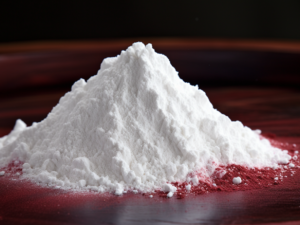
Platinum black is a finely divided, highly porous form of metallic platinum. It appears as a grey-black powder or deposit and has an extremely high surface area due to its nanoscale, branched structure. This high surface area makes Pt black an excellent catalyst and an effective way to increase the active area of electrodes.
Key properties
- Very high surface area for enhanced catalytic activity
- Excellent catalytic properties for reactions such as hydrogen evolution, oxygen reduction, and formic acid oxidation
- Porous, network-like structure that can be deposited on various substrates
- Mechanically less stable than bulk Pt or Pt nanoparticles on stable supports; can sinter or detach if not properly bound
- Chemical stability in acidic environments, but surface can oxidize at high potentials
Common uses
- Electrodes in fuel cells (enhanced HOR/ORR activity)
- Electrochemical sensors and biosensors (where high surface area improves detection limits)
- Catalyst layers on electrodes for various electrochemical reactions
- Modifier coatings to increase the effective surface area of a working electrode
How platinum black is prepared
There are a few common approaches. Here are three typical methods, with a brief outline of each:
-
Electrochemical deposition (on a substrate)
- Clean the substrate (e.g., glassy carbon, gold, or ITO).
- Immerse in a solution containing aPt precursor (commonly H2PtCl6 in acid).
- Apply a negative potential to reduce Pt(IV) to Pt(0), forming a porous Pt black film on the surface.
- Rinse and dry.
-
Chemical reduction (in solution)
- Prepare a solution of a Pt precursor (e.g., H2PtCl6) in acid solution.
- Add a reducing agent such as formaldehyde, hydrazine, or formic acid under controlled conditions.
- Pt reduces and deposits onto any nearby surface or an electrode as Pt black.
- Filter or decant the deposit, rinse, and dry.
-
Polyol or solvothermal-like methods (for powder dispersions)
- Reduce Pt precursors in a polyol medium (e.g., ethylene glycol) at elevated temperature.
- Form Pt nanoparticles that agglomerate into a porous Pt black-like network.
- Deposit onto a substrate by filtration or electrodeposition.
If you’d like, I can lay out a step-by-step protocol for a specific method and substrate.
Quick comparison of deposition methods
| Method | Typical reducing agent | Pros | Cons | Substrates / outcomes |
|---|---|---|---|---|
| Electrochemical deposition | Negative potential in Pt salt solution | Controlled film growth, good adhesion | Requires electrochemical setup, potential optimization needed | Glassy carbon, Au, ITO, etc. |
| Chemical reduction | Formaldehyde, hydrazine, etc. | Simple, gentle deposition on faces not easily accessible | Potentially less uniform, need thorough washing | Can coat various surfaces; forms Pt black directly on substrate |
| Polyol / powder deposition | Polyol solvents like ethylene glycol | Produces highly porous Pt networks | More processing steps, solvent handling | Pt powders or films on substrates; high surface area |
Practical tips and considerations
- Adhesion matters: For stable Pt black films, ensure good substrate preparation and consider a thin adhesion layer or surface pretreatment.
- Control over roughness: Deposition conditions (concentration, potential, time, temperature) dictate the porosity and surface area. Fine-tuning is often needed for catalytic performance.
- Post-deposition activation: A brief conditioning in acid (e.g., dilute H2SO4) can clean the surface and restore activity before use.
- Storage: Keep Pt black-coated substrates dry and store in a clean, inert or low-humid environment to prevent oxidation or contamination of the surface.
- Safety: Pt salts and reducing agents require proper handling. Work in a fume hood with appropriate PPE; dispose of waste per local regulations.
Safety and handling
- Handle all platinum salts and reducing agents in a well-ventilated area.
- Use gloves, eye protection, and appropriate waste disposal procedures.
- Finely divided Pt materials can be a respiratory hazard; avoid generating respirable dust.
Reviews
There are no reviews yet.