
Description
1. What Is a Perfluorosulfonic Acid Ionomer?
| Feature | What It Means |
|---|---|
| Perfluoro‑ | Every carbon atom is fully fluorinated (‑CF₂‑). This gives the backbone a “Teflon‑like” chemical inertness and thermal stability. |
| Sulfonic Acid (‑SO₃H) | The side‑chain functional group that provides strong acidity, high water affinity, and proton‑conducting ability. |
| Ionomer | A polymer that contains a small fraction of ionic groups (here, –SO₃H) dispersed throughout an otherwise non‑ionic matrix. |
In short, a PFSA ionomer is a hydrophobic fluoropolymer backbone peppered with hydrophilic sulfonic acid side chains. The striking dichotomy between these two domains creates a nanostructured morphology that is uniquely suited for transporting protons while resisting harsh chemical environments.
Quick Visual:
Imagine a spaghetti‑like matrix of Teflon tubes (hydrophobic) intertwined with water‑filled “galleries” lined by sulfonic acid groups (hydrophilic). This phase‑separated architecture is the secret sauce of Nafion’s performance.
2. The Chemistry Behind Nafion
Nafion is the flagship PFSA developed by DuPont (now Chemours) in the 1960s. Its repeat unit can be written as:
          –CF₂–CF₂–
          |       |
–(CF₂–CF(CF₃)–O–)–(SO₃H)–
- Backbone: –(CF₂–CF₂)ₙ– (a perfluoro‑ethylene chain).
- Side Chain: –(CF₂–CF(CF₃)–O–)ₙ– terminates in a sulfonic acid group (–SO₃H).
Key structural parameters that engineers tune:
| Parameter | Typical Range | Effect |
|---|---|---|
| Equivalent Weight (EW) | 800–1100 g·eq⁻¹ (commercial Nafion 211, 212, 115, 117…) | Higher EW → fewer –SO₃H groups → lower conductivity but higher mechanical strength. |
| Degree of Crystallinity | 30–45 % | More crystalline → higher dimensional stability but reduced water uptake. |
| Side‑Chain Length | 4–6 –CF₂– units (Nafion) vs. longer in newer PFSA variants | Longer side chains increase spacing of ionic clusters, often improving conductivity at low RH. |
3. Why PFSA Ionomers Are So Special
3.1 Exceptional Proton Conductivity
- Conductivity: 0.1–0.2 S cm⁻¹ at 80 °C under fully humidified conditions.
- Mechanism: Protons hop between sulfonic acid sites via the Grotthuss mechanism facilitated by tightly bound water molecules.
3.2 Chemical & Thermal Resilience
- Stability: Resistant to oxidation, strong acids/bases, and temperatures up to ~200 °C (when water‑free).
- Durability: Can survive >10,000 h of operation in a PEM fuel cell without catastrophic degradation.
3.3 Mechanical Toughness & Dimensional Stability
- Young’s Modulus: 200–300 MPa in the dry state, decreasing modestly when hydrated.
- Swelling: Controlled by the balance of hydrophobic backbone and hydrophilic clusters, limiting catastrophic swelling that would rupture a membrane.
3.4 Versatile Processability
- Forms: Powder, solution (in perfluorinated solvents), membranes, thin films, inks, and nanofibres.
- Fabrication Techniques: Casting, hot‑pressing, electrospinning, layer‑by‑layer deposition, 3‑D printing (emerging).
4. Real‑World Applications
| Sector | Role of PFSA Ionomer | Example Products |
|---|---|---|
| Fuel Cells (PEMFC) | Proton‑exchange membrane + catalyst binder | Automotive fuel‑cell stacks (Toyota Mirai, Hyundai Nexo) |
| Electrolyzers (PEM‑EL) | Anode/Cathode membrane to conduct protons while blocking gases | Green hydrogen plants (Nel Hydrogen, ITM Power) |
| Redox Flow Batteries | Ion‑selective separator to prevent crossover | Vanadium redox flow batteries |
| Water & Gas Separation | Ion‑exchange layer in electrodialysis & pervaporation | Desalination modules, CO₂ capture |
| Sensors & Actuators | Ion‑conducting layer in humidity sensors, micro‑fluidic valves | MEMS humidity sensors |
| Coatings & Paints | Anti‑corrosion, anti‑fouling, and superhydrophobic coatings | Marine paints, aerospace protective layers |
| Medical Devices | Biocompatible ion‑exchange membranes for dialysis | Experimental hemofiltration membranes |
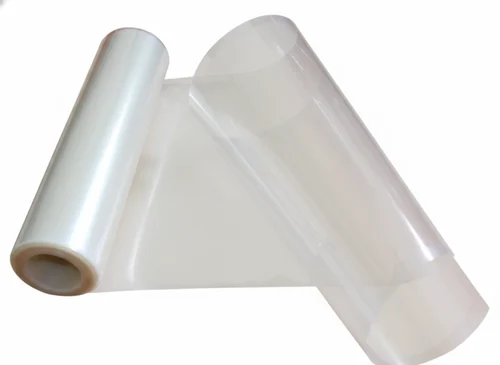
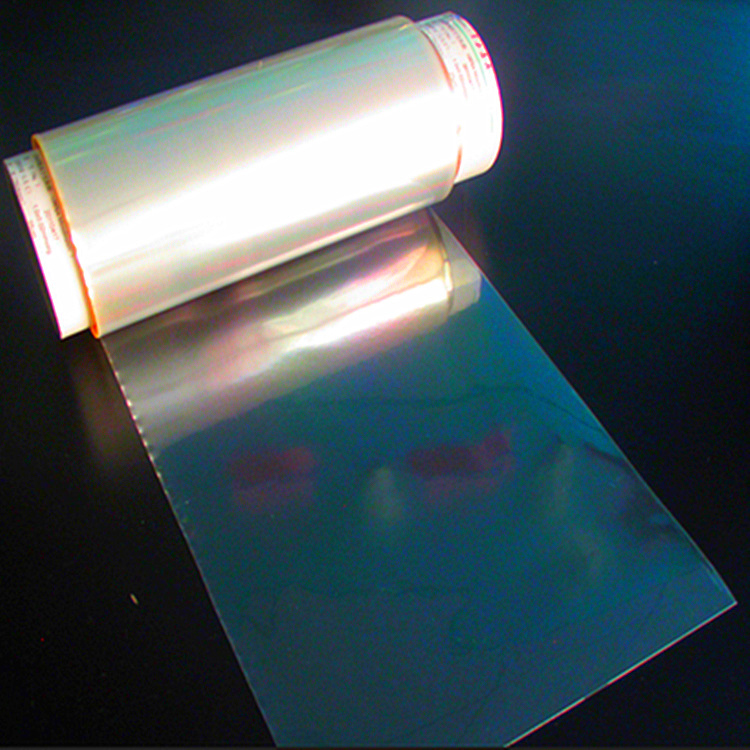
Fun Fact: In a typical PEM fuel‑cell car, the Nafion membrane alone is about 30 µm thick—roughly the thickness of a human hair—yet it carries the entire current load of the vehicle’s powertrain.
5. How Are PFSA Membranes Made? (A Simplified Overview)
- Polymer Synthesis
- Electrochemical polymerisation of tetrafluoroethylene (TFE) with perfluoro‑alkyl vinyl ethers → perfluorinated backbone.
- Sulfonation step introduces –SO₃H groups (usually via copolymerisation with sulfonyl fluoride monomers).
- Solution Casting
- Dissolve PFSA in a fluorinated solvent (e.g., N,N‑dimethylacetamide (DMAc) with perfluorinated sulfonic acid additive).
- Cast onto a smooth substrate (glass, PTFE) and evaporate solvent under controlled humidity → thin film.
- Heat‑Treatment & Annealing
- Thermal anneal at 130‑150 °C for 1–2 h to improve phase separation and crystallinity.
- Mechanical stretching (optional) to align the polymer chains, raising dimensional stability.
- Membrane Conditioning
- Acid‑exchange from Na⁺ form to H⁺ form using dilute sulfuric acid.
- Hydration in de‑ionized water or a controlled humidity chamber before testing.
Tip for Makers: If you’re a lab researcher without access to perfluorinated solvents, you can purchase pre‑cast Nafion membranes (e.g., Nafion™ 117) and focus on downstream functionalisation (e.g., incorporating catalytic nanoparticles).
6. Challenges & Areas of Active Research
| Challenge | Why It Matters | Current Strategies |
|---|---|---|
| Cost | PFSA production is energy‑intensive; a 50 kW fuel‑cell car can need >10 g of Nafion (~$150). | • Low‑EW formulations to reduce ionic group density. • Alternative ionomers (hydrocarbon‑based, sulfonated polyimides). |
| Environmental Impact | Perfluorinated polymers persist in the environment; end‑of‑life recycling is limited. | • Closed‑loop recycling (solvent‑based recovery). • Design‑for‑degradation using cleavable side‑chains. |
| High‑Temperature Operation | Conventional PFSA loses water above 120 °C, dropping conductivity. | • Composite membranes (PFSA + inorganic fillers like SiO₂, ZrP). • Phosphoric‑acid‑doped PFSA for >150 °C dry operation. |
| Methanol Crossover (in Direct Methanol Fuel Cells) | Undesired fuel permeation reduces efficiency. | • Layered architectures (PFSA + ultra‑thin polymeric barrier). |
| Mechanical Fatigue under Cycling | Repeated start‑stop leads to crack formation. | • Reinforced PFSA (e‑PTFE fabric, carbon nanofibres). |
7. Future Outlook: What’s Next for PFSA Ionomers?
- Hybrid Nanocomposite Membranes – Embedding metal‑organic frameworks (MOFs) or covalent‑organic frameworks (COFs) to create proton‑highways that work even when water is scarce.
- 3‑D‑Printed Gradient Membranes – Using additive manufacturing to tailor EW gradients across a membrane, optimizing performance for both high‑current density and low‑humidity zones.
- Digital Twin Modeling – Coupling molecular dynamics (MD) simulations with process‑scale models to predict how processing conditions influence nanostructure and thus conductivity.
- Circular Economy Pathways – Developing chemical recycling routes where the perfluorinated backbone is broken down into reusable monomers.
- Beyond Energy – Biomedical & Environmental Sensors – Leveraging PFSA’s ion‑selectivity and biocompatibility for wearable sweat‑analysis patches and selective ion‑capture filters for water remediation.
8. Quick Take‑Away Checklist (For Engineers & Researchers)
| ✅ | Item |
|---|---|
| ✅ Understand the balance: High –SO₃H density ↑ conductivity but ↑ swelling. Lower EW ↑ mechanical stability. | |
| ✅ Choose the right form: Cast membrane for PEMFC, ink for catalyst binder, nanofibre for filtration. | |
| ✅ Condition before testing: Convert to H⁺ form, hydrate fully, and pre‑condition at target operating temperature. | |
| ✅ Monitor degradation: Track fluoride release, dimensional change, and conductivity loss over time. | |
| ✅ Keep sustainability in mind: Design for recyclability and explore low‑cost alternatives early in the development cycle. |
9. Final Thoughts
Perfluorosulfonic acid ionomers like Nafion may seem like a niche polymer, but their impact is anything but small. From powering the next generation of zero‑emission vehicles to enabling green hydrogen production at scale, PFSA membranes are the invisible bridges that let electric charge travel through water without compromising durability.
Reviews
There are no reviews yet.