
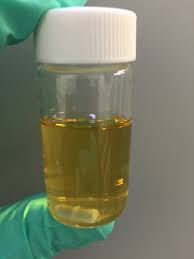
Description
Perfluorosulfonic Acid Ionomers (PFSAs): The Unseen Powerhouse of Modern Electrochemistry, Featuring Nafion
In the relentless quest for sustainable energy solutions and advanced chemical processes, certain materials stand as unsung heroes, silently enabling revolutionary technologies. Among these, Perfluorosulfonic Acid Ionomers (PFSAs) – particularly the iconic Nafion – have carved out an indispensable niche. These remarkable polymers are at the very heart of clean energy systems like fuel cells and electrolyzers, pushing the boundaries of efficiency and durability.
What are Perfluorosulfonic Acid Ionomers (PFSAs)?
PFSAs are a class of synthetic polymers characterized by a unique molecular architecture:
- A Perfluorinated Backbone: The main chain of the polymer is composed entirely of carbon-fluorine bonds. This perfluorinated structure provides exceptional chemical inertness, making the material highly resistant to degradation by strong acids, bases, oxidizers, and high temperatures – conditions commonly found in electrochemical devices.
- Pendant Sulfonic Acid Groups (-SO₃H): Attached to this robust backbone are side chains terminating in highly acidic sulfonic acid groups. These groups are the functional “engine” of the ionomer. In the presence of water, the sulfonic acid groups readily dissociate, releasing mobile protons (H⁺) and becoming negatively charged sulfonate anions (-SO₃⁻).
The term “ionomer” itself signifies a polymer that contains a relatively small proportion of ionic groups, which are often clustered together. In PFSAs, these ionic clusters create a fascinating internal nanostructure crucial for their performance.
The “Magic” of Nafion: A Pioneer in PFSA Technology
Nafion, originally developed by DuPont in the late 1960s (now primarily manufactured by Chemours, a spin-off of DuPont), is the most well-known and widely studied commercial PFSA. Its groundbreaking properties set the standard for proton exchange membranes.
The secret to Nafion’s exceptional performance lies in its ability to phase-separate at a nanoscale. The hydrophobic perfluorinated backbone forms a structural matrix, while the hydrophilic sulfonic acid groups self-assemble into interconnected networks, or “channels,” within this matrix.
These hydrophilic channels act like microscopic highways for protons. When the membrane is hydrated, water molecules fill these channels, creating a continuous aqueous environment. Protons then “hop” from one water molecule to another (the Grotthuss mechanism) or are carried by water molecules (vehicular mechanism), resulting in incredibly efficient proton conduction.
Key Properties and Advantages:
- Exceptional Proton Conductivity: This is the hallmark of PFSAs, particularly when adequately hydrated. They can conduct protons with very low electrical resistance.
- Outstanding Chemical Stability: The perfluorinated backbone ensures resistance to harsh chemical environments, including strong acids, bases, and radical species, which are prevalent in electrochemical cells.
- High Thermal Stability: PFSAs maintain their structural integrity and performance over a wide range of temperatures, often up to 80-100°C for fuel cell applications.
- Good Mechanical Strength: Despite being membranes, they possess sufficient strength to withstand the stresses of assembly and operation without tearing.
- Durability and Longevity: Their inherent stability translates into long operational lifetimes for devices built with them.
Transformative Applications:
The unique combination of properties makes PFSAs, especially Nafion, indispensable in several cutting-edge technologies:
- Proton Exchange Membrane Fuel Cells (PEMFCs): This is arguably the most significant application. In PEMFCs, a Nafion membrane acts as the electrolyte, selectively allowing protons generated at the anode to pass through to the cathode, while blocking the flow of electrons (which travel through an external circuit to do work). This efficiency enables clean power generation for vehicles (e.g., hydrogen cars), portable electronics, and stationary power generation.
- Water Electrolysis (PEMWE): The reverse of a fuel cell, PEM electrolyzers use electricity to split water into hydrogen and oxygen. PFSAs are crucial here, providing the membrane that conducts protons while separating the product gases, enabling the production of “green hydrogen” from renewable energy sources.
- Chlor-Alkali Process: This industrial process produces chlorine gas (Cl₂) and caustic soda (NaOH), vital chemicals for numerous industries. Nafion membranes revolutionized this process by replacing less efficient and environmentally problematic mercury cells, significantly improving energy efficiency and reducing pollution.
- Humidity and Chemical Sensors: The ability of PFSAs to swell and change conductivity based on water uptake makes them excellent candidates for humidity sensors. Their selective ion transport properties also lend them to various chemical sensing applications.
- Electrodialysis and Ion Exchange: In water purification and desalination, PFSAs can be used as ion-exchange membranes to remove specific ions from a solution.
Challenges and Future Outlook:
Despite their remarkable capabilities, PFSAs are not without challenges:
- Cost: Nafion and other PFSAs are relatively expensive to manufacture, impacting the overall cost of devices that utilize them.
- Performance at High Temperatures/Low Humidity: Their proton conductivity drops significantly if they dry out. This necessitates humidification systems for fuel cells, adding complexity and cost. Research focuses on developing high-temperature PFSAs or alternative ionomers that function well under drier conditions.
- Methanol Crossover (for DMFCs): In Direct Methanol Fuel Cells (DMFCs), methanol can permeate through the membrane to the cathode, reducing efficiency. While less of an issue for hydrogen PEMFCs, it’s a consideration for other fuel types.
The future of PFSA ionomers remains incredibly promising. Research is aggressively pursuing ways to reduce manufacturing costs, improve performance at varying humidity levels, and develop even more robust and thinner membranes. As the global demand for sustainable energy solutions and greener industrial processes grows, Perfluorosulfonic Acid Ionomers like Nafion will continue to play a pivotal, though often unseen, role in shaping our cleaner future.


Reviews
There are no reviews yet.