

Description
Perfluoroalkoxy (PFA) Resin: A Deeper Look at its Exceptional Properties and Applications
In the realm of high-performance plastics, perfluoroalkoxy (PFA) resin stands out as a versatile fluoropolymer prized for its exceptional properties and wide-ranging applications. This article delves into the unique characteristics of PFA, exploring its benefits, limitations, and diverse uses across various industries.
What is PFA Resin?
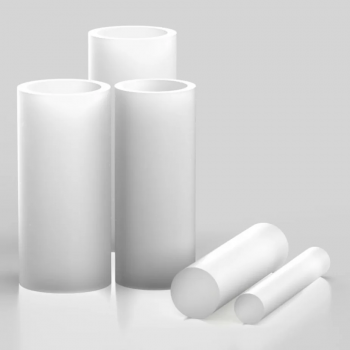
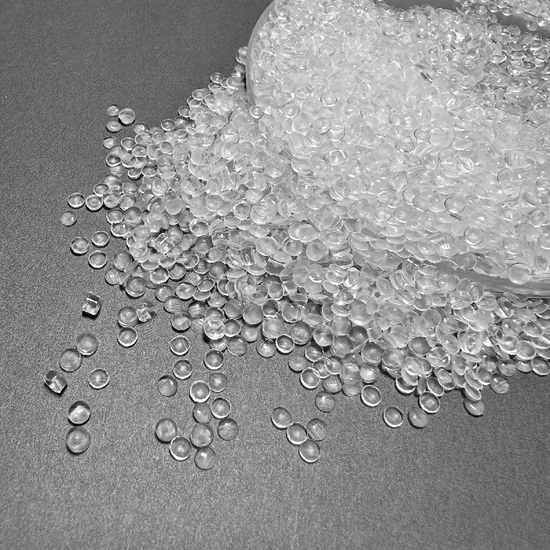
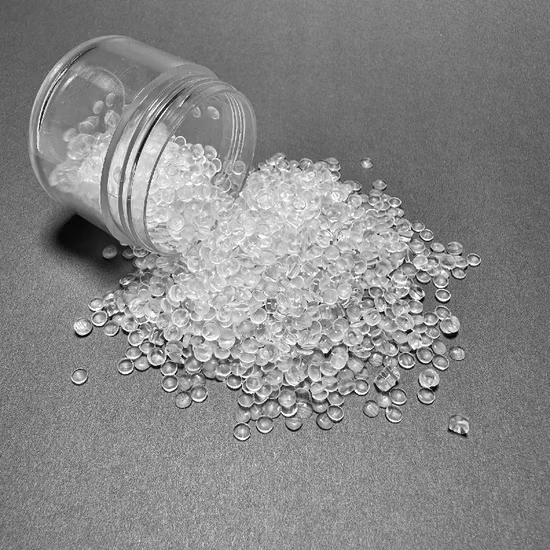
PFA is a fluoropolymer copolymer formed by melt-processing tetrafluoroethylene (TFE) with a perfluoroalkyl vinyl ether. This modification of PTFE (Teflon®) results in a material that retains many of PTFE’s desirable qualities while exhibiting superior melt processability. Unlike PTFE, which must be processed using specialized techniques like sintering, PFA can be processed using conventional methods like injection molding, extrusion, and compression molding.
Key Properties of PFA Resin:
PFA’s widespread adoption is attributed to its remarkable combination of properties, including:
- Exceptional Chemical Resistance: PFA is virtually inert to almost all chemicals, including strong acids, bases, and organic solvents. This makes it an ideal choice for demanding chemical processing environments.
- High-Temperature Performance: PFA boasts excellent high-temperature performance, retaining its properties at temperatures up to 260°C (500°F) for extended periods. This makes it suitable for applications involving extreme heat.
- Low Coefficient of Friction: Similar to PTFE, PFA exhibits a very low coefficient of friction, making it a desirable material for applications requiring low friction and wear resistance.
- Excellent Electrical Insulation: PFA is an excellent electrical insulator, making it suitable for wire and cable insulation, connectors, and other electrical components.
- UV Resistance: PFA is highly resistant to degradation from ultraviolet (UV) radiation, ensuring long-term durability in outdoor applications.
- Melt Processability: As mentioned earlier, PFA’s melt processability allows for fabrication into complex shapes using conventional plastic processing techniques, unlike PTFE.
- FDA Compliance: PFA is often approved for food contact applications, making it suitable for use in food processing equipment and containers.
Applications of PFA Resin:
The exceptional properties of PFA resin translate into a wide array of applications across diverse industries:
- Chemical Processing: PFA is extensively used in chemical processing equipment, including pipes, valves, pumps, tanks, and linings, due to its superior chemical resistance.
- Semiconductor Manufacturing: PFA is employed in semiconductor manufacturing equipment for handling corrosive chemicals and maintaining high purity environments.
- Electrical and Electronics: PFA is used for wire and cable insulation, connectors, and other electrical components due to its excellent electrical insulation properties and high-temperature performance.
- Food and Beverage Industry: PFA is utilized in food processing equipment, tubing, and containers due to its FDA compliance and chemical inertness.
- Pharmaceutical Industry: PFA is used in pharmaceutical manufacturing equipment for its chemical resistance and ability to maintain high purity.
- Medical Devices: PFA can be found in medical tubing, catheters, and other medical devices due to its biocompatibility and chemical resistance.
- Automotive Industry: PFA is used in fuel hoses, seals, and other automotive components due to its resistance to fuels, oils, and high temperatures.
- Aerospace Industry: PFA is employed in aerospace applications where its combination of high-temperature resistance, chemical resistance, and lightweight properties are crucial.
Advantages and Limitations of PFA:
While PFA offers numerous advantages, it’s important to consider its limitations:
Advantages:
- Superior chemical resistance compared to other fluoropolymers and conventional polymers.
- Excellent high-temperature performance.
- Melt processable, allowing for complex shapes.
- FDA compliant for food contact applications.
- Low coefficient of friction.
- Excellent electrical insulation.
- UV resistance.
Limitations:
- Relatively high cost compared to other polymers.
- Can be susceptible to permeation by certain gases and liquids.
- Not as rigid as some other engineering plastics.
- Potential for creep under sustained loads at high temperatures.
Conclusion:
Perfluoroalkoxy (PFA) resin is a high-performance fluoropolymer that offers a unique combination of chemical resistance, high-temperature performance, and melt processability. Its diverse applications across various industries demonstrate its versatility and value in demanding environments. While its higher cost and some limitations should be considered, PFA remains a crucial material for applications requiring exceptional performance and reliability. As technology advances, PFA’s role in pushing the boundaries of innovation will undoubtedly continue to grow.

Reviews
There are no reviews yet.