
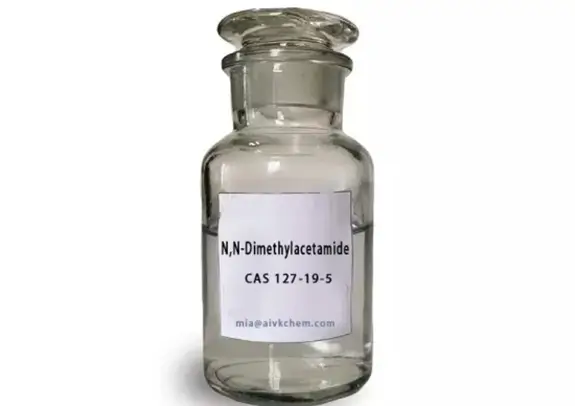
Description
N,N‑Dimethylacetamide (DMAc): The Unsung Workhorse of Modern Chemistry
By [Your Name] | Date: February 26 2026
📌 Quick Take‑aways
| Property | Value / Insight |
|---|---|
| Chemical formula | C₄H₉NO |
| Molecular weight | 87.12 g mol⁻¹ |
| Boiling point | 165 °C (at 1 atm) |
| Density | 0.937 g cm⁻³ (20 °C) |
| Polarity | High (ε ≈ 37) |
| Common use | Solvent for polymers, pharmaceuticals, batteries, and electronic inks |
| Safety | Low acute toxicity (LD₅₀ (oral, rat) ≈ 4 g kg⁻¹) but can be a reproductive hazard at high exposures |
1️⃣ What Is DMAc, Anyway?
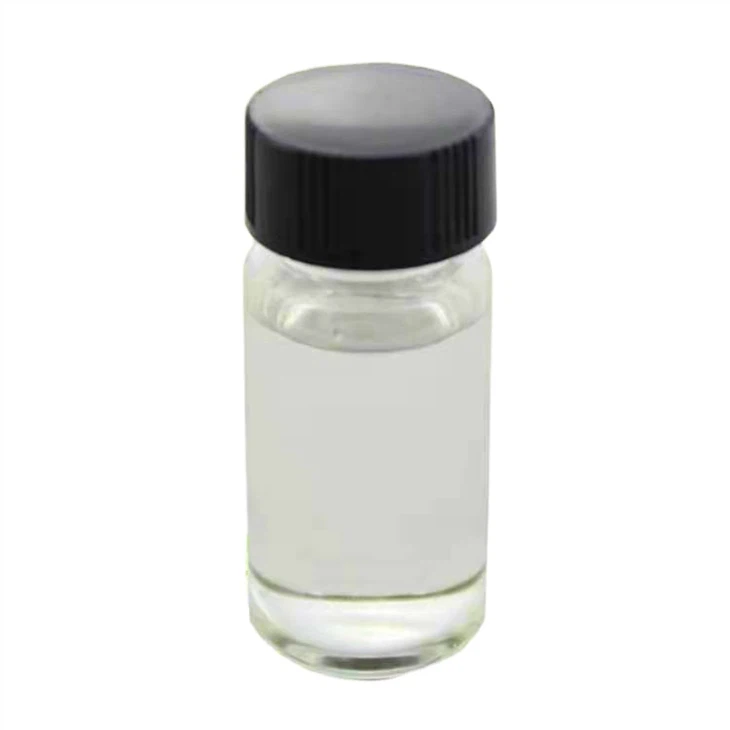
N,N‑Dimethylacetamide (often abbreviated DMAc or DMAC) is a colourless, slightly hygroscopic liquid that belongs to the family of N‑substituted amides. Its structure is deceptively simple: a carbonyl (C=O) flanked by a dimethyl‑substituted nitrogen atom and a methyl group.
CH3‑C(=O)‑N(CH3)2
Because the nitrogen is fully substituted (no N‑H bond), DMAc is non‑protic—it does not donate protons, but it can accept them. This dual nature (polar carbonyl + basic nitrogen) makes it a “universal solvent” for a surprisingly wide range of organic and inorganic substances.
2️⃣ How Is DMAc Made?
Industrial production of DMAc is dominated by two routes:
| Route | Key Reaction | Typical Feedstock |
|---|---|---|
| Amination of Acetyl Chloride | CH₃COCl + 2 CH₃NH₂ → CH₃CON(CH₃)₂ + 2 HCl | Acetyl chloride, dimethylamine |
| Aminolysis of Acetic Anhydride | (CH₃CO)₂O + 2 CH₃NH₂ → 2 CH₃CON(CH₃)₂ + H₂O | Acetic anhydride, dimethylamine |
Both pathways are carried out in the gas‑phase or in an aqueous medium under controlled temperature (80–120 °C). Modern plants recycle the HCl or water by‑products, making the process energy‑efficient and low‑waste.
Fun fact: Because the amide bond is thermodynamically stable, the reverse reaction (hydrolysis back to acetic acid) is sluggish under normal conditions—hence DMAc’s excellent solvent stability.
3️⃣ Why Do Chemists Love DMAc?
3.1 A “Goldilocks” Solvent
- Polarity: With a dielectric constant of ~37, DMAc can dissolve both polar (e.g., salts, polymers) and moderately non‑polar compounds (e.g., aromatic hydrocarbons).
- High Boiling Point: 165 °C lets you run reactions at elevated temperatures without losing solvent to the vapor phase, reducing the need for reflux condensers.
- Low Viscosity: 0.8 cP at 20 °C → easy mixing, efficient mass transport in polymerizations.
- Good Miscibility: Fully miscible with water, ethanol, THF, DMSO, and many organic solvents, enabling seamless solvent swaps in multi‑step syntheses.
3.2 Key Applications
| Industry | Typical Use | Why DMAc? |
|---|---|---|
| Polymer Manufacturing | Solvent for polyacrylonitrile (PAN), polyimides, PMMA, and cellulose derivatives. | Dissolves high‑molecular‑weight polymers; evaporates cleanly for film casting. |
| Pharmaceuticals | Reaction medium for peptide coupling, heterocycle formation, and API purification. | Stabilises reactive intermediates; easy to remove by antisolvent precipitation. |
| Electronics | Ink solvent for conductive inks, dielectric coatings, and battery electrolytes. | High conductivity of dissolved salts; low residue after curing. |
| Lithium‑Ion Batteries | Co‑solvent for electrolyte salts (LiPF₆, LiFSI). | Improves ionic conductivity at moderate temperatures. |
| Catalysis | Ligand‑solvent in transition‑metal catalyzed cross‑coupling (e.g., Suzuki‑Miyaura). | Maintains catalyst solubility and activity. |
4️⃣ Safety, Health, and Environmental Profile
4.1 Human Health
- Acute toxicity: Low (LD₅₀ ≈ 4 g kg⁻¹, oral, rat).
- Irritation: May cause mild skin and eye irritation; prolonged exposure can lead to dermatitis.
- Reproductive hazard: Classified by the EU as a Repr. 2 (suspected of reproductive toxicity). Pregnant workers should avoid prolonged exposure.
- Occupational exposure limit (OEL): 30 ppm (10 mg m⁻³) TWA (ACGIH TLV).
Best practices:
- Use a ventilated fume hood.
- Wear chemical‑resistant gloves (e.g., nitrile) and safety glasses.
- Store in a closed, cool, well‑ventilated area away from strong oxidizers.
4.2 Environmental Impact
- Biodegradability: Moderate; readily hydrolysed by microbial amideases in wastewater treatment plants.
- Aquatic toxicity: LC₅₀ for Daphnia magna ≈ 300 mg L⁻¹ – not highly toxic but still requires careful discharge control.
- Air emissions: Low vapor pressure (0.4 kPa at 20 °C) → minor volatile organic compound (VOC) contribution, but still regulated under the EU VOC Directive.
Green alternatives under investigation include N‑methyl‑2‑pyrrolidone (NMP)‑free polymer formulations and bio‑derived amide solvents (e.g., N‑acetyl‑L‑proline). However, none yet match DMAc’s combination of polarity, boiling point, and cost.
5️⃣ Handling & Storage Tips – A Mini‑Cheat Sheet
| Action | Recommendation |
|---|---|
| Opening a bottle | Use a syringe or pump to avoid splashing. |
| Spill clean‑up | Absorb with inert absorbent (e.g., vermiculite), then collect for proper waste disposal. |
| Fire safety | Class III (flammable liquids) – keep away from open flames; have CO₂ or dry‑chemical extinguishers ready. |
| Waste disposal | Consolidate with other organic solvent waste streams; adhere to local hazardous waste regulations. |
| Recycling | Distill under reduced pressure (0.1 atm) to recover > 95 % purity for reuse. |
6️⃣ The Future of DMAc: Trends to Watch
| Trend | What It Means for DMAc |
|---|---|
| Circular Chemistry | Companies are recovering DMAc from polymer waste streams using supercritical CO₂ extraction, closing the solvent loop. |
| Battery Technology | Emerging solid‑state electrolytes still use DMAc as a processing aid; formulation tweaks could increase energy density. |
| Regulatory Pressure | The EU’s REACH evaluation has placed DMAc on the “Substances of Very High Concern” watchlist; manufacturers are pre‑emptively improving safety data sheets. |
| Digital Manufacturing | Ink‑jet printed electronics rely on DMAc‑based conductive inks for high‑resolution patterning; new “quick‑dry” DMAc blends cut cure times by 30 %. |
| Bio‑Derived Solvents | Research into amino‑acid derived amides may eventually supplant DMAc in niche pharma routes, but cost parity remains a hurdle. |
7️⃣ Frequently Asked Questions (FAQ)
Q1. Can I use DMAc as a replacement for DMF?
Yes, in many cases. DMAc is less toxic than DMF (dimethylformamide) and has a higher boiling point, making it a preferable substitute for high‑temperature reactions. However, check solubility data for your specific substrate.
Q2. Is DMAc compatible with strong acids?
It tolerates moderate acids (e.g., HCl, H₂SO₄ up to ~1 M) but strong, concentrated acids can lead to hydrolysis of the amide and generate acetic acid. Always perform a small‑scale compatibility test.
Q3. How do I know if my DMAc is “wet”?
DMAc is hygroscopic; water content can be measured with Karl Fischer titration or by using a dry‑solvent indicator (e.g., a small amount of sodium metal). For moisture‑sensitive reactions, dry over molecular sieves (3 Å) or calcium hydride.
Q4. What is the best way to remove DMAc after a reaction?
Because of its high boiling point, rotary evaporation under reduced pressure (≈ 150 mbar) is efficient. For trace residues, a high‑vacuum (≤ 1 mbar) followed by argon sparging works well.
Q5. Are there any “green” certifications for DMAc?
Currently, DMAc does not carry an Ecovadis or ISO 14001 “green solvent” label, but some suppliers provide life‑cycle analysis (LCA) data that demonstrate a lower carbon footprint compared to NMP.
8️⃣ Bottom Line – Why DMAc Still Matters
N,N‑Dimethylacetamide may not have the flashiest name in the solvent world, but its versatility, reliability, and cost‑effectiveness keep it at the core of modern manufacturing—from aerospace‑grade polyimide films to next‑generation lithium‑ion batteries. While regulatory and sustainability pressures will surely push the industry toward greener alternatives, DMAc’s unique balance of polarity, boiling point, and low volatility ensures it will remain a key player for at least the next decade.

Reviews
There are no reviews yet.