
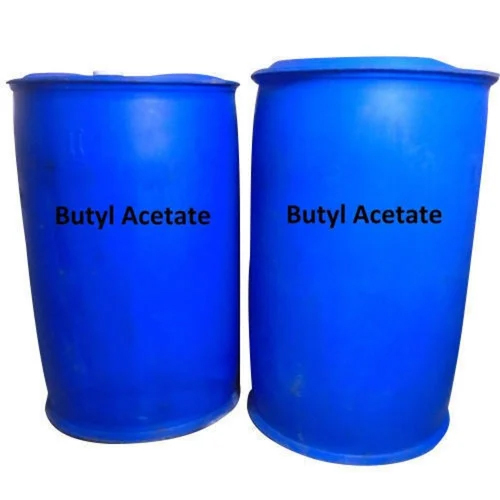
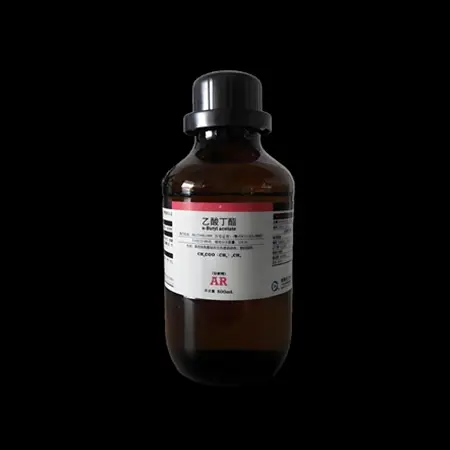
Description
N-Butyl acetate (n-Butyl acetate)
N-Butyl acetate is a common organic ester used primarily as a solvent in coatings, inks, cleaners, and adhesives. The name typically refers to the straight-chain (normal) butyl group attached to the acetate moiety.
Quick facts
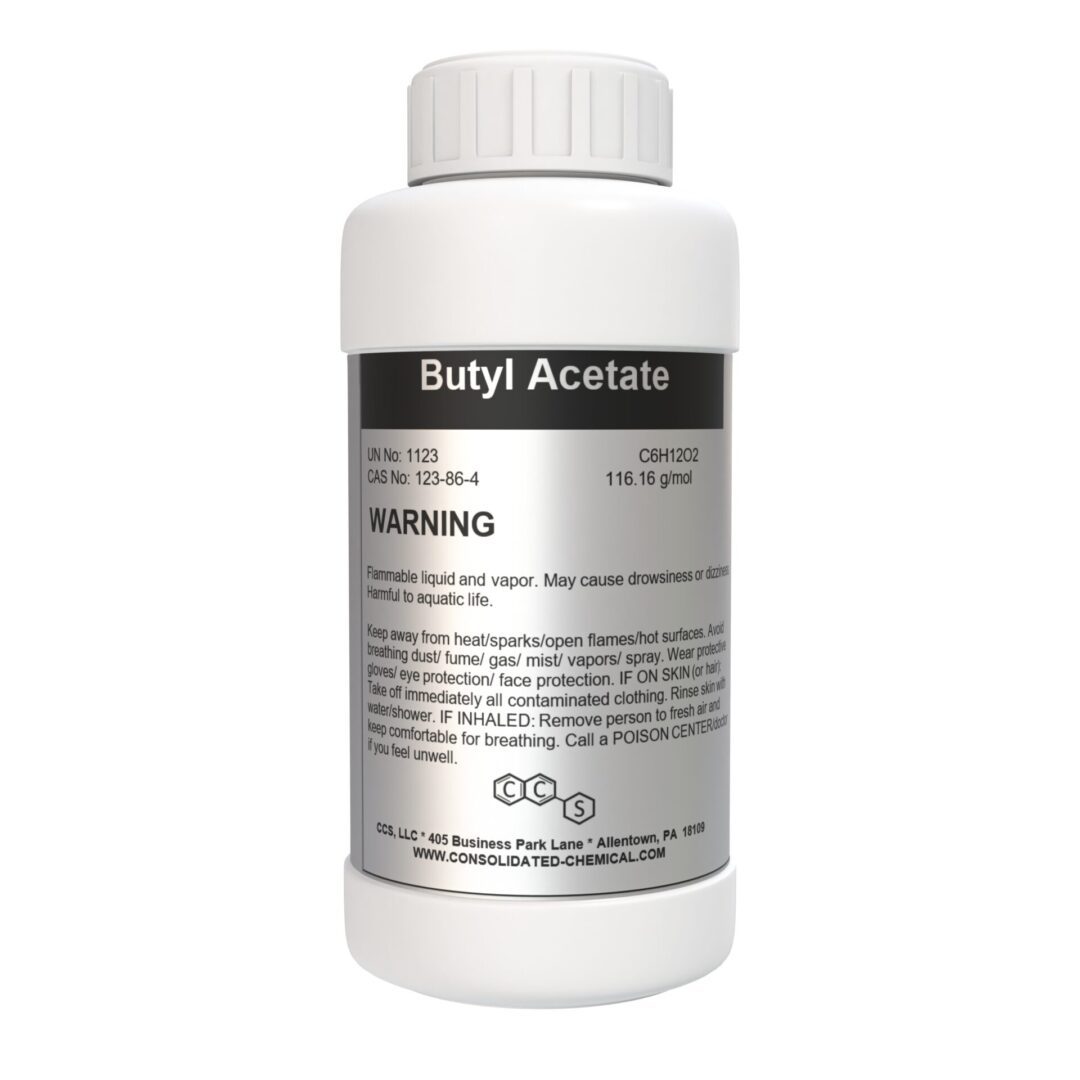
- Chemical formula: C6H12O2
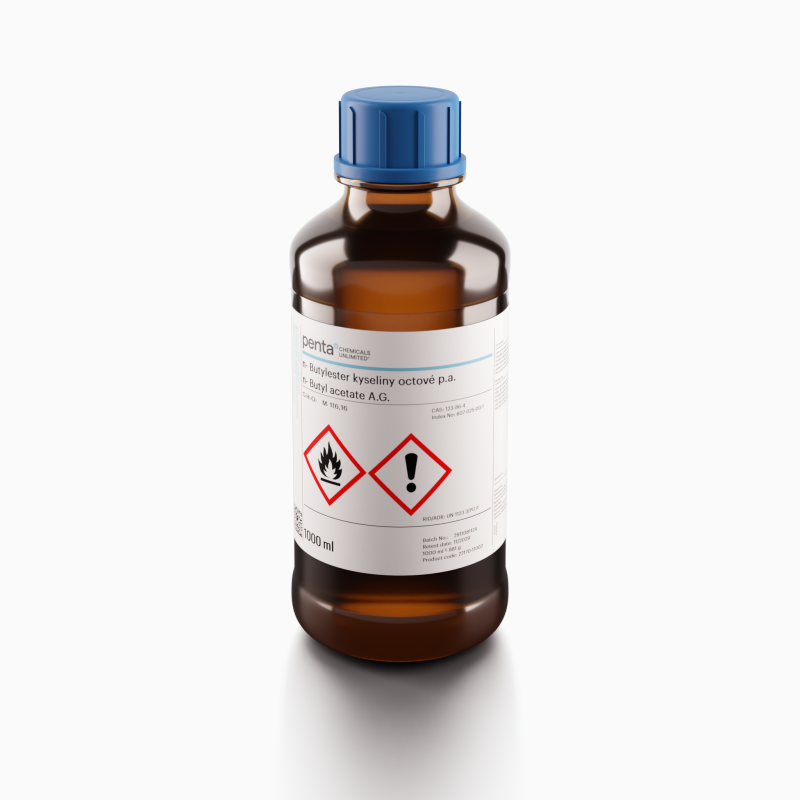
- Molar mass: 116.16 g/mol
- Structure: CH3-CO-O-CH2-CH2-CH2-CH3
- Common names: n-Butyl acetate, butyl acetate
- Boiling point: ~126–127 °C
- Density: ~0.88 g/mL at 25 °C
- Solubility in water: Limited; slightly soluble in water; miscible with many organic solvents
- Odor: Mild fruity ester-like aroma
- Flammability: Flammable liquid and vapor
How it’s made
- Industrial production: Typically produced by esterifying acetic acid with n- butanol in the presence of an acid catalyst (for example sulfuric acid) or via transesterification processes. The reaction is:
- Acetic acid + n-Butanol ⇌ n-Butyl acetate + water
- Purification: Distillation to remove water and unreacted starting materials.
Common uses
- Primary solvent in:
- Paints and varnishes
- Lacquers and coatings
- Inks and printing formulations
- Adhesives and cleaners
- Used for its moderate evaporation rate and good solvency for a wide range of resins and polymers
Safety and handling
- Hazards: Flammable liquid and vapor; can irritate skin, eyes, and respiratory tract; prolonged exposure may affect the central nervous system.
- Exposure controls: Use in a well-ventilated area or fume hood; avoid ignition sources; wear appropriate PPE (gloves, goggles).
- Storage: Keep containers tightly closed; store away from heat, sparks, and oxidizers; use cool, dry, well-ventilated storage areas.
- First aid (user guidance):
- Inhalation: Move to fresh air; seek medical attention if symptoms persist.
- Skin contact: Wash with soap and water; remove contaminated clothing.
- Eye contact: Rinse cautiously with water for several minutes; remove contact lenses if present.
- Ingestion: Do not induce vomiting unless told by a poison control center; seek medical attention.
Environmental and regulatory notes
- Generally regulated as a volatile organic compound (VOC) solvent in many jurisdictions.
- Disposal should follow local hazardous waste regulations and the material’s Safety Data Sheet (SDS).
Quick comparison (n-Butyl acetate vs. ethyl acetate)
-
- n-Butyl acetate: higher boiling point, slower evaporation, slightly less polar
- Ethyl acetate: lower boiling point, faster evaporation, more polar
- Both are common VOC solvents used in coatings and cleaners, but they differ in drying time and compatibility with resins
Practical tips
- If you are formulating a coating, select n- butyl acetate based on desired drying time and resin compatibility.
- For consumer cleaning products, consider compatibility with plastics and the odor profile.
If you’d like, I can tailor this to a specific use case (e.g., paint formulation, cleaning solvent, safety data sheet summary) or pull together exact regulatory exposure limits and SDS references for your region.


Reviews
There are no reviews yet.