
Description
When it comes to materials that can survive the most hostile environments—think re‑entry spacecraft, hyper‑fast data‑center servers, or next‑generation electric‑vehicle batteries—high‑temperature polyimides (HT‑PIs) are often the quiet workhorses that make it all possible. In this post we’ll pull back the curtain on what makes these polymers tick, why they’re indispensable in today’s high‑tech world, and where the next breakthroughs are likely to appear.
1. Polyimides 101 – A Quick Chemistry Refresher
Polyimides belong to the family of heterocyclic aromatic polymers. Their backbone is built from alternating imide groups (–CO–NH–CO–) and aromatic rings (benzene, naphthalene, biphenyl, etc.). This structure gives them three key traits:
| Trait | How it arises | What it means for the material |
|---|---|---|
| Rigidity | Aromatic rings are planar and stiff. | High tensile strength & modulus. |
| Thermal stability | Imide linkages resist cleavage up to 600 °C in inert atmospheres. | Little degradation at temperatures where most plastics melt. |
| Chemical resistance | π‑conjugated system & strong C–N bonds. | Low solvent uptake, excellent oxidation resistance. |
Because the polymer chain is already “pre‑cooked” with an imide bond, polyimides can be processed from a low‑melting precursor (poly(amic acid)) and then thermally cured to form the final, fully imidized network. This two‑step route is the secret behind their ability to be molded, spun, or printed before they become the fire‑proof, high‑temperature material we need.
2. What Makes a Polyimide “High‑Temperature”?
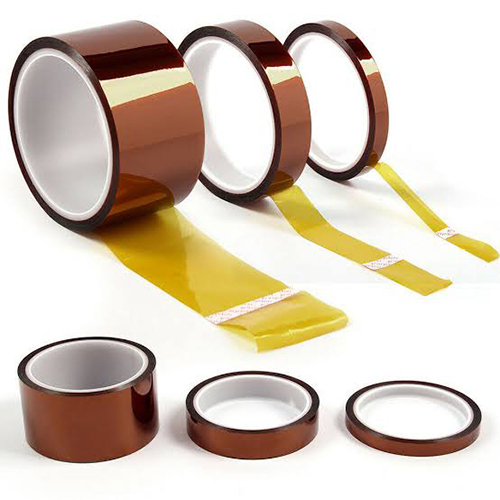
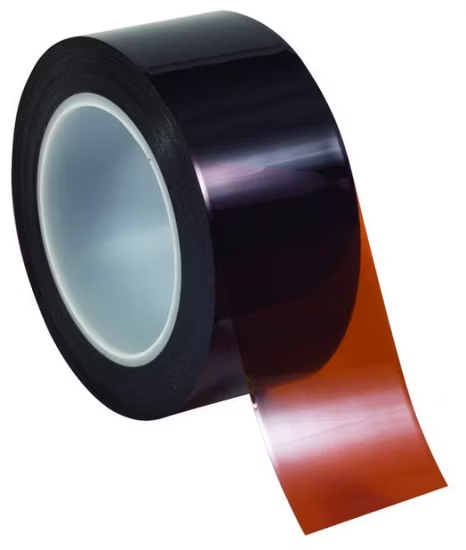
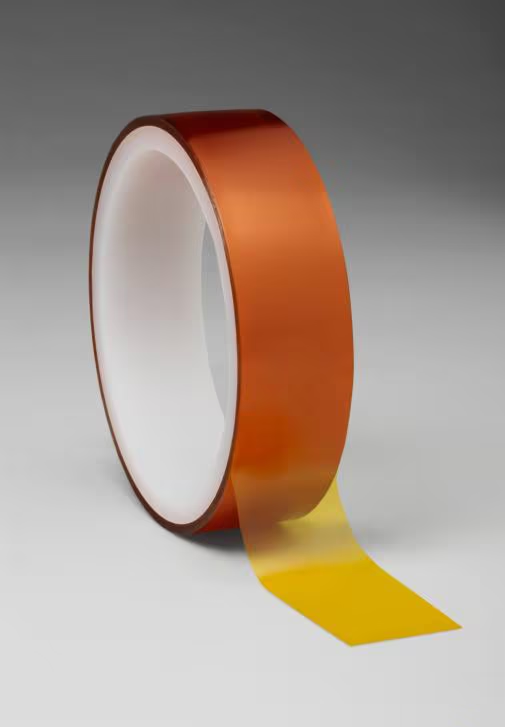
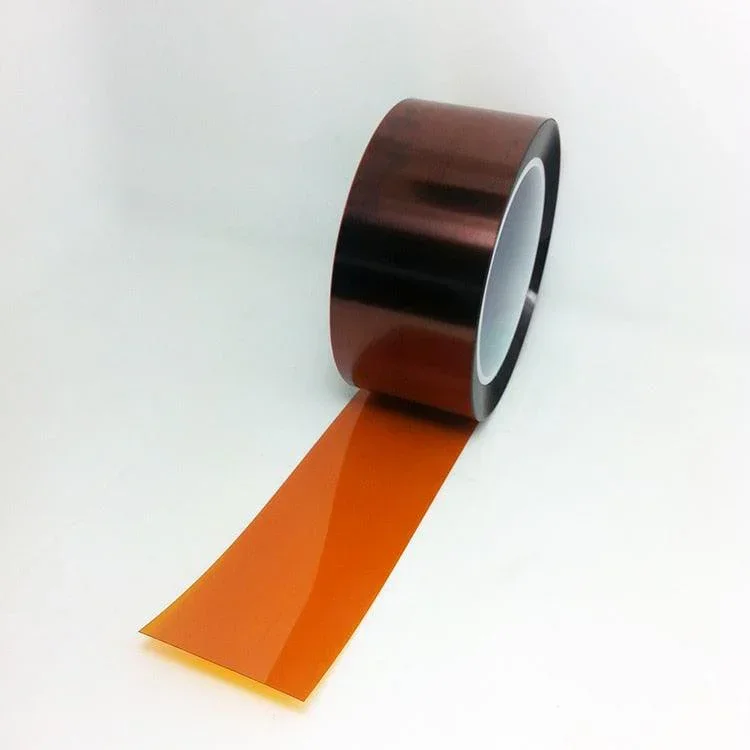
Not all polyimides are created equal. Standard PI films (e.g., Kapton®) can survive continuous use up to ~ 260 °C in air. High‑temperature polyimides push that ceiling to 340 °C–400 °C (and even higher in inert environments).
The tricks engineers use to lift the temperature limit are:
- Incorporating Rigid, High‑Tg Monomers – Adding naphthalene, biphenyl, or benzoxazole units raises the glass‑transition temperature (Tg).
- Enhancing Chain Segmentation – Introducing ortho‑substituted diamines creates steric hindrance that reduces segmental motion.
- Introducing Cross‑Linkable Sites – Phenylethynyl, acetylene, or epoxide groups allow post‑cure cross‑linking, locking the network in place.
- Adding Inorganic Fillers – Nanoparticles of silica, alumina, or boron nitride improve heat dissipation and raise the composite’s decomposition temperature.
A typical HT‑PI formulation might look like:
- Diamine: 4,4′‑Oxydianiline (ODA) + 3,3′‑Diaminobenzidine (DAB)
- Dianhydride: 4,4′‑(Hexafluoroisopropylidene) diphthalic anhydride (6FDA)
- Cross‑linker: 4‑(4‑Phenylethynyl)‑4′‑dimethylaminophenyl (PEA)
The resulting polymer boasts a Tg around 380 °C, a 5 % weight‑loss temperature (T5) above 520 °C in nitrogen, and a dielectric constant < 3—perfect for high‑frequency electronics.
3. Where HT‑PIs Shine: Real‑World Applications
| Industry | Typical Use | Why HT‑PI? |
|---|---|---|
| Aerospace & Defense | Thermal blankets, radar domes, reusable rocket nozzle liners | Survive repeated thermal cycling from -150 °C to > 400 °C; low outgassing. |
| Microelectronics | Flexible printed circuit boards (FPCs), high‑frequency interconnects, chip‑on‑board substrates | Retain dimensional stability at solder reflow (≥ 260 °C) and under high‑speed signal loads. |
| Automotive/Electric Vehicles | Power‑module insulation, battery‑pack separators, high‑temperature sensor housings | Resist oil, fuel, and high ambient temps while staying lightweight. |
| Energy & Power | Gas‑turbine seals, fuel‑cell membranes, high‑temperature filtration | Combine flame resistance with chemical inertness. |
| Additive Manufacturing | 3D‑printed high‑temp molds and tooling | Can be extruded or ink‑jet printed, then cured to a rigid, heat‑stable part. |
Case Study: SpaceX’s next‑gen heat‑shield tiles employ a phenylethynyl‑cross‑linked HT‑PI matrix that tolerates > 450 °C re‑entry heating while keeping the tile weight under 0.5 kg m⁻².
4. Processing HT‑PIs – From Lab to Production Line
- Poly(amic acid) (PAA) Synthesis
- Dissolve diamine(s) in anhydrous N‑methyl‑2‑pyrrolidone (NMP).
- Slowly add dianhydride under nitrogen, keep temperature < 30 °C.
- Stir 2–4 h to reach a high molecular weight PAA (Mw ≈ 30–80 kDa).
- Film Casting / Fiber Spinning
- Film: Blade‑coat onto a silicon wafer or metal carrier, pre‑dry at 80 °C.
- Fiber: Wet‑spin the PAA into a coagulation bath (water/IPA), then wash.
- Imidization Cure Cycle
Temp (°C) Hold Time (min) Purpose 100 30 Evaporate solvent 200 60 Initial imidization 300–350 30–60 Full imidization & cross‑linking 400 (optional) 15 Post‑cure densification (inert N₂) - Post‑Processing (if needed)
- Surface Treatment: Plasma etching for improved adhesion.
- Metal Plating: Sputter Cr/Au for conductive traces.
Tip: Even a 5 % residual solvent can dramatically lower the HT‑PI’s Tg, so a thorough low‑temperature bake before imidization is crucial.
5. Recent Breakthroughs (2022‑2025)
| Innovation | What Changed | Impact |
|---|---|---|
| Bio‑Derived Diamines (e.g., 2,5‑furandiamine) | Renewable feedstock, modest Tg boost (~20 °C). | Sustainable PI routes, lower carbon footprint. |
| Self‑Healing HT‑PI Networks | Dynamic imide‑exchange chemistry activated at 250 °C. | Extended service life for aerospace interiors. |
| Hybrid PI/Graphene Aerogels | 0.5–2 wt % graphene oxide integrated before cure. | Thermal conductivity ↑ 3×, enabling faster heat spreading in power modules. |
| UV‑Curable PI Precursors | Photo‑initiated imidization using benzophenone. | Enables rapid (under 5 min) imprint lithography for flexible RF circuits. |
| Machine‑Learning‑Guided Monomer Design | Bayesian optimization of diamine/dianhydride combos. | Predictive Tg > 420 °C achieved in silico before first lab trial. |
These advances are tightening the gap between polyimides and “high‑temperature ceramics”—offering polymer‑processability with ceramic‑like durability.
6. Challenges That Still Need Solving
| Issue | Why It Matters | Emerging Solution |
|---|---|---|
| Moisture Uptake at Low Temperatures | Can cause dielectric loss in high‑frequency PCBs. | Incorporate fluorinated side‑chains to lower hygroscopicity. |
| Thermal Expansion Mismatch | Leads to delamination when bonded to metals or silicon. | Design graded composites with nano‑fillers that tune CTE. |
| Processing Time | Multi‑step cure cycles add cost. | UV‑triggered imidization + rapid IR post‑cure. |
| Recycling | End‑of‑life polyimide waste is inert. | Develop depolymerization catalysts for selective imide bond cleavage. |
| Cost of High‑Purity Monomers | Specialized dianhydrides like 6FDA are pricey. | Scale‑up bio‑based routes and leverage bulk petrochemical streams. |
7. The Road Ahead – What to Expect in the Next 5–10 Years
- Ultra‑High‑Tg Polyimides (Tg > 500 °C) – Leveraging benzoxazole and pyridyl heterocycles, combined with nano‑carbide fillers, we’ll see polymers that can replace certain SiC components in low‑stress applications.
- Integrated PI‑Based Sensors – Embedding conductive nanowires during the PAA stage will enable “smart” blankets that monitor temperature, strain, and even radiation in real time.
- Additive Manufacturing at Scale – High‑viscosity PI inks compatible with direct‑ink‑write (DIW) printers will make custom thermal shielding parts printable on‑demand, reducing inventory for aerospace programs.
- Circular Polyimide Economy – Catalytic depolymerization routes (e.g., using Lewis‑acid ionic liquids) could turn used PI waste back into monomer feedstock, closing the loop for high‑value aerospace material.
- Hybrid Organic‑Inorganic “PI‑Ceramics” – Sol‑gel derived silica networks interpenetrated with PI will provide a material that cures at < 200 °C yet offers ceramic‑like hardness and thermal conductivity.
8. Quick Take‑aways
- High‑temperature polyimides are aromatic polymers whose imide linkages give them unmatched stability up to and beyond 400 °C.
- Molecular design (rigid monomers, cross‑linkers, fillers) is the key lever to push Tg and oxidative stability.
- Applications span aerospace, electronics, automotive, and emerging 3D‑printing markets.
- Recent advances in bio‑derived monomers, self‑healing chemistries, and AI‑driven polymer design are accelerating performance and sustainability.
- Future trends point toward ultra‑high‑Tg variants, printable PI systems, and a circular materials economy.
Reviews
There are no reviews yet.