
Description
The Unseen Powerhouse: High-Purity (Battery-Grade) Sulfuric Acid and Its Critical Role in Modern Energy
In the intricate world of advanced manufacturing and energy storage, some components are celebrated for their direct, tangible impact, while others, equally vital, operate behind the scenes, their purity and precision making all the difference. High-purity sulfuric acid, often referred to as “battery-grade” or “ultra-high purity (UHP)” sulfuric acid, falls squarely into the latter category. Far from the industrial strength acid used in bulk chemical processes, this specialized variant is a linchpin in the production of everything from the batteries powering our electric vehicles to the semiconductors found in our smartphones.
What is Battery-Grade Sulfuric Acid?
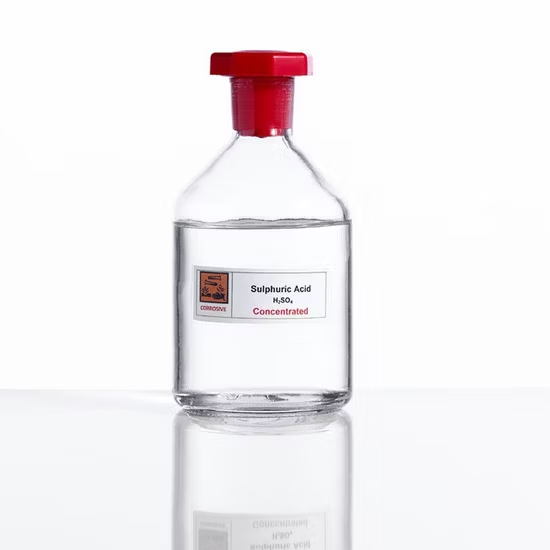
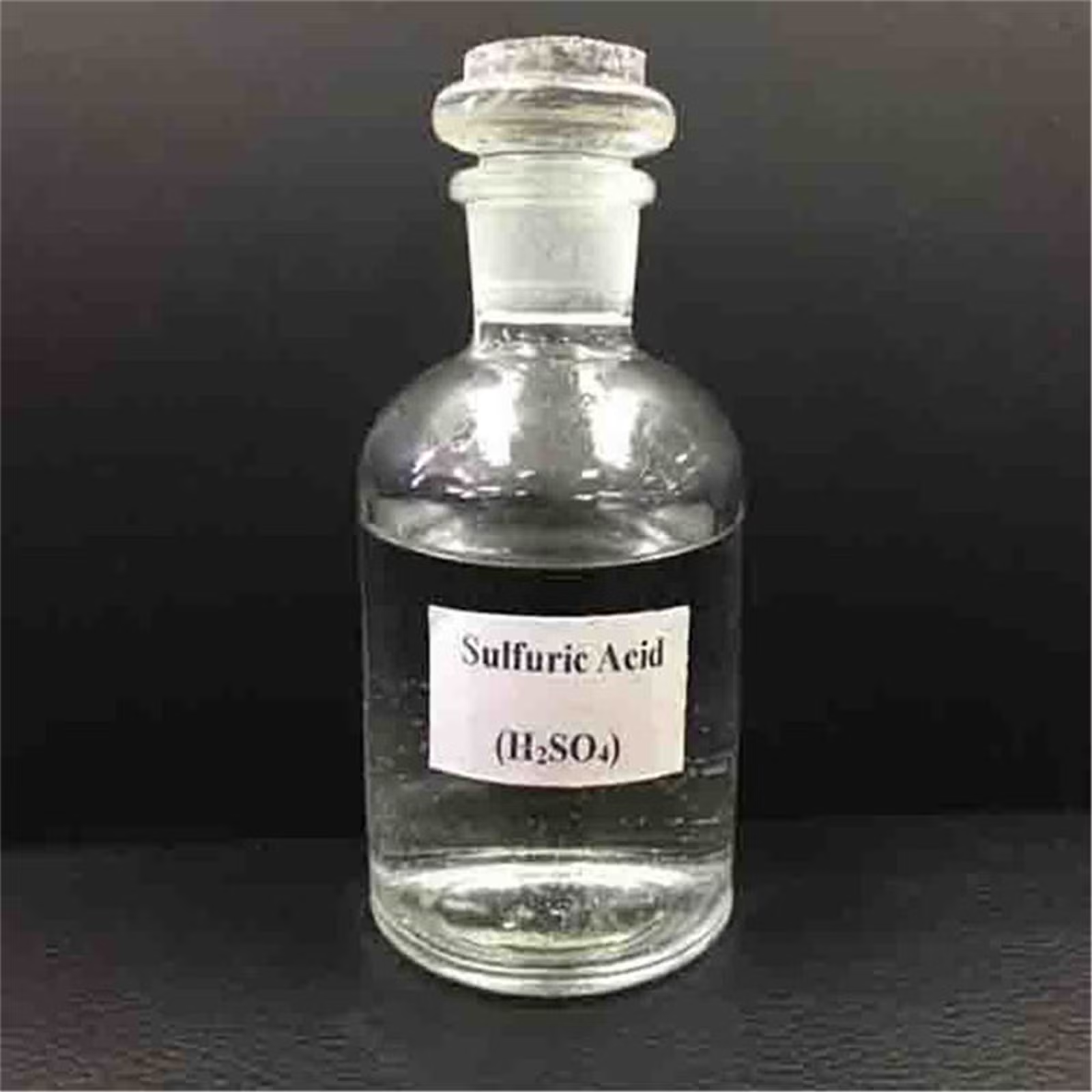
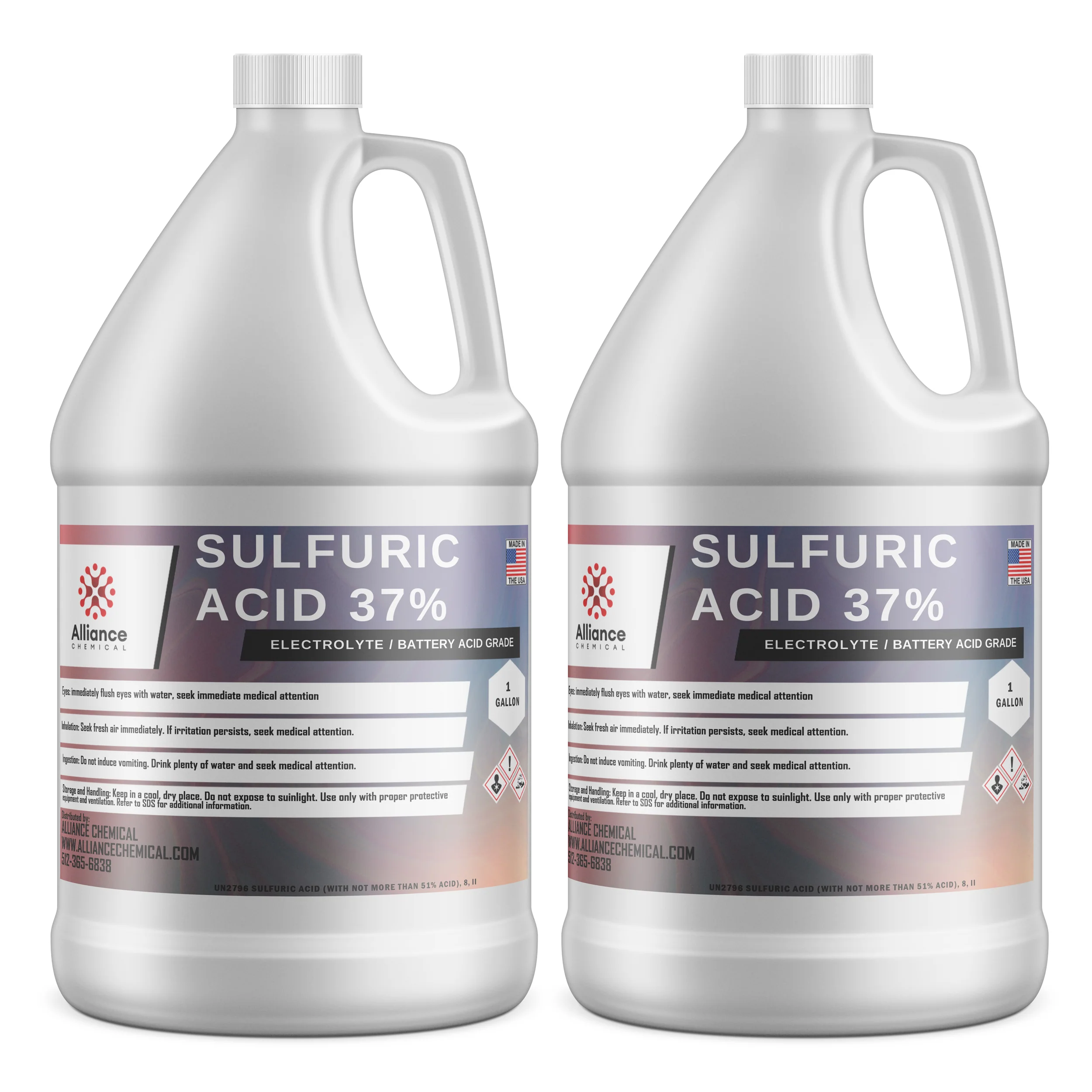
Sulfuric acid (H2SO4) is a fundamental chemical, but “battery-grade” signifies a level of purity that is exceptionally demanding. Unlike standard industrial grades, which might tolerate trace impurities in parts per million (ppm), battery-grade sulfuric acid often specifies impurities in parts per billion (ppb) or even parts per trillion (ppt).
The primary reason for this extreme purity lies in its application. In lead-acid batteries, sulfuric acid serves as the electrolyte – the medium through which ions flow to create electricity. Any contaminants, even in minute quantities, can react with the lead plates, leading to:
- Reduced Battery Lifespan: Impurities can accelerate self-discharge, corrode electrodes, and lead to premature battery failure.
- Decreased Performance: They can lower capacity, reduce efficiency, and hinder charge/discharge cycles.
- Increased Gassing: Unwanted reactions can produce excessive hydrogen gas, posing safety risks.
While fundamental to lead-acid batteries, the term “battery-grade” has expanded to encompass its critical role in the broader battery manufacturing ecosystem, particularly for lithium-ion batteries. Here, it’s not the electrolyte but a crucial processing agent. High-purity sulfuric acid is essential for:
- Etching and Cleaning: Used to prepare and clean electrode materials (cathodes and anodes) to ensure optimal surface characteristics and conductivity.
- Precursor Synthesis: Involved in the synthesis of various active materials and precursors for battery components.
- Quality Control: Ensuring no residual impurities compromise the delicate electrochemical reactions within advanced battery cells.
The Purity Imperative: Why Every Trace Matters
Imagine a single grain of sand in a precision clockwork mechanism – it can bring the entire system to a halt. In the microscopic world of battery chemistry, trace impurities act similarly. Metals like iron, copper, nickel, lead, and chromium, along with anions like chlorides and nitrates, are particularly detrimental. They can:
- Create Localized Corrosion Sites: Leading to structural degradation of electrodes.
- Act as Catalysts for Undesirable Reactions: Promoting self-discharge or side reactions that consume active material.
- Form Undissolved Particles: Which can act as short-circuit paths, especially in thin separators of advanced batteries.
For example, just a few ppb of iron can significantly reduce the cycle life of a lead-acid battery, while in the highly sensitive fabrication of lithium-ion cells, even minute organic contaminants can hinder performance.
Manufacturing Excellence: Achieving the Unparalleled Purity
Producing battery-grade sulfuric acid is a highly specialized and capital-intensive process that goes far beyond standard industrial production:
- High-Quality Feedstock: It starts with the purest possible raw materials.
- Multi-Stage Purification: Conventional sulfuric acid is subjected to rigorous purification steps, often including:
- Multiple Distillations: Including vacuum distillation to remove heavier impurities and volatile contaminants.
- Ion Exchange: To remove dissolved metal ions.
- Advanced Filtration: Utilizing ultra-fine membrane filters to remove sub-micron particulate matter.
- Cleanroom Environments: Manufacturing and packaging often occur in ISO-certified cleanroom environments to prevent airborne contamination.
- Specialized Packaging and Transport: The acid is stored and transported in meticulously cleaned, inert containers (e.g., fluoropolymer-lined tanks, high-purity glass or plastic bottles) that do not leach impurities into the product.
Rigorous analytical testing, including Inductively Coupled Plasma Mass Spectrometry (ICP-MS) and particle counting, is performed at every stage to verify purity specifications.
Beyond Batteries: Other Demanding Applications
While “battery-grade” highlights a critical application, this level of purity is also essential for other high-tech industries:
- Semiconductor Manufacturing: Used extensively for etching, cleaning, and preparing silicon wafers, where even a single impurity can compromise microchip functionality.
- Pharmaceutical and Life Sciences: As a reagent where absolute purity is non-negotiable for drug synthesis and analytical procedures.
- High-Purity Laboratory Reagents: For sensitive analytical and research applications.
Market Trends and Future Demand
The global push towards electrification, driven by the burgeoning electric vehicle (EV) market and large-scale renewable energy storage solutions, is significantly boosting the demand for high-purity sulfuric acid. As battery technologies become more sophisticated and energy density increases, the purity requirements for all input materials, including processing chemicals, will only become more stringent. The rise of advanced materials and next-generation battery chemistries further solidifies the critical role of ultra-pure reagents.
Conclusion
High-purity (battery-grade) sulfuric acid is an unsung hero of modern technology. Its meticulous production and unprecedented purity levels are not merely desirable – they are indispensable for the performance, longevity, and safety of the batteries that power our increasingly electric world. As innovation continues to push the boundaries of energy storage, the silent, invisible contribution of this critical chemical will remain a foundational element, ensuring the reliability and efficiency of the technologies that define our future.


Reviews
There are no reviews yet.