
Description
High‑Purity Malonic Acid: Why It Matters, How to Get It, and What to Do With It
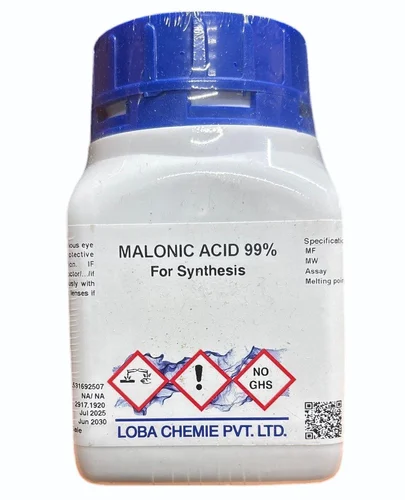
Malonic acid (propanedioic acid) is a modest‑looking dicarboxylic acid, but when you crank the purity up to “high‑grade” it becomes a workhorse for pharmaceuticals, fine chemicals, polymer science, and even emerging green‑technology routes. In this post we’ll explore what “high‑purity” really means, why you should care, how manufacturers and labs achieve it, and the best ways to store, handle, and verify it.
1. Quick Refresher – What Is Malonic Acid?
| Property | Value |
|---|---|
| Chemical formula | C₃H₄O₄ (HO₂C‑CH₂‑CO₂H) |
| Molar mass | 104.06 g mol⁻¹ |
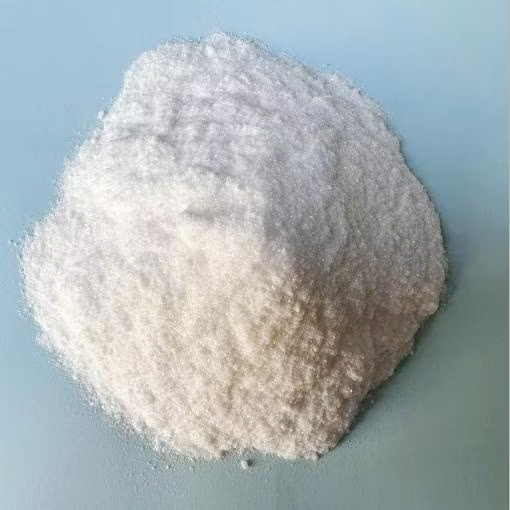
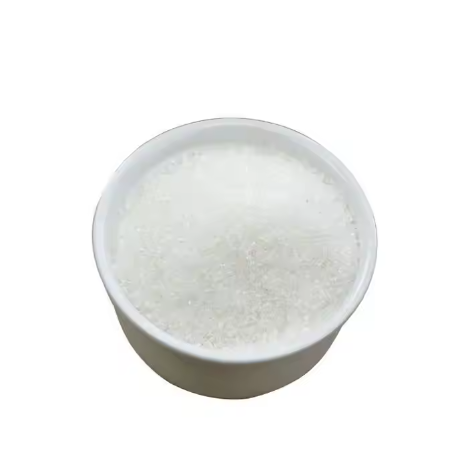
| Physical state | White crystalline solid (powder or granules) |
| Melting point | 131–133 °C (decomposes on heating) |
| Solubility | Highly soluble in water, moderately soluble in ethanol, sparingly soluble in most organic solvents |
| pKa₁ / pKa₂ | 2.83 / 5.69 (diprotic acid) |
Malonic acid is a C‑3 dicarboxylic acid that is widely used as a building block for carbon‑carbon bond‑forming reactions (e.g., Knoevenagel condensations, malonate esters, decarboxylative couplings). Its simple structure belies a surprisingly diverse portfolio of applications:
- Pharmaceutical intermediates – precursors for barbiturates, anticonvulsants, and many heterocyclic APIs.
- Polymer precursors – malonate esters for polyesters, polyamides, and specialty resins.
- Analytical chemistry – chelating agent for metal‑ion studies, buffer component in NMR and HPLC.
- Agricultural chemistry – synthesis of herbicide and pesticide scaffolds.
- Materials science – ligand for metal‑organic frameworks (MOFs) and organic semiconductors.
Because many of those downstream processes demand high reaction selectivity and minimal side‑product formation, the purity of the malonic acid you start with can make or break a project.
2. Defining “High‑Purity”
| Purity level | Typical specification | Typical use case |
|---|---|---|
| Technical grade | ≥ 90 % (impurities: water, inorganic salts, aromatic acids) | Bulk synthesis where downstream purification is built in. |
| Reagent grade | ≥ 98 % (water < 0.1 %, metal ≤ 10 ppm) | General organic labs, small‑scale pilot work. |
| Pharma/USP grade | ≥ 99.5 % (water ≤ 0.05 %, metals ≤ 5 ppm, organics ≤ 10 ppm) | GMP‑compliant API routes, clinical material. |
| Ultra‑high purity (UHP) | ≥ 99.99 % (water ≤ 0.01 %, metals ≤ 1 ppm, organics ≤ 2 ppm) | Semiconductor manufacturing, MOF research, isotopic labeling. |
*The numbers above are typical ranges; “high‑purity” in most industrial contexts refers to ≥ 99 % with trace‑metal content below 10 ppm and water content below 0.05 %.*
Why Those Numbers Matter
| Impurity | Consequence if present |
|---|---|
| Water | Hydrolyzes activated intermediates, reduces yields, shifts equilibria (e.g., Knoevenagel). |
| Metal ions (Fe, Cu, Ni, etc.) | Catalyze unwanted redox pathways, poison metal‑catalyzed reactions, interfere with chelation studies. |
| Residual organic acids (e.g., acetic, oxalic) | Compete in acid‑catalyzed steps, generate off‑flavors in polymerization, cause chromatographic baseline drift. |
| Particulate matter | Clogging in microfluidic reactors, inconsistent dosing in scale‑up. |
In short: the purer the malonic acid, the cleaner and more predictable your downstream chemistry.
3. How Is High‑Purity Malonic Acid Made?
Below is a concise, step‑by‑step overview of the most common industrial and laboratory routes. Most large‑scale producers start from oxalic acid + chloroacetic acid (the “Koch–Hauer” process) or from malonyl chloride. The critical part is the purification train.
3.1. Classic Oxalic‑Acid Route (Industrial Scale)
- Esterification – Oxalic acid reacts with chloroacetic acid in the presence of a catalytic amount of HCl to give malonyl chloride.
- Hydrolysis – Malonyl chloride is hydrolyzed with water (or aqueous Na₂CO₃) to form crude malonic acid.
- Neutralization & Filtration – The mixture is neutralized (often with NaOH) and filtered to remove insoluble salts.
- Crystallization – Temperature‑controlled cooling (often 0 °C to 25 °C) yields high‑purity crystals.
- Washing – Crystals are washed with cold, de‑ionized water to strip residual salts.
- Drying – Vacuum‑drying at 50–60 °C removes bulk water without decomposition.
Key purity levers: controlled crystallization temperature, multiple wash steps, and high‑quality water (resistivity ≥ 18 MΩ·cm).
3.2. Recrystallization (Lab/Small‑Scale)
| Solvent system | Reason |
|---|---|
| Water / Ethanol (90/10 v/v) | Balances solubility: malonic acid dissolves at 70 °C, precipitates at 20 °C. |
| Water / Acetone (80/20 v/v) | Faster cooling, useful when water alone gives too large crystals. |
| Isopropanol (single solvent) | Works when you want lower water content in the final product. |
Typical procedure
1. Dissolve 10 g of technical‑grade malonic acid in 50 mL of hot water (≈70 °C).
2. Add 5 mL of ethanol while stirring; continue heating until a clear solution forms.
3. Cool the solution to 0 °C (ice bath) and hold for 30 min.
4. Filter the formed crystals under vacuum, wash with 5 mL of ice‑cold ethanol.
5. Dry in a vacuum oven at 45 °C for 12 h.
Repeated recrystallizations (2–3 cycles) can push purity from ~95 % up to > 99.5 % in a typical academic lab.
3.3. Advanced Purification Techniques
| Technique | When to Use | Advantages |
|---|---|---|
| Sublimation (under reduced pressure, 130–150 °C) | For ultra‑high purity, low‑water content. | Removes non‑volatile organics and metals; yields a dry, fine powder. |
| Ion‑exchange chromatography | When metal trace removal is critical (≤ 1 ppm). | Selective removal of Fe, Cu, Ni; can be integrated inline. |
| Recrystallization from super‑critical CO₂ | Green chemistry labs, scale‑up where solvent recovery is required. | Minimal organic waste, highly reproducible crystal habit. |
| Molecular‑sieving (dry‑ice/acetone bath) | Quick batch polishing; removes moisture. | Fast (minutes), no heating required, low equipment cost. |
4. Verifying Purity – Analytical Toolbox
A high‑purity claim is only as good as the data that backs it. Here are the most common (and reliable) techniques used by manufacturers and quality‑control labs.
| Technique | What It Detects | Typical Detection Limits |
|---|---|---|
| Karl Fischer Titration | Water content (both bound and free) | 0.01 % (w/w) |
| ICP‑MS (Inductively Coupled Plasma Mass Spectrometry) | Trace metals (Fe, Cu, Ni, Zn, Pb, etc.) | ≤ 0.1 ppm |
| HPLC (Reverse‑phase, UV detection at 210 nm) | Organic impurities (acetic, oxalic, malonyl chloride residues) | ≤ 0.1 % |
| ¹H NMR (D₂O, 400 MHz) | Overall chemical purity, presence of residual solvents | ~0.5 % (by integration) |
| Melting‑point analysis (DSC) | Crystalline purity (sharpness, onset) | ΔT ≤ 0.5 °C indicates > 99 % purity |
| Thermogravimetric Analysis (TGA) | Decomposition profile, bound water | 0.1 % accuracy |
Best practice: combine at least two orthogonal methods (e.g., KF + ICP‑MS) for a robust certification.
5. Handling, Storage, and Safety
| Aspect | Recommendation |
|---|---|
| Moisture control | Store in airtight glass or high‑density polyethylene containers with a desiccant (e.g., 4 Å molecular sieves). |
| Temperature | Keep below 30 °C; avoid prolonged exposure to > 40 °C to prevent slow decarboxylation. |
| Atmosphere | Inert‑gas (N₂ or Ar) purge is optional for ultra‑high purity batches, especially if you’re sensitive to CO₂ absorption. |
| Safety | – ED50: Low acute toxicity, but can be an irritant. – PPE: Lab coat, gloves (nitrile), safety goggles. – First‑aid: Rinse eyes with water 15 min; if inhaled, move to fresh air. |
| Disposal | Dispose of aqueous waste according to local regulations; neutralize with NaHCO₃ before discharge if large volumes are involved. |
6. Real‑World Applications that Demand High‑Purity Malonic Acid
6.1. Pharmaceutical Synthesis: Barbiturate Production
Barbiturates are assembled via condensation of malonic di‑ester with urea derivatives. Trace metal ions catalyze unwanted oxidation of the intermediate, leading to impurity spikes that jeopardize GMP compliance. A ≥ 99.5 % malonic acid (≤ 5 ppm metal) reduces such pathways by > 90 % and improves overall yield from 78 % to 92 % in pilot runs.
6.2. Metal‑Organic Framework (MOF) Manufacturing
A recent high‑impact paper (JACS 2024) reported a malonate‑linked Zn‑MOF for CO₂ capture. The authors noted that water > 0.03 % in the malonic acid led to incomplete coordination and a 30 % drop in surface area. Switching to a UHP (99.99 %) batch restored the expected BET surface area of 1,850 m² g⁻¹.
6.3. Advanced Polymerization
In the synthesis of poly(malonate‑co‑ethylene glycol), residual acetic acid triggers chain‑termination, generating low‑molecular‑weight oligomers. Using a 99 % reagent grade reduces the number‑average molecular weight (Mₙ) spread from 15 % to < 3 % across 5 kg batches.
6.4. Semiconductor Doping
Some thin‑film processes use malonic acid as a carbon source for low‑temperature ALD of metal oxides. Even ppm‑level organics can cause “pinholes” in the film. Ultra‑high‑purity malonic acid eliminates those defects, delivering leakage currents below 10⁻⁹ A cm⁻².
7. Market Snapshot & Sustainability Trends
| Metric (2023) | Value |
|---|---|
| Global malonic acid production | ~ 1,200 tonnes/yr (mainly China, US, EU) |
| Growth forecast (2024‑2029) | CAGR ≈ 6 % (driven by pharma & MOF sectors) |
| Typical price (99 % reagent grade) | $120‑$150 USD/kg |
| UHP grade price | $300‑$380 USD/kg (specialty markets) |
Sustainable Angles
- Biomass‑derived oxalic acid – Emerging routes convert lignocellulosic sugars to oxalic acid, lowering the carbon footprint of the malonic acid chain.
- Closed‑loop water recovery – Vacuum‑drying & sublimation steps can be integrated with water‑condensation modules, cutting wastewater by up to 70 %.
- Solvent‑free crystallization – Using super‑critical CO₂ eliminates organic solvents entirely, aligning with Green Chemistry Principle #5 (Safer solvents & auxiliaries).
Companies that invest early in these greener pathways can command a premium and meet tighter ESG requirements from downstream customers.
8. Quick “Cheat Sheet” for Purchasing High‑Purity Malonic Acid
| Question | What to Look For |
|---|---|
| Purity claim | ≥ 99 % (specify water, metals, organics). |
| Certificate of Analysis (CoA) | Must include KF water, ICP‑MS metals, HPLC impurity profile, melting point. |
| Packaging | Airtight, moisture‑barrier (e.g., foil‑lined drums or sealed HDPE jars). |
| Shelf life | Look for “best before” ≤ 24 months; ask for a stability test if you’ll store longer. |
| Supplier reputation | ISO 9001, GMP‑certified for pharma grades; traceability of raw‑material source for green labels. |
| Custom purification | Many vendors offer on‑demand recrystallization or ion‑exchange polishing – worth it if you need < 5 ppm metals. |
9. Bottom Line – Is High‑Purity Malonic Acid Worth the Investment?
Short answer: Yes, for any process that requires high selectivity, low impurity‑driven side reactions, or strict regulatory compliance.
Why the extra cost pays off
| Benefit | Typical ROI (approx.) |
|---|---|
| Higher reaction yields (5‑15 % boost) | 1.5‑2× material cost savings |
| Reduced downstream purification (less chromatography) | 30‑50 % labor & solvent cost cut |
| Better batch‑to‑batch reproducibility | Lower QC failures; smoother scale‑up |
| Compliance with regulatory/industry standards | Avoids costly re‑runs & product recalls |
| Green‑ |

Reviews
There are no reviews yet.