


Description
1. Product Overview
Formaldehyde is a widely used industrial chemical, typically supplied as an aqueous solution (formalin), composed of formaldehyde gas dissolved in water with stabilizers. It serves as a critical building block in the production of resins, adhesives, disinfectants, and numerous chemical intermediates. The key value proposition lies in its high reactivity, cost efficiency, and versatility across multiple large-scale industrial applications. Strategically, formaldehyde remains indispensable in global manufacturing supply chains, particularly in wood processing, construction materials, and chemical synthesis, due to its consistent performance and broad utility.
2. Key Specifications & Technical Characteristics
- Chemical Composition:
- Formaldehyde (CH₂O) in aqueous solution
- Water (balance)
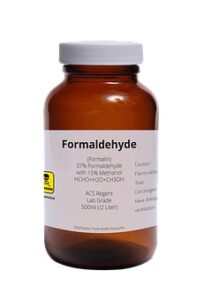
- Methanol (typically 5–15%) as stabilizer
- Purity Level / Grade:
- Industrial grade
- Typical concentration: 37%–50% formaldehyde (formalin)
- Custom concentrations available upon request
- Physical Characteristics:
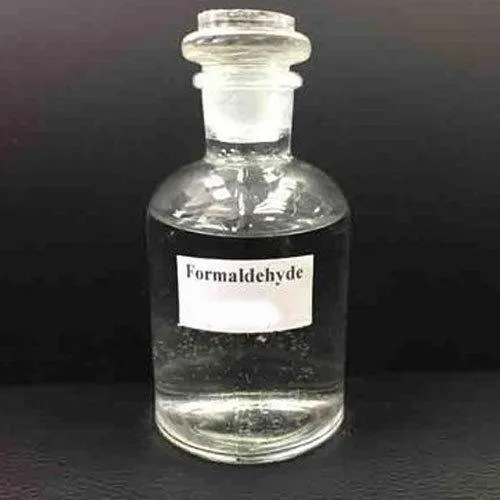
- Liquid form
- Color: Clear, colorless
- Odor: Strong, pungent
- Density: Approx. 1.08–1.15 g/cm³ (depending on concentration)
- Fully miscible with water
- Packaging Options:
- Bulk tanker trucks
- ISO tank containers
- IBC containers (1,000L)
- Drums (200L)
- Shelf Life:
- Typically 3–6 months under proper storage conditions
- Store in cool, well-ventilated, sealed containers to prevent polymerization
3. Core Industrial Applications
Primary Industries:
- Wood processing and panel manufacturing
- Chemical and petrochemical industries
- Textile and leather processing
- Healthcare and disinfectant production
- Construction materials manufacturing
Operational Use Cases:
- Production of urea-formaldehyde, phenol-formaldehyde, and melamine resins
- Adhesives and binders for plywood, MDF, and particleboard
- Intermediate in the synthesis of chemicals such as hexamine and pentaerythritol
- Disinfectant and preservative formulations
- Textile finishing and wrinkle-resistant treatments
Performance & Cost Advantages:
Formaldehyde offers superior reactivity and binding efficiency compared to alternative aldehydes, enabling high-performance resin systems at lower cost. Its scalability and compatibility with large-volume industrial processes make it a preferred choice for mass production environments. Buyers benefit from consistent product quality, process efficiency, and competitive pricing across diverse applications.
4. Competitive Advantages
- Quality Consistency: Controlled concentration levels with batch-wise quality assurance
- Supply Reliability: Continuous production from established chemical manufacturing infrastructure
- Logistics Capability: Global bulk distribution via ISO tanks and certified chemical transport systems
- Price Competitiveness: Cost-effective feedstock for large-scale industrial applications
- Sustainability Benefits: Efficient production processes with opportunities for emission control and recycling integration
- Technical Documentation: Certificate of Analysis (COA), Safety Data Sheet (SDS), and regulatory compliance documentation available
Positioned as a strategic sourcing decision, formaldehyde enables industrial buyers to optimize production efficiency, maintain consistent product performance, and secure reliable supply for high-volume manufacturing operations.
5. Commercial & Supply Information
- Minimum Order Quantity (MOQ): BULK 20MT
- Loading Capacity (MT per container): Approximately 20–25 MT per 20’ ISO tank container (depending on concentration and density)



Reviews
There are no reviews yet.