


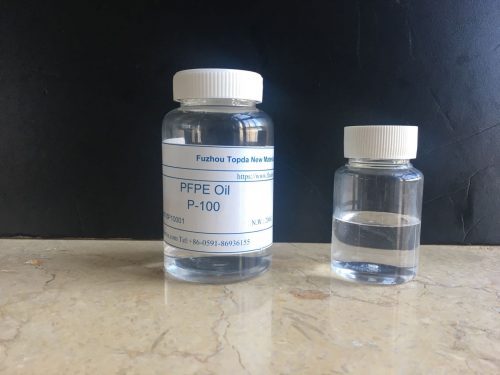
Description
Perfluoropolyether (PFPE) Lubricants: The Ultimate Solution for Extreme Environments
In the relentless march of technological progress, industries constantly push the boundaries of performance, demanding materials that can withstand ever-more challenging conditions. When it comes to lubrication, where conventional oils and greases break down, evaporate, or react, a unique class of synthetic lubricants emerges as the undisputed champion: Perfluoropolyether (PFPE) lubricants.
Often referred to simply as “fluorinated lubricants,” PFPEs are synthetic, non-flammable, and chemically inert fluids that stand apart due to their remarkable stability and performance across an astonishing range of temperatures and aggressive environments.
What are PFPE Lubricants?
At their core, PFPEs are long-chain polymers composed of carbon, fluorine, and oxygen atoms. The secret to their unparalleled performance lies in the incredibly strong carbon-fluorine (C-F) bonds and the stable ether linkages (-O-) that form their backbone. Unlike traditional petroleum-based or even most synthetic hydrocarbons, PFPEs contain no hydrogen atoms, which makes them impervious to many chemical reactions that plague other lubricants.
These fluorinated polymers are typically clear, colorless, and odorless fluids or greases (when thickened with PTFE or other inert fillers).
Unparalleled Properties and Advantages
PFPE lubricants are chosen when standard lubricants simply won’t do. Their unique molecular structure bestows them with a suite of properties that make them indispensable for critical applications:
- Extreme Temperature Stability: PFPEs exhibit an incredibly wide operating temperature range, typically from -80°C to over 250°C (and sometimes higher for specialized grades). They maintain their viscosity and lubricating properties without breaking down, oxidizing, or forming carbonaceous deposits.
- Chemical Inertness: This is perhaps their most defining characteristic. PFPEs are virtually non-reactive with a vast array of aggressive chemicals, including strong acids, bases, solvents, fuels, oxidizers like pure oxygen, and even nuclear radiation. This makes them ideal for environments where chemical attack would degrade conventional lubricants.
- Non-Flammability: Due to the absence of hydrogen and the high proportion of fluorine, PFPEs are inherently non-flammable and do not support combustion, even in 100% oxygen environments. This is a critical safety feature in many high-risk applications.
- Low Vapor Pressure and Vacuum Compatibility: PFPEs have extremely low vapor pressures, meaning they evaporate very slowly. This makes them perfect for high-vacuum and ultra-high-vacuum (UHV) systems, where outgassing from lubricants could contaminate equipment or impair vacuum performance.
- Excellent Dielectric Properties: They are excellent electrical insulators, making them suitable for use in electrical and electronic components.
- Long Service Life: Their inherent stability translates to an exceptionally long service life, reducing the need for frequent relubrication, minimizing downtime, and lowering maintenance costs over the equipment’s lifespan.
- Compatibility with Materials: They are generally compatible with most plastics, elastomers, and metals, though specific compatibility should always be verified for critical applications due to the variety of PFPE grades and additives.
- Cleanliness: They do not leave residues or carbon deposits, essential for cleanroom environments and precision machinery.
Key Applications
The unique properties of PFPE lubricants make them essential across a diverse range of high-performance industries:
- Aerospace & Space: For satellite mechanisms, spacecraft components, rocket engine bearings, and aircraft hydraulic systems where extreme temperatures, vacuum, and oxidative environments are present.
- Semiconductor Manufacturing: In vacuum pumps, wafer handling robots, cleanroom equipment, and lithography systems, where low outgassing, non-contamination, and thermal stability are paramount.
- Vacuum Technology: For general vacuum pumps, scientific instruments (e.g., mass spectrometers, electron microscopes), and thin-film deposition systems.
- Automotive (Specialized): In high-performance vehicle components, such as constant velocity joints (CV joints) in racing cars, or specific bearing applications exposed to extreme heat.
- Medical Devices: For MRI machines, surgical tools, and laboratory equipment where cleanliness, non-reactivity, and resistance to sterilization processes are crucial.
- Chemical Processing: In pumps, valves, and seals handling aggressive chemicals, solvents, and corrosive gases.
- Oxygen Systems: In applications involving pure oxygen, such as diving equipment, medical oxygen delivery, and specialized industrial processes, where non-flammability is non-negotiable.
- Cleanroom Environments: Anywhere particulate contamination must be minimized, as PFPEs do not attract dust and do not outgas harmful vapors.
Considerations and Limitations
While PFPE lubricants offer unparalleled performance, they do come with a primary consideration:
- Cost: PFPEs are significantly more expensive than conventional mineral oils or even most synthetic lubricants. Their cost is justified by their superior performance and extended service life in critical applications where alternatives simply fail.
- Application Specificity: While versatile, choosing the correct PFPE grade (viscosity, additives, and base fluid structure) is crucial for optimal performance in specific applications.
Conclusion
Perfluoropolyether (PFPE) lubricants are true marvels of material science, providing robust and reliable lubrication where no other fluid can. Their exceptional thermal stability, chemical inertness, and non-flammability make them indispensable for critical operations across aerospace, semiconductor manufacturing, vacuum technology, and beyond. As industries continue to reach for new frontiers, PFPE lubricants will undoubtedly remain the ultimate solution for ensuring performance and reliability in the most extreme and demanding environments on Earth and in space.



Reviews
There are no reviews yet.