
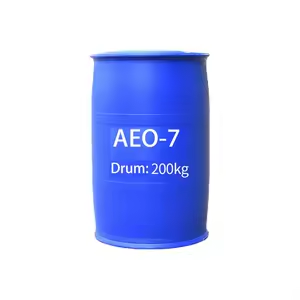
Description
The Science of Versatility: A Deep Dive into Ethoxylated Fatty Alcohols
In the world of industrial chemistry, few ingredients are as ubiquitous yet unsung as Ethoxylated Fatty Alcohols (EFAs). If you look at the ingredient label of your favorite shampoo, the heavy-duty degreaser in your garage, or the laundry detergent in your cupboard, chances are you’ll find these powerful non-ionic surfactants hard at work.
But what exactly are they, and why have they become the backbone of modern formulation?
What are Ethoxylated Fatty Alcohols?
Ethoxylated fatty alcohols are a class of non-ionic surfactants produced through a process called ethoxylation. The process involves reacting a fatty alcohol (derived from either natural sources like palm and coconut oil or synthetic sources like petroleum) with ethylene oxide.
The result is a molecule with two distinct personalities:
- The Lipophilic Tail: A long-chain hydrocarbon (the fatty alcohol) that loves oil.
- The Hydrophilic Head: A polyoxyethylene chain that loves water.
By adjusting the length of the fatty alcohol chain and the number of “moles” of ethylene oxide added, chemists can “tune” the molecule to perform specific tasks, ranging from high-foaming detergents to low-foam emulsifiers.
Why Formulators Choose EFAs
The popularity of ethoxylated fatty alcohols isn’t accidental. They offer a suite of functional benefits that make them superior to many alternatives:
1. Exceptional Chemical Stability
Unlike many anionic surfactants, EFAs are non-ionic, meaning they carry no electrical charge. This makes them incredibly stable in the presence of “hard water” minerals (like calcium and magnesium) and allows them to remain effective across a wide range of pH levels.
2. The “HLB” Advantage
Formulators use the Hydrophilic-Lipophilic Balance (HLB) scale to choose the right ingredient. Because the ethoxylation process is highly controllable, manufacturers can produce EFAs with specific HLB values.
- Low HLB (3–6): Excellent for water-in-oil emulsification.
- High HLB (13–15): Perfect for high-performance detergents and solubilizers.
3. Synergy with Other Ingredients
EFAs are the “team players” of the chemical world. They are compatible with anionic, cationic, and other non-ionic surfactants, often enhancing the overall performance of a formula when used in a blend.
Key Applications Across Industries
The versatility of EFAs allows them to cross into almost every major industrial sector:
- Home & Personal Care: They are the primary cleaning agents in laundry detergents and dish soaps. In cosmetics, they act as emulsifiers, ensuring that the oil and water in your lotions and creams stay perfectly blended.
- Agriculture: EFAs serve as wetting agents in pesticides and herbicides, ensuring that the active ingredients spread evenly across leaf surfaces rather than beading up and rolling off.
- Textile Industry: They are used as scouring agents to remove oils and impurities from fibers during processing, and as leveling agents to ensure even dye distribution.
- Paints & Coatings: They improve the “flow and level” of paints, ensuring a smooth finish and helping to stabilize pigment dispersions.
The Sustainability Factor
In the modern market, performance is no longer the only metric—sustainability is paramount. The industry is currently seeing a significant shift toward bio-based fatty alcohols. By sourcing the “fatty” part of the molecule from RSPO-certified palm kernel oil or coconut oil, manufacturers can produce ethoxylates with a significantly lower carbon footprint.
Furthermore, most ethoxylated fatty alcohols are readily biodegradable, making them a preferred choice for “green” cleaning products that must meet strict environmental standards.
Conclusion
Ethoxylated fatty alcohols are the quiet workhorses of the chemical industry. Their ability to bridge the gap between oil and water, combined with their stability and tunable nature, makes them indispensable. Whether you are formulating a gentle facial cleanser or a high-strength industrial degreaser, EFAs provide the molecular precision required to get the job done.
Looking for the right EFA for your next project? When selecting an ethoxylated fatty alcohol, always consider the carbon chain length (e.g., C12-14 vs. C16-18) and the degree of ethoxylation (the “moles”) to ensure your product achieves the perfect balance of solubility and cleaning power.



Reviews
There are no reviews yet.