
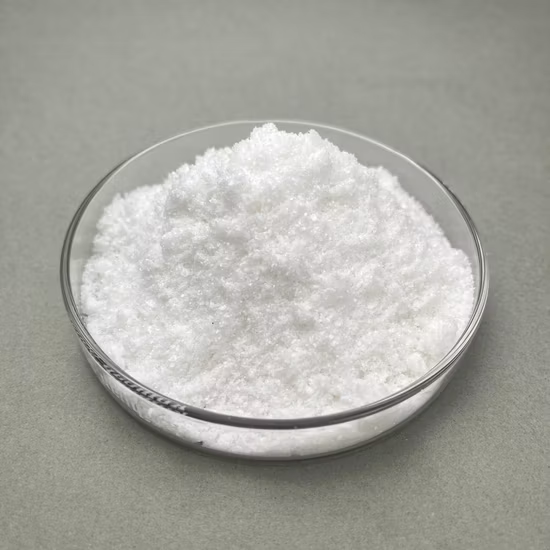
Description
Dithiocarbamates: Versatile Compounds with Applications Spanning Agriculture, Industry, and Medicine
Dithiocarbamates are a fascinating class of organosulfur compounds characterized by the general formula R1R2NCS2−M+, where R1 and R2 represent organic groups, M represents a metal, and the core structure is based on dithiocarbamic acid. These compounds possess a unique combination of chemical and physical properties, making them incredibly versatile and finding applications in diverse fields ranging from agriculture to manufacturing and even medicine.
A Look at the Structure and Properties
The defining feature of dithiocarbamates is the presence of the dithiocarbamate moiety (-NCS2). This functionality allows them to act as ligands, readily coordinating with a wide variety of metal ions. The nature of the R1 and R2 groups significantly influences the compound’s properties, affecting its solubility, reactivity, and biological activity.
Dithiocarbamates can exist as salts or as metal complexes. The metal in the complex often dictates the compound’s specific application. For instance, zinc dithiocarbamates are commonly used as vulcanization accelerators in the rubber industry, while copper dithiocarbamates are employed as fungicides.
Agricultural Applications: Protecting Crops from Fungal Diseases
Perhaps the most well-known application of dithiocarbamates lies in agriculture. They are widely used as fungicides to protect a vast array of crops from fungal diseases, including blights, rusts, and mildews. Common examples include mancozeb, zineb, and thiram.
These fungicides work by interfering with fungal metabolism, often by disrupting enzyme activity through metal chelation. Their broad-spectrum activity and relatively low cost have made them a staple in crop protection programs for decades. However, concerns regarding potential environmental impact and human health have led to ongoing research and regulations surrounding their use, emphasizing the importance of responsible application and monitoring.
Industrial Applications: From Rubber Production to Metal Extraction
The versatility of dithiocarbamates extends far beyond agriculture. They play crucial roles in various industrial processes:
- Rubber Industry: Dithiocarbamates, particularly zinc dithiocarbamates, are vital as accelerators in the vulcanization of rubber. They facilitate the cross-linking of polymer chains, resulting in stronger, more durable rubber products.
- Mining and Metal Extraction: Certain dithiocarbamates act as chelating agents in the extraction and recovery of metals from ores. They selectively bind to metal ions, allowing for their separation and purification.
- Polymer Chemistry: Dithiocarbamates are used as chain transfer agents in radical polymerization, allowing for control over the molecular weight and properties of polymers.
- Oil Industry: They can be used as additives in lubricating oils to protect against wear and corrosion.
Emerging Biomedical Applications: A Promising Frontier
The potential of dithiocarbamates in the biomedical field is increasingly being recognized. Research has indicated their potential use in:
- Metal Chelation Therapy: Dithiocarbamates can effectively bind to and remove heavy metals from the body, making them potential candidates for treating metal poisoning.
- Anticancer Agents: Some dithiocarbamate derivatives have shown promising anticancer activity in preclinical studies, demonstrating potential in inhibiting tumor growth and metastasis.
- Antiviral Agents: Research suggests that certain dithiocarbamates can inhibit viral replication, offering a potential avenue for developing antiviral therapies.
Challenges and Future Directions
Despite their widespread use, dithiocarbamates face ongoing scrutiny regarding their environmental impact and potential health risks. Concerns about degradation products and the development of fungicide resistance in fungal populations are prompting research into more sustainable and effective alternatives.
Future research will likely focus on:
- Developing more environmentally friendly dithiocarbamate formulations: Reducing the potential for environmental contamination and minimizing the impact on non-target organisms.
- Synthesizing novel dithiocarbamate derivatives with improved efficacy and selectivity: Targeting specific fungal pathogens and reducing the risk of resistance development.
- Exploring the full potential of dithiocarbamates in biomedical applications: Developing new therapies for metal poisoning, cancer, and viral infections.
Conclusion
Dithiocarbamates are a remarkable collection of compounds with a rich history and a promising future. Their unique chemical properties have made them invaluable in agriculture, industry, and increasingly, in medicine. As research continues and new applications are discovered, dithiocarbamates are poised to play an even more significant role in various aspects of our lives, provided that their use is managed responsibly and sustainably.

Reviews
There are no reviews yet.