
Description
Diethyl Carbonate: The Versatile Chemical You Might Not Know You’re Using
We often talk about the amazing innovations and groundbreaking discoveries driven by chemistry. From the medicines that heal us to the materials that build our world, it’s all thanks to the power of chemical compounds. Today, we’re going to shine a spotlight on a particularly versatile and surprisingly common player in this arena: Diethyl Carbonate (DEC).
You might be thinking, “Diethyl Carbonate? Never heard of it.” But chances are, you’ve interacted with or benefited from this chemical in ways you don’t even realize. So, let’s dive in and uncover the fascinating world of DEC!
What Exactly is Diethyl Carbonate?
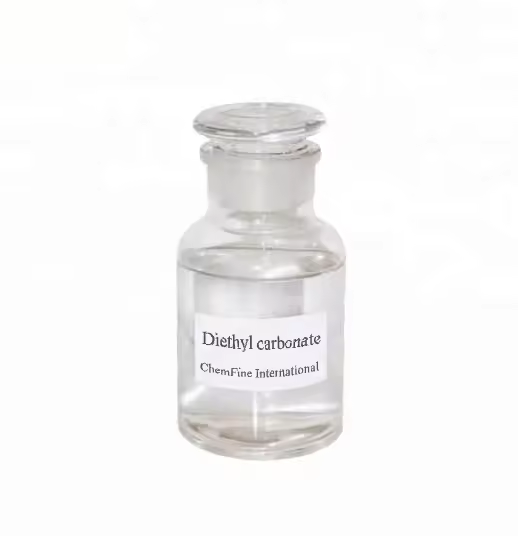
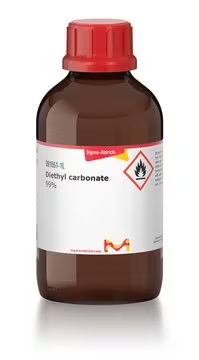
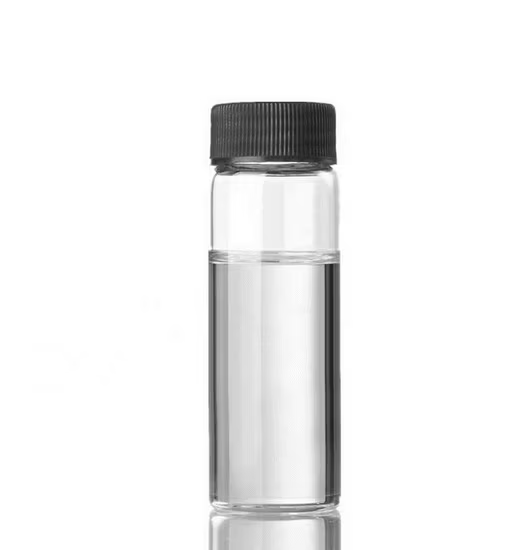
At its core, Diethyl Carbonate is an organic compound with the chemical formula (C₂H₅O)₂CO. It’s a clear, colorless liquid with a mild, pleasant odor. Chemically speaking, it’s an ester of carbonic acid and ethanol. Think of it as a building block that can be used to create or modify other important substances.
Why is DEC So Special? Its Multiplying Talents
The real magic of Diethyl Carbonate lies in its diverse applications. It’s not just a one-trick pony; DEC is a true chemical chameleon, adapting to various roles across different industries. Here are some of its most prominent uses:
- The Powerhouse of Lithium-ion Batteries: This is perhaps DEC’s most significant claim to fame in recent years. It’s a crucial component in the electrolyte solutions of lithium-ion batteries, the very batteries that power our smartphones, laptops, electric vehicles, and so much more! DEC helps facilitate the movement of lithium ions between the electrodes, enabling the battery to store and release energy efficiently and safely. Its low viscosity and relatively high dielectric constant make it an excellent solvent in this demanding application.
- A Greener Alternative in Organic Synthesis: In the world of chemistry, DEC is increasingly recognized as a “green solvent”. This means it’s a more environmentally friendly option compared to many traditional solvents. It’s less toxic, biodegradable, and has a lower overall environmental impact. This makes it an attractive choice for chemists looking to develop more sustainable chemical processes in pharmaceuticals, agrochemicals, and specialty chemicals. It can act as a methylenating agent or a carbonylation reagent, allowing for the creation of complex molecules with reduced waste.
- Fuel Additive for Improved Performance: DEC can also find its way into our fuel tanks. As a fuel additive, it can help to improve the octane rating of gasoline, leading to more efficient combustion and potentially reducing emissions. It can also act as a solvent for other additives, ensuring they are well-dispersed and effective.
- Cosmetics and Personal Care: Believe it or not, DEC can even be found in some cosmetics and personal care products. It can function as a solvent or a viscosity-decreasing agent, helping to create smoother textures and improve the application of products like nail polish and perfumes.
- Polymer Production: In the realm of materials science, DEC plays a role in the production of certain polymers. It can be used as a monomer or a co-monomer in the synthesis of polycarbonates and other specialty plastics, contributing to the development of new materials with unique properties.
The Future is Bright (and Likely Contains DEC)
As our world continues to demand more efficient energy storage solutions and more sustainable chemical processes, the importance of Diethyl Carbonate is only set to grow. Its role in the booming electric vehicle market and its adoption as a greener solvent in various industries point towards a promising future for this versatile compound.
So, the next time you charge your phone, drive an electric car, or even use a new cosmetic product, take a moment to appreciate the silent contributions of chemicals like Diethyl Carbonate. It’s a testament to the ingenuity of chemistry and its power to shape our modern lives in countless, often unseen, ways.
What are your thoughts on the role of chemicals like DEC in our daily lives? Share your comments below!


Reviews
There are no reviews yet.