Demulsifiers

£1,400.00

Demulsifiers: Benefits, Prescription, Nutritional Information, Ingredients

Are you curious about demulsifiers and their role in various products? In this article, we will delve into the benefits, prescription, nutritional information, and ingredients of demulsifiers. Let’s explore everything you need to know about these essential components.

What are Demulsifiers?

Demulsifiers are substances that help separate emulsions into their individual components. They are commonly used in industries such as food processing, pharmaceuticals, and petroleum to enhance the quality and stability of products. By breaking down emulsions, demulsifiers help improve the efficiency and effectiveness of various processes.

Benefits of Demulsifiers

  1. Enhanced Product Quality: Demulsifiers play a crucial role in maintaining the quality of products by preventing the formation of unwanted emulsions.
  2. Improved Process Efficiency: By promoting the separation of emulsions, demulsifiers help streamline production processes and reduce wastage.
  3. Extended Product Shelf Life: The use of demulsifiers can prolong the shelf life of products by preventing the growth of harmful microorganisms.
  4. Cost-Effective Solution: Incorporating demulsifiers into manufacturing processes can lead to cost savings by optimizing production and reducing downtime.

Prescription of Demulsifiers

Demulsifiers are typically prescribed by industry experts based on the specific requirements of a product or process. The dosage and application of demulsifiers may vary depending on factors such as the type of emulsion, desired outcome, and processing conditions. It is essential to consult with professionals to determine the appropriate prescription of demulsifiers for optimal results.

Nutritional Information

Demulsifiers are not typically consumed directly as they are used in industrial applications. Therefore, nutritional information may not be applicable in this context. However, it is essential to consider the impact of demulsifiers on the overall nutritional value of products in which they are used.

Ingredients of Demulsifiers

Demulsifiers can be derived from various sources, including natural and synthetic compounds. Common ingredients found in demulsifiers may include surfactants, polymers, solvents, and other specialized compounds. It is crucial to carefully assess the ingredients used in demulsifiers to ensure compatibility with specific applications and regulatory requirements.
In conclusion, demulsifiers play a vital role in various industries by improving product quality, enhancing process efficiency, and extending shelf life. Understanding the benefits, prescription, nutritional information, and ingredients of demulsifiers is essential for optimizing their use in manufacturing processes. Consultation with industry experts and careful consideration of ingredients are key steps in leveraging the full potential of demulsifiers.

Description

Demulsifiers: Breaking Down Barriers in Emulsions

Emulsions, those intimate mixtures of two immiscible liquids like oil and water, are ubiquitous in various industries, from food processing and cosmetics to petroleum refining and pharmaceuticals. While some emulsions are desired and carefully crafted, others are undesirable and can cause significant operational problems or reduce product quality. This is where demulsifiers, specialized chemicals designed to destabilize and break down emulsions, come into play.

Understanding Emulsions and Their Stability

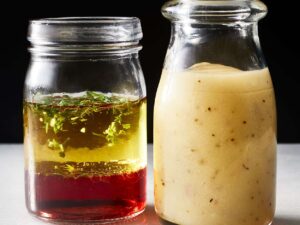
Before diving into demulsifiers, it’s crucial to understand what makes emulsions stable in the first place. An emulsion is formed when one liquid (the dispersed phase) is finely distributed within another (the continuous phase). Thermodynamics favors the separation of these liquids, but emulsions can persist due to several factors:

  • Interfacial Tension: The surface tension between the two liquids resists mixing.
  • Emulsifiers: These molecules, often surfactants, reduce interfacial tension and create a film around the dispersed droplets, preventing them from coalescing.
  • Viscosity: Higher viscosity of the continuous phase can hinder droplet movement and coalescence.
  • Electrical Charges: Charged droplets repel each other, preventing them from combining.

The Role of Demulsifiers

Demulsifiers, also known as emulsion breakers, are specifically designed to counteract these stabilizing factors and promote the separation of the oil and water phases. They achieve this through a variety of mechanisms:

  • Neutralizing Emulsifiers: Demulsifiers can compete with existing emulsifiers for space at the oil-water interface, effectively displacing them. This weakens the protective film around the dispersed droplets.
  • Bridging: Some demulsifiers can bind to multiple droplets, creating bridges that facilitate their aggregation and subsequent coalescence.
  • Changing Interfacial Tension: By altering the interfacial tension between the oil and water phases, demulsifiers can reduce the energy required for the droplets to coalesce.
  • Flocculation: Demulsifiers can promote the flocculation of the dispersed droplets, causing them to clump together and settle out of the continuous phase.
  • Gravity: Increased droplet size due to coalescence, allows for the separated phase to settle out due to the force of gravity.

Types of Demulsifiers

Demulsifiers come in a variety of chemical compositions, each tailored to specific emulsion properties. Common types include:

  • Anionic Demulsifiers: These charged molecules are particularly effective in breaking emulsions stabilized by cationic emulsifiers or emulsions with positively charged droplets.
  • Cationic Demulsifiers: Conversely, these are used for emulsions stabilized by anionic emulsifiers or those with negatively charged droplets.
  • Non-ionic Demulsifiers: These are often preferred for their versatility and effectiveness across a wider range of conditions. They typically consist of ethoxylated alcohols or phenols.
  • Polymeric Demulsifiers: These high-molecular-weight compounds can be very effective at bridging droplets and promoting flocculation.

Applications of Demulsifiers

Demulsifiers find widespread applications in various industries:

  • Crude Oil Processing: In the petroleum industry, demulsifiers are crucial for separating water from crude oil, improving oil quality and preventing corrosion in pipelines and refineries.
  • Wastewater Treatment: Demulsifiers are used to separate oil and grease from wastewater, facilitating its treatment and disposal.
  • Food Processing: In the food industry, demulsifiers can be used to separate oil from aqueous solutions, such as in vegetable oil refining.
  • Cosmetics: Demulsifiers are used in the formulation and processing of various cosmetic products, ensuring stability and desired texture.
  • Pharmaceuticals: Demulsifiers play a role in the production of certain pharmaceutical formulations, particularly those involving emulsions.

Selecting the Right Demulsifier

Choosing the right demulsifier for a specific application is critical. Factors to consider include:

  • Type of Emulsion: Identifying the nature of the oil and water phases, the type of emulsifiers present, and the stability mechanisms at play.
  • Operating Conditions: Temperature, pH, salinity, and other process parameters can influence the effectiveness of a demulsifier.
  • Dosage: Determining the optimal concentration of demulsifier required to achieve desired separation.
  • Environmental Considerations: Selecting demulsifiers that are environmentally friendly and comply with relevant regulations.

Future Trends

Research and development in the field of demulsifiers are focused on:

  • Developing Environmentally Benign Demulsifiers: Moving towards more sustainable and biodegradable alternatives.
  • Improving Demulsifier Efficiency: Enhancing the performance of demulsifiers to reduce dosage requirements and treatment costs.
  • Developing Novel Demulsifier Chemistries: Exploring new chemical structures and mechanisms for emulsion breaking.

Conclusion

Demulsifiers are essential tools for managing emulsions in a wide range of industries. By understanding the principles of emulsion stability and the mechanisms of demulsification, industries can effectively address emulsion-related challenges, optimize processes, and improve product quality. As environmental concerns grow, the development and adoption of environmentally friendly and highly efficient demulsifiers will be crucial for sustainable practices.

Additional information

Price

per ton

Reviews

There are no reviews yet.

Be the first to review “Demulsifiers”

Your email address will not be published. Required fields are marked *

Add to cart