
Description
Cyclopentanone: The Sweet-Smelling Secret of Synthesis and Scents
Ever wondered about the hidden ingredients that give your favorite perfume its alluring depth or help forge complex pharmaceuticals? Often, the answer lies in seemingly humble organic molecules, and today, we’re shining a spotlight on one such unsung hero: Cyclopentanone.
Don’t let its simple name fool you; this five-membered ring ketone is a chemical powerhouse, boasting a fascinating duality as both a captivating aroma chemical and an indispensable building block in organic synthesis.
What Exactly is Cyclopentanone?
At its core, Cyclopentanone is a cyclic ketone with the chemical formula C5H8O. Imagine a ring of five carbon atoms, with one of those carbons double-bonded to an oxygen atom (the ketone group). This unique structure gives it a distinct set of chemical properties and makes it highly desirable across various industries.
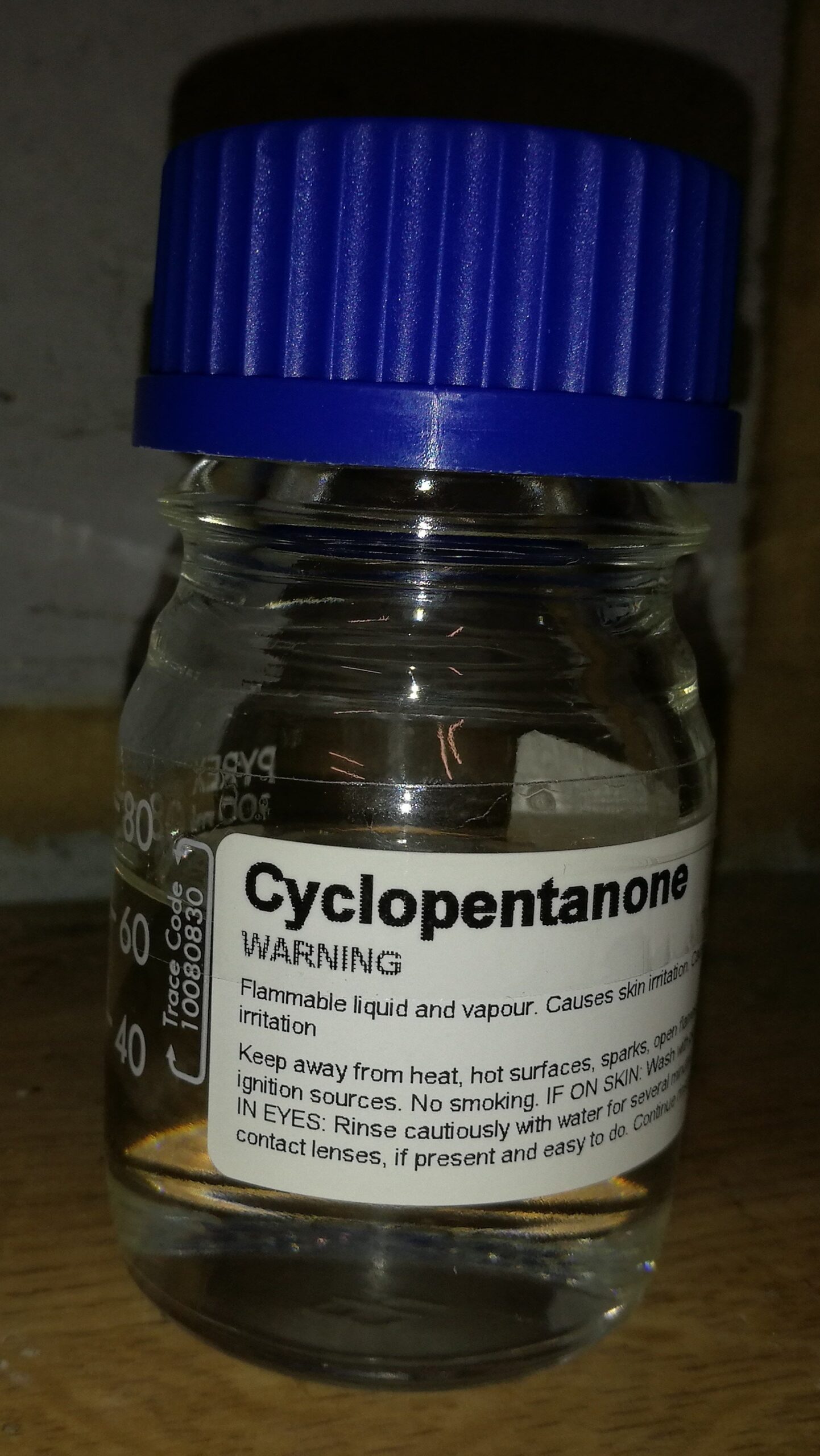
Physically, it’s a colorless liquid. But its most striking feature for many is its distinct aroma…
The Scent of Science: Aromatic Applications
Indeed, Cyclopentanone boasts a fascinating scent profile that makes it a star in the world of perfumery and flavors. It’s often described as having a:
- Sweet, Minty, or Camphoraceous note: Providing a refreshing and clean character.
- Fruity undertone: Adding a subtle sweetness and brightness.
- Jasmine-like nuance: At certain concentrations, it can contribute to floral accords, particularly those reminiscent of jasmine.
This versatility means you’ll find Cyclopentanone (or its derivatives) in:
- Fine Fragrances: Contributing freshness, green notes, or enhancing floral bouquets.
- Soaps and Detergents: Imparting a clean, pleasant aroma.
- Cosmetics: Used in various personal care products for its scent.
- Food Flavorings: Though typically in very small amounts, it can add nuance to certain fruit or mint profiles.
Its ability to be subtle yet impactful makes it a valuable tool for perfumers looking to create complex and memorable scents.
Beyond the Aroma: A Chemical Chameleon
But to pigeonhole Cyclopentanone as merely a scent provider would be a disservice. Its true chemical prowess lies in its reactivity as a versatile building block for more complex molecules. The ketone group is a powerful functional handle, allowing chemists to perform a wide array of reactions, including:
- Nucleophilic Additions: Adding various groups across the carbonyl double bond.
- Condensation Reactions: Forming new carbon-carbon bonds.
- Ring Expansions or Contractions: Modifying the size of the carbon ring.
This makes Cyclopentanone an essential intermediate in the synthesis of:
- Pharmaceuticals: Used to create precursors for various drugs, including anti-inflammatory agents, cardiovascular medicines, and more.
- Agrochemicals: Playing a role in the synthesis of certain pesticides, herbicides, and other agricultural chemicals.
- Polymers and Materials: It can be used as a starting material to create monomers for certain specialized plastics, resins, and fibers. For instance, it’s a precursor in the production of glutaric acid, which in turn can be used for polyesters and polyamides.
- Other Specialty Chemicals: Its cyclic structure and reactivity make it ideal for creating complex organic compounds with specific functionalities.
A Glimpse into its Creation
Industrially, Cyclopentanone is commonly produced through the dehydrogenation or oxidation of cyclopentanol. Various methods also exist that involve the cyclization of linear precursors, highlighting the ingenuity of synthetic organic chemistry in creating this valuable compound.
Safety First
Like many organic solvents, Cyclopentanone is flammable and can be an irritant to skin and eyes. Proper handling, ventilation, and safety precautions are always paramount in its use and storage within industrial and laboratory settings.
Conclusion
From enhancing the fragrant bouquet of a high-end perfume to serving as the foundational block for life-saving medicines and advanced materials, Cyclopentanone reminds us that even seemingly simple molecules can hold immense power and potential. It’s a testament to the elegant ingenuity found within the world of chemistry, where a small ring with a double-bonded oxygen can open up a universe of possibilities. So, the next time you catch a sweet, minty whiff or ponder the origins of a complex chemical structure, spare a thought for the remarkable Cyclopentanone!


Reviews
There are no reviews yet.