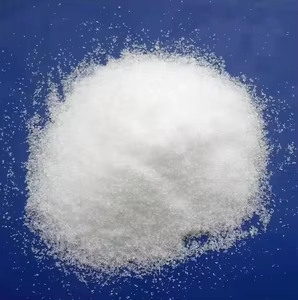
Sodium dodecylbenzene sulfonate

£64.00

## Sodium dodecylbenzenesulfonate (SDBS)

Sodium dodecylbenzenesulfonate, often abbreviated as SDBS, is a type of **anionic surfactant**. It consists of a hydrophobic dodecyl (C12) alkyl chain attached to a hydrophilic benzenesulfonate group, with a sodium counterion. It is widely used in detergents and various industrial formulations due to its effectiveness at reducing surface tension and stabilizing emulsions.

### Quick identity

– **Common names:** Sodium dodecylbenzenesulfonate, sodium dodecylbenzene sulfonate, SDBS
– **Molecular formula:** C18H29NaO3S
– **Approximate molecular weight:** ~348.5 g/mol
– **Structure:** Amphiphilic – long hydrophobic tail and hydrophilic sulfonate head

### Key properties

– **Solubility:** Highly soluble in water; limited solubility in most organic solvents
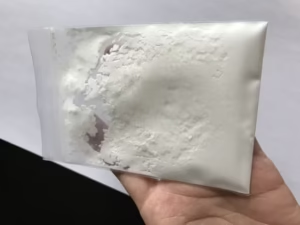
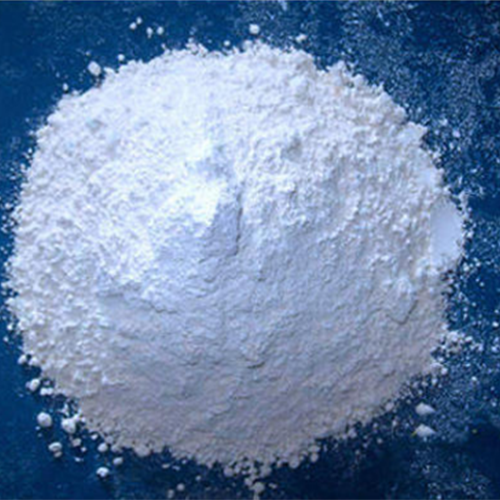
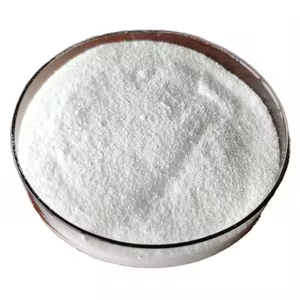
– **Appearance:** White to off-white solid or powder (often supplied as a powder or in a liquid concentrate)
– **Stability:** Generally stable under normal handling and storage conditions; stable in neutral to mildly basic or acidic media
– **Behavior in solution:** Forms micelles at sufficient concentration (acts as a surface active agent)

### Common uses

– **Detergents and cleaners:** Laundry detergents, dishwashing liquids, and household cleaners
– **Industrial applications:** Emulsifiers and wetting agents in paints, coatings, and textile processing
– **Cosmetic and personal care:** Emulsions and cleansing formulations
– **Laboratory and industrial formulations:** Surfactant for solubilizing and stabilizing mixtures

### Safety and handling

– **Health hazards:** Can cause skin and eye irritation upon contact; ingesting or inhaling fine dust may be harmful depending on exposure
– **Environmental impact:** Surfactants can affect aquatic life in high concentrations; avoid releases to the environment and follow local regulations
– **Handling tips:** Use appropriate PPE (gloves, eye protection); use in a well-ventilated area; store in a cool, dry place in the original container
– **First aid (general guidance):**
– Skin contact: rinse with plenty of water
– Eye contact: rinse cautiously with water for several minutes
– Inhalation: move to fresh air
– Ingestion: rinse mouth and seek medical advice if symptoms occur

### Environmental and regulatory notes

– SDBS is typically biodegradable under aerobic conditions, but disposal should follow local environmental regulations and guidelines
– Regulatory status varies by country; consult the relevant safety data sheet (SDS) or regulatory databases for detailed classifications

### Quick reference table

| Property | Value / Description |
|————————–|—————————————————|
| Chemical name | Sodium dodecylbenzenesulfonate |
| Formula | C18H29NaO3S |
| Molar mass | ~348.5 g/mol |
| Solubility in water | High |
| Typical uses | Detergents, cleaners, emulsifiers, coatings |
| Safety concerns | Irritation to skin/eyes; aquatic toxicity at high concentrations |
| Common forms | Powder or liquid concentrates |

### If you need more details

– I can provide: a concise Safety Data Sheet (SDS) summary tailored to your region, typical formulation concentrations for common applications, or guidance on testing and handling in your specific use case.
– If you want to explore how SDBS compares to other surfactants (for example SDS or LAS variants), I can present a quick side-by-side comparison.

Key takeaway: Sodium dodecylbenzenesulfonate is a versatile anionic surfactant widely used to reduce surface tension and stabilize emulsions in detergents and industrial formulations, with safety considerations focused on irritation and environmental impact.

Description

Sodium Dodecylbenzene Sulfonate: The Unsung Hero of Modern Cleaning

Published on February 26, 2026

When you reach for that bottle of laundry detergent, dish soap, or even a foamy shampoo, you’re probably not thinking about the chemistry that makes those bubbles pop and the grime disappear. Yet hidden behind the glossy label is a workhorse molecule that has quietly transformed the way we clean our homes, bodies, and industrial equipment: sodium dodecylbenzene sulfonate (SDBS).

In this post we’ll unpack what SDBS is, why it’s so effective, where you’ll find it, and what the latest research says about its safety and environmental footprint. By the end, you’ll have a clearer picture of the chemical that’s keeping our world spotless—one surfactant at a time.


1. What Exactly Is Sodium Dodecylbenzene Sulfonate?

Chemical Basics

  • IUPAC name: Sodium 4-(dodecyl)benzenesulfonate
  • Molecular formula: C₁₈H₂₉NaO₃S
  • Molecular weight: 348.47 g·mol⁻¹
  • Structure: A long 12‑carbon aliphatic chain (the “dodecyl” part) attached to a benzene ring that carries a sulfonate group, balanced by a sodium cation.

In layman’s terms, SDBS is an anionic surfactant—a molecule that carries a negative charge in water. The dual nature of its structure (hydrophobic tail + hydrophilic head) lets it lower surface tension, break up oil droplets, and keep them suspended in water. That’s the heart of any cleaning process.

How It Works – A Quick Science Recap

Step What Happens Why It Matters
Adsorption The hydrophobic tail latches onto oily stains, while the sulfonate head stays in the water. Creates a bridge between water and oil.
Micelle Formation Above a certain concentration (the critical micelle concentration, ~0.01 % w/v for SDBS), molecules aggregate into spherical micelles. Micelles encapsulate oil droplets, keeping them solvated and easy to rinse away.
Foam Generation Gas bubbles become stabilized by a film of surfactant molecules. Foam helps distribute the surfactant evenly across surfaces and improves user perception of cleaning power.

2. Where Do We See SDBS in Everyday Life?

Product Category Typical Use Why SDBS Is Chosen
Laundry Detergents Primary surfactant for removing grease and body oils Highly effective at low concentrations; works well with enzymes and bleach.
Dishwashing Liquids & Pods Degreasing pots, pans, and dishes Strong grease‑cutting ability and excellent foam control.
Shampoos & Body Washes Cleansing hair and skin Provides gentle foaming while being compatible with conditioners and moisturizers.
Industrial Cleaners Heavy‑duty degreasers for metal, automotive parts, and printing equipment Robust performance in hard water and high‑temperature environments.
Agricultural Formulations Wetting agent for herbicide and pesticide sprays Improves spreading and penetration of active ingredients.

Fun fact: Approximately 70 % of the global surfactant market is made up of anionic surfactants, and SDBS accounts for a large chunk of that share.


3. Manufacturing: From Benzene to a Household Staple

  1. Alkylation – Benzene is alkylated with a long‑chain dodecyl chloride (or bromide) to give dodecylbenzene.
  2. Sulfonation – The aromatic ring is sulfonated with sulfuric acid, forming dodecylbenzene sulfonic acid.
  3. Neutralization – The acid is neutralized with sodium hydroxide, giving the sodium salt—SDBS.

Modern plants employ continuous flow reactors and process intensification to reduce waste, lower energy consumption, and cut down on by‑product formation. Because the final product is a simple salt, purification is straightforward: crystallization, washing, and drying yield a white powder that dissolves readily in water.


4. Safety Profile: What the Research Says

Aspect Findings
Human Toxicity Acute oral LD₅₀ in rats ≈ 2 g kg⁻¹ (low toxicity). Skin irritation is mild to moderate; eye irritation is possible at high concentrations.
Biodegradability OECD 301B (CO₂ evolution) tests show > 96 % degradation within 28 days—classified as “readily biodegradable.”
Ecotoxicity LC₅₀ for Daphnia magna ≈ 5 mg L⁻¹ (moderate). However, rapid biodegradation reduces long‑term aquatic impact.
Regulatory Status Listed on the EU’s Cosmetic Ingredient Database (CIDs) and approved for use in cleaning products worldwide. No major restrictions, though concentrations in cosmetics are capped (typically ≤ 5 % w/w).

Bottom line: SDBS is considered safe for the intended uses, provided manufacturers follow concentration guidelines and include proper labeling for skin‑sensitive individuals.


5. Environmental Footprint – The Good, the Bad, and the Ongoing Work

The Good

  • Readily biodegradable: Most of it disappears within weeks in wastewater treatment plants.
  • Low bioaccumulation potential: Its charged nature prevents it from building up in organisms.

The Bad

  • High production volume → significant raw material (benzene, a petrochemical) demand.
  • Aquatic toxicity at high concentrations: In case of accidental spills or over‑dosing, short‑term toxicity to fish and invertebrates can occur.

What’s Changing?

Innovation Impact
Green Feedstocks Researchers are exploring bio‑based dodecylbenzene derived from lignin or fatty acids, cutting reliance on fossil benzene.
Enzymatic Sulfonation Pilot projects use engineered sulfonate‑transferases to replace harsh sulfuric acid, reducing waste.
Enhanced Bioremediation Bio‑augmentation with SDBS‑degrading bacteria (e.g., Pseudomonas putida) improves degradation in contaminated sites.

Takeaway: While SDBS isn’t perfect, the industry is actively moving toward greener synthesis routes and smarter waste‑treatment strategies.


6. DIY Spotlight: Making a Simple SDBS‑Based Cleaner at Home

Disclaimer: This recipe uses commercially available SDBS powder (often sold as “linear alkylbenzene sulfonate” in bulk). Follow safety precautions—wear gloves, goggles, and work in a well‑ventilated area.

Ingredients

  • 30 g SDBS (≈ 8 % w/v)
  • 500 mL warm distilled water
  • 20 mL white vinegar (optional for extra grease‑cutting)
  • 5 mL essential oil (eucalyptus or lemon for fragrance)

Procedure

  1. Dissolve the SDBS in warm water, stirring until fully dissolved (≈ 2 min).
  2. Add vinegar and essential oil; stir again.
  3. Transfer to a spray bottle.

Use: Spray on countertops, stovetops, or bathroom tiles. Let sit 2–3 minutes, then wipe clean. The result? A cost‑effective, low‑foaming cleaner that tackles oil and grime without harsh phosphates.


7. Frequently Asked Questions

Question Answer
Is SDBS the same as “SLS” (sodium lauryl sulfate)? No. SLS is a straight‑chain C₁₂ sulfate, whereas SDBS has a benzene ring. SDBS generally produces more stable foam and works better in hard water.
Can I find SDBS in “natural” or “eco‑friendly” products? Many “green” brands still use SDBS because of its performance and biodegradability. Look for labels that specify “bio‑based SDBS” if you want renewable sourcing.
What happens if I ingest a small amount? Because of its low acute toxicity, accidental ingestion of a tiny sip is unlikely to cause serious harm, but it can irritate the gastrointestinal tract. Seek medical advice if symptoms appear.
Does SDBS affect water hardness? It can form complexes with calcium and magnesium ions, helping to prevent soap scum. This makes it especially valuable in hard‑water regions.

8. Bottom Line: Why SDBS Deserves a Standing Ovation

Sodium dodecylbenzene sulfonate may not be a household name, but its impact on modern life is undeniable. From the sudsy lather in your shower to the spotless dishes in your sink, SDBS acts as the molecular bridge that lets water and oil co‑exist—and more importantly, separate when you rinse. Its combination of high efficiencyreadily biodegradable nature, and versatility across sectors makes it a cornerstone of the global surfactant market.

Reviews

There are no reviews yet.

Be the first to review “Sodium dodecylbenzene sulfonate”

Your email address will not be published. Required fields are marked *

Add to cart