

Description
- Product Overview
Polysaccharides are high-molecular-weight carbohydrate polymers derived from natural plant, microbial, or algal sources, widely used across industrial, pharmaceutical, food, and chemical sectors. They serve as critical functional materials for thickening, stabilizing, gelling, and binding applications in complex formulations. Their versatility, biocompatibility, and tunable physicochemical properties make them a high-value input across multiple value chains. In today’s market, polysaccharides are strategically important due to increasing demand for sustainable, bio-based industrial raw materials and high-performance functional ingredients. - Key Specifications & Technical Characteristics
- Chemical Composition: Natural or modified carbohydrate polymers (e.g., cellulose, starch derivatives, pectin, alginate, xanthan)
- Purity Level/Grade: Industrial grade / Food grade / Pharmaceutical grade (as required)
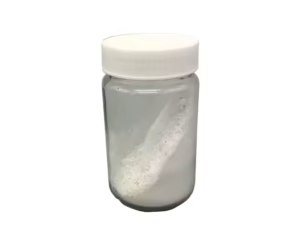
- Physical Form: Powder / granules / liquid dispersion (depending on type)
- Color: White to off-white or light yellow
- Particle Size: 80–200 mesh (customizable based on application)
- Bulk Density: 0.3–0.8 g/cm³ (varies by type)
- Solubility: Water-soluble or partially soluble depending on derivative
- Packaging Options: 25 kg bags, 500 kg jumbo bags, bulk tanker or customized packaging
- Shelf Life: 24–36 months under recommended storage conditions
- Core Industrial Applications
Polysaccharides are extensively used across food & beverage, pharmaceuticals, cosmetics, agriculture, and industrial manufacturing. In the food industry, they function as stabilizers, emulsifiers, and thickeners in sauces, dairy products, and baked goods. In pharmaceuticals, they are used in controlled drug release systems, tablet binding, and capsule formulations. In cosmetics, they enhance texture, moisture retention, and product stability. Industrial applications include paper manufacturing, textile sizing, oil drilling fluids, and biodegradable material production. Compared to synthetic polymers, polysaccharides offer superior biodegradability, regulatory acceptance, and cost-efficient performance in large-scale production environments. - Competitive Advantages
- High batch-to-batch consistency ensuring reliable industrial performance
- Secure and scalable global supply chain for uninterrupted procurement
- Efficient logistics network enabling stable bulk delivery worldwide
- Competitive pricing optimized for large-volume industrial buyers
- Environmentally sustainable, biodegradable, and renewable raw material source
- Strong technical documentation and regulatory compliance support (COA, MSDS available)
- Versatile functionality across multiple industries reduces substitution risk and improves procurement efficiency
- Commercial & Supply Information
- Minimum Order Quantity (MOQ): BULK 20MT
- Loading Capacity: 20–25 MT per 20-foot container (depending on product density and packaging configuration)


Reviews
There are no reviews yet.