
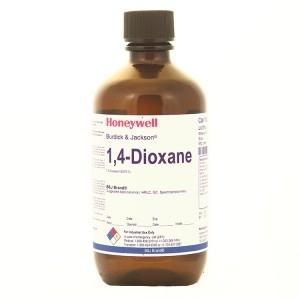
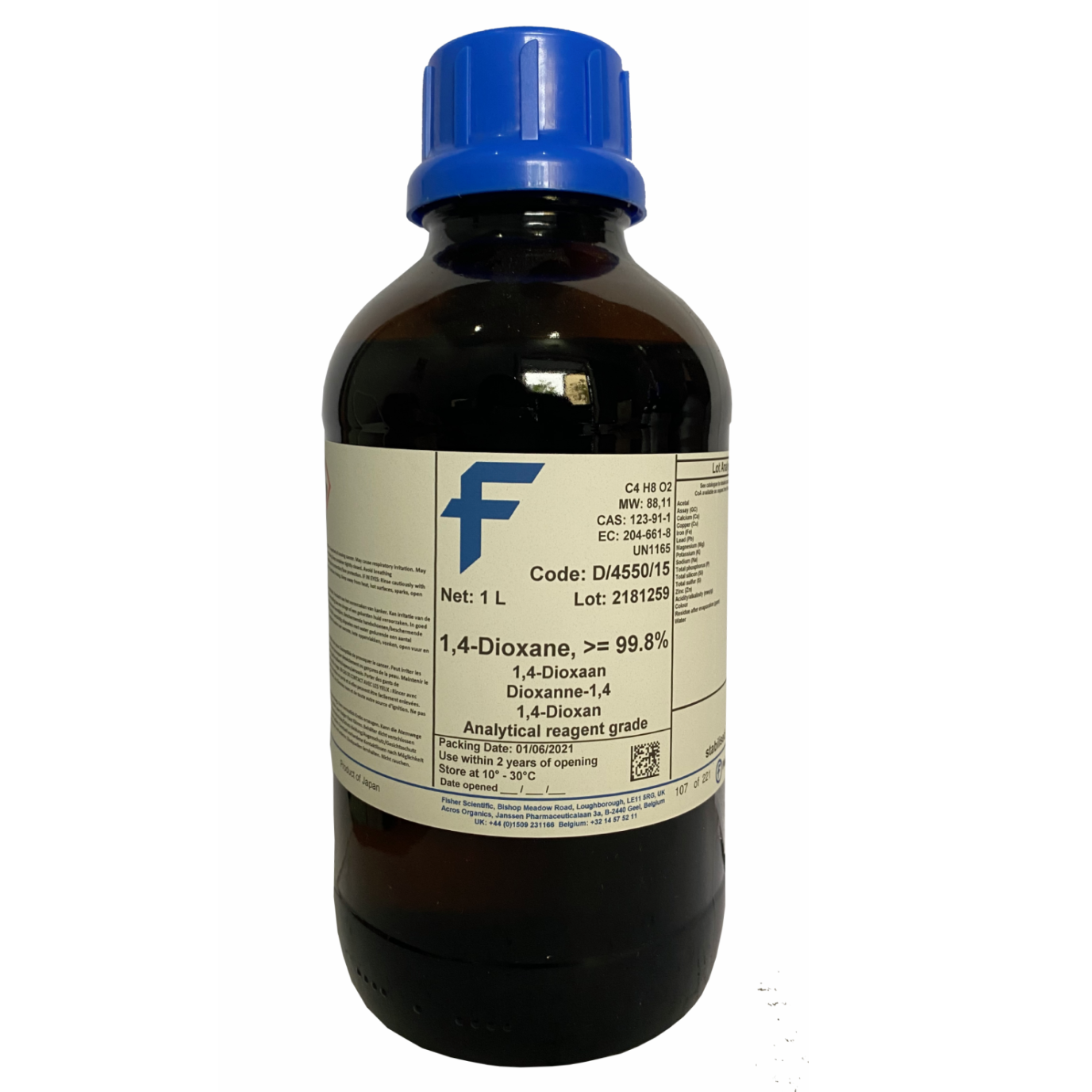
1,4-Dioxane

£32.77

The Solvent with a Troubled Past In the world of organic chemistry, solvents play a crucial role in facilitating chemical reactions and extracting desired compounds from complex mixtures. One such solvent, 1,4-Dioxane, has been widely used in various industrial and laboratory settings due to its unique properties. However, its popularity has been marred by concerns over its toxicity and environmental persistence. 1,4-Dioxane is a heterocyclic compound, comprising a six-membered ring with two ether linkages. Its high boiling point, low viscosity, and ability to dissolve a wide range of organic compounds make it an attractive solvent for various applications. It has been employed in the production of fibers, adhesives, paints, and even in the manufacture of pharmaceuticals and personal care products. Despite its usefulness, 1,4-Dioxane has been classified as a potential human carcinogen by the International Agency for Research on Cancer (IARC). Prolonged exposure to the solvent has been linked to liver and kidney damage, as well as an increased risk of cancer. Moreover, its volatility and water solubility facilitate its entry into environmental systems, where it can persist for extended periods, posing a threat to aquatic ecosystems. In response to these concerns, regulatory agencies have begun to crack down on the use of 1,4-Dioxane. The European Union, for instance, has listed it as a substance of very high concern, while the United States Environmental Protection Agency (EPA) has included it in the Toxic Substances Control Act (TSCA) Inventory. Manufacturers are now required to use alternative solvents or adopt stringent safety protocols to minimize exposure to workers and the environment. As the chemical industry continues to grapple with the challenges posed by 1,4-Dioxane, researchers are actively exploring safer alternatives and more sustainable production methods. While its troubled past cannot be ignored, it is undeniable that this solvent has played a significant role in shaping the course of modern chemistry. As we move forward, it is essential to balance the benefits of scientific progress with the need to protect human health and the environment. I hope this text meets your requirements!

Description

1,4-Dioxane: An Emerging Contaminant with Complex Challenges

1,4-Dioxane is a synthetic industrial chemical that has garnered increasing attention in recent years due to its presence as an emerging contaminant in water sources and its potential health risks. While not directly added to water supplies, it often finds its way into the environment through various industrial and commercial processes. Understanding its sources, impacts, and potential solutions is crucial for protecting public health and the environment.

What is 1,4-Dioxane?

1,4-Dioxane is a cyclic ether, a colorless liquid with a slight ether-like odor. Its chemical structure consists of a six-membered ring containing two oxygen atoms. It’s highly soluble in water and readily dissolves many organic compounds, making it a useful solvent in a variety of applications. It is also very stable and does not easily break down in the environment, contributing to its persistence.

Where Does it Come From?

The primary sources of 1,4-dioxane contamination are:

  • Industrial Use: It’s used as a solvent in the production of various chemicals, including adhesives, sealants, paints, varnishes, and pharmaceuticals. It can also be a byproduct in the manufacturing of certain chemicals, particularly ethoxylated surfactants.
  • Personal Care Products and Detergents: Historically, 1,4-dioxane was a common byproduct in the production of ethoxylated ingredients (like sodium laureth sulfate) found in shampoos, detergents, cosmetics, and other personal care products. While manufacturers have made efforts to reduce its presence, trace amounts can still be found in some products.
  • Industrial Discharge and Wastewater Treatment: Industrial facilities that use 1,4-dioxane may release it into wastewater streams. Conventional wastewater treatment processes are often ineffective at completely removing it, leading to its presence in treated effluent discharged into rivers and other water bodies.
  • Landfills and Waste Disposal Sites: Improper disposal of products containing 1,4-dioxane can lead to soil and groundwater contamination, which can then migrate to drinking water sources.

Why is it a Concern?

The concern surrounding 1,4-dioxane stems primarily from its potential health effects and its persistence in the environment:

  • Potential Carcinogen: The U.S. Environmental Protection Agency (EPA) classifies 1,4-dioxane as a likely human carcinogen based on studies in laboratory animals. Long-term exposure through drinking water or other pathways could potentially increase the risk of cancer.
  • Groundwater Contamination: Its high solubility and stability means that 1,4-dioxane can easily migrate through soil and contaminate groundwater aquifers, which serve as a major source of drinking water for many communities.
  • Persistence: 1,4-Dioxane is resistant to biodegradation under typical environmental conditions. This means it can persist in the environment for extended periods, making remediation challenging.

What’s Being Done About It?

Addressing 1,4-dioxane contamination requires a multi-faceted approach:

  • Regulation and Monitoring: Several states have established or are developing drinking water standards and regulations for 1,4-dioxane. Regular monitoring of water sources is essential to identify and track contamination levels.
  • Source Reduction: Encouraging manufacturers to minimize or eliminate the use of 1,4-dioxane in their products and processes is a key preventative measure. This includes exploring alternative solvents and optimizing manufacturing processes to reduce byproduct formation.
  • Improved Wastewater Treatment: Developing and implementing advanced wastewater treatment technologies that can effectively remove 1,4-dioxane is crucial. These technologies may include advanced oxidation processes (AOPs), such as UV/hydrogen peroxide or ozone, and granular activated carbon (GAC) filtration.
  • Remediation of Contaminated Sites: For sites with existing 1,4-dioxane contamination, remediation strategies may involve pump-and-treat systems, in-situ chemical oxidation, or enhanced bioremediation.
  • Public Awareness: Educating the public about the sources, risks, and potential solutions related to 1,4-dioxane is important for fostering informed decision-making and supporting efforts to protect water resources.

The Future of 1,4-Dioxane Management

1,4-Dioxane presents a complex challenge that requires ongoing research, technological innovation, and collaboration between government, industry, and the public. Continued efforts to understand its behavior in the environment, develop effective treatment technologies, and implement proactive source reduction strategies are essential for mitigating its risks and ensuring safe and sustainable water resources for future generations. As analytical methods improve and detection becomes easier, it is likely that this chemical will only become more concerning to environmental regulators and the public.

Possible additions/modifications based on your needs:

  • Target Audience: Specify the intended audience (general public, scientists, policymakers, etc.) so I can adjust the level of technical detail and language accordingly.
  • Specific Focus: Are you particularly interested in the regulatory aspects, the health effects, the treatment technologies, or a specific region or industry?
  • Level of Detail: Do you want more in-depth explanations of the chemistry, the treatment processes, or the regulatory landscape?
  • Call to Action: Do you want to include a call to action, such as urging readers to contact their elected officials or support research efforts?
  • Sources: Would you like me to add some links to relevant sources, such as EPA documents, scientific articles, or news reports?
  • Images/Graphics: Consider what images or graphics would be appropiate.

Let me know how you’d like me to refine this!

Reviews

There are no reviews yet.

Be the first to review “1,4-Dioxane”

Your email address will not be published. Required fields are marked *

Add to cart