
Description
Redox‑Flow Batteries & Vanadium Electrolytes: Power‑Plants in a Tank
If the future of grid‑scale storage looks like a chemical‑engineered version of a bathtub, the vanadium redox‑flow battery (VRFB) is the most mature, efficient, and flexible design we have today. In this post we’ll dive into how a simple mixture of vanadium ions can store gigawatt‑hours of clean energy, why the technology is gaining traction worldwide, and what hurdles still need to be cleared before VRFBs become the workhorse of renewable grids.
1. What Exactly Is a Redox‑Flow Battery?
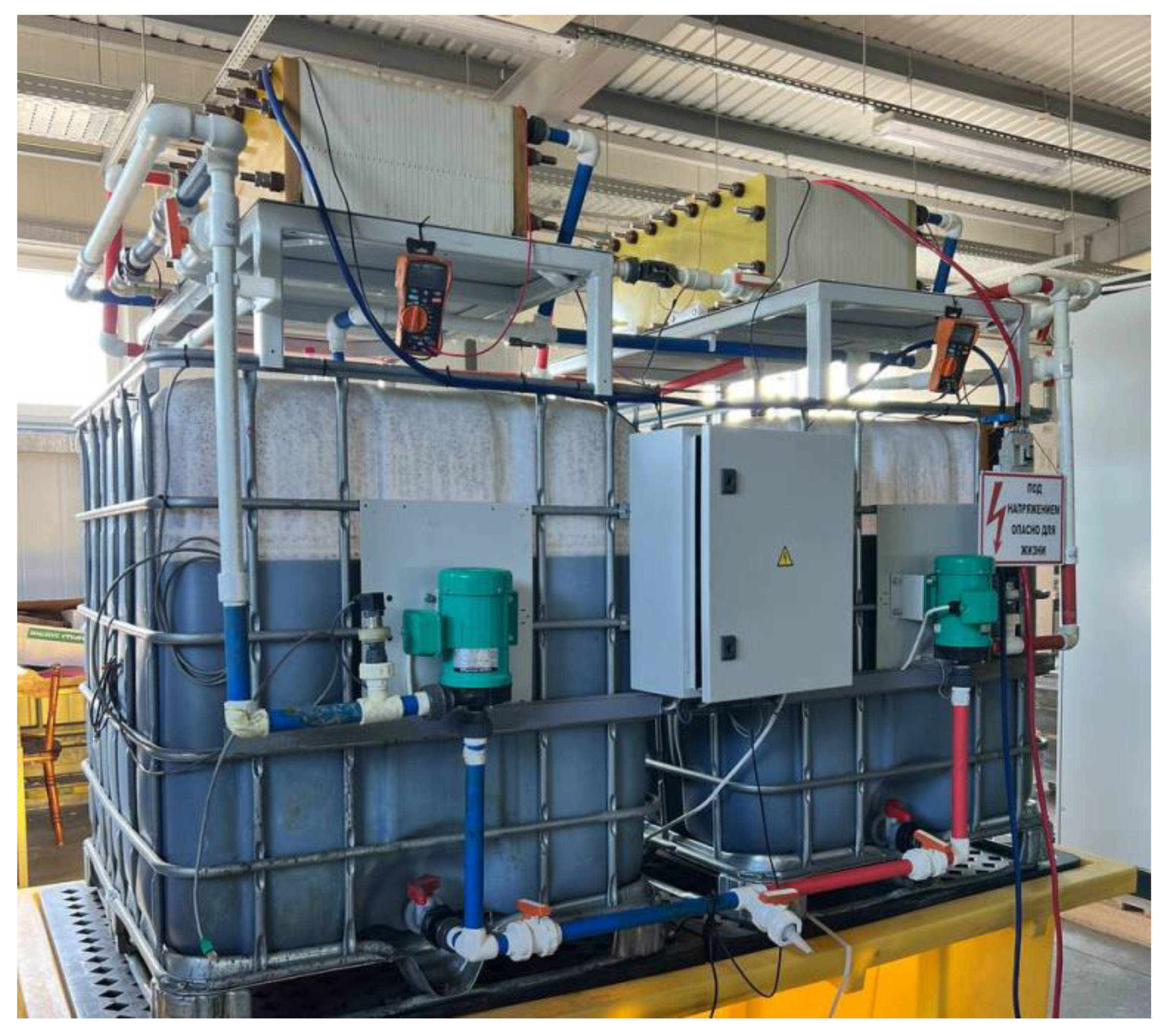
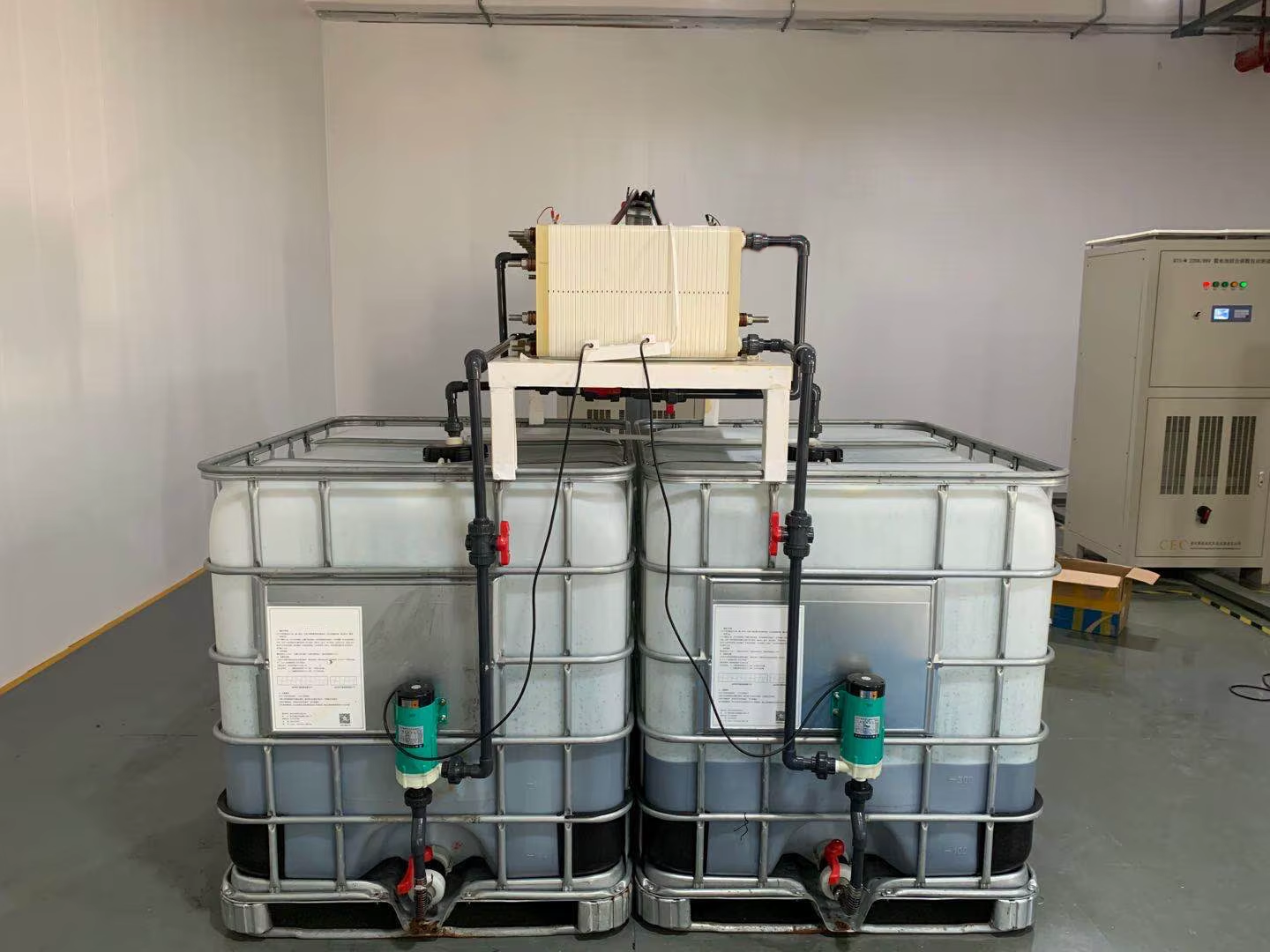
A redox‑flow battery (RFB) stores energy outside the cell, in liquid electrolytes that flow through a stack of electrochemical cells much like blood circulates through a heart. The basic ingredients are:
| Component | Role |
|---|---|
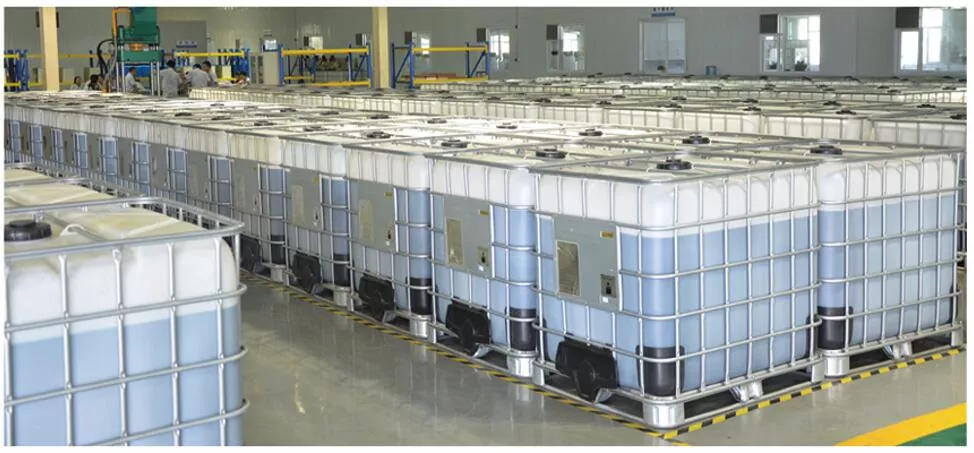
| Electrolyte tanks | Hold the redox‑active liquid (the “fuel”). |
| Pump system | Circulates the electrolyte through the cell stack. |
| Cell stack | Where the oxidation‑reduction (redox) reactions occur, generating voltage. |
| Power electronics | Controls charge/discharge and integrates with the grid. |
Because the energy is a function of the volume of electrolyte (kiloliters × concentration) and the power is a function of the size of the cell stack (number of cells, electrode area), designers can scale each independently. Need more energy? Add a bigger tank. Need more power? Add more cells. This decoupling is the core advantage of flow batteries over conventional solid‑state chemistries (Li‑ion, lead‑acid, etc.), which are forced to trade energy for power in a single package.
2. Why Vanadium? The Chemistry Behind the “V” in VRFB
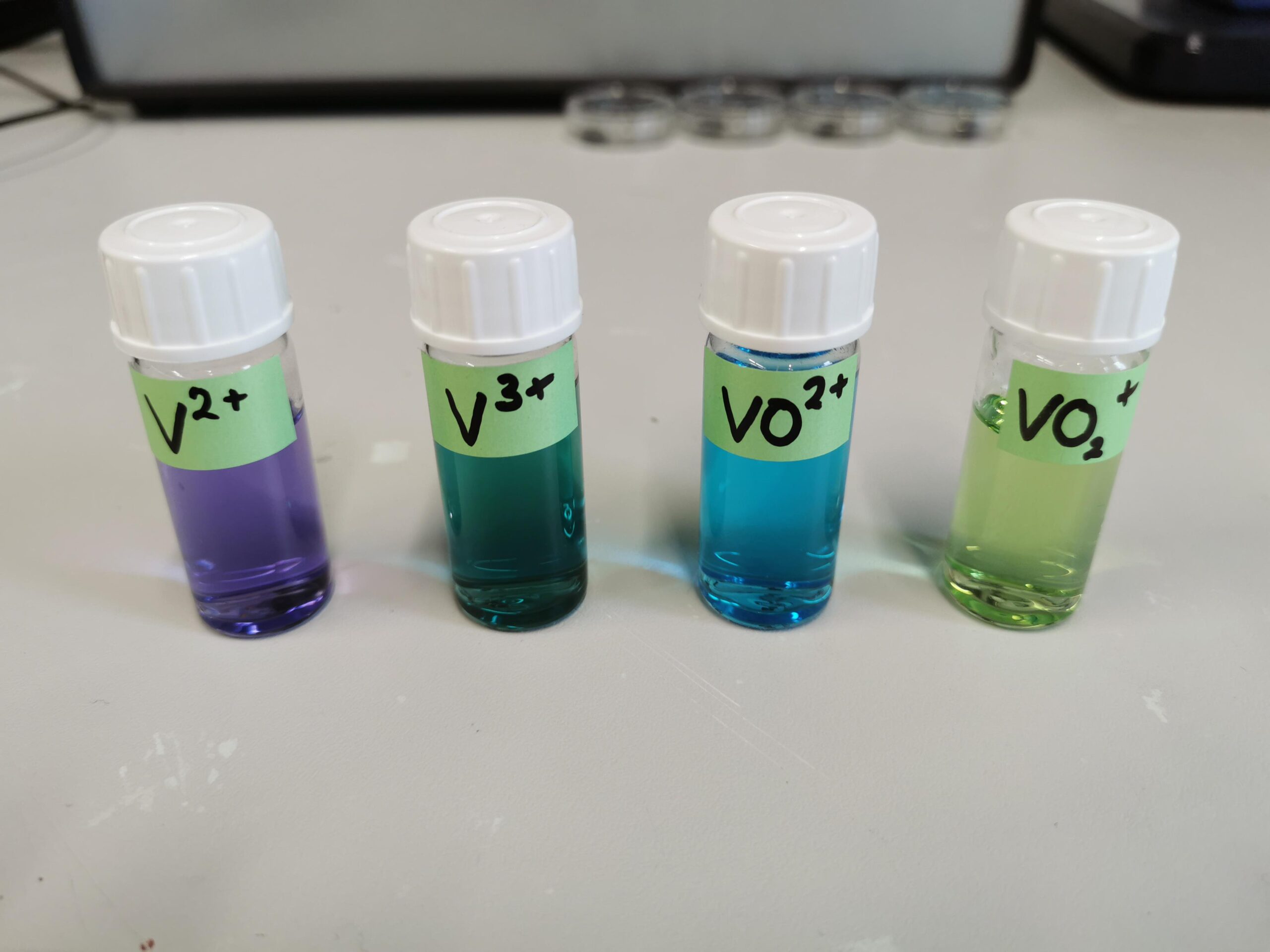
Vanadium is the only element that can exist in four stable oxidation states in aqueous solution:
| Oxidation state | Ion form | Standard potential (V vs SHE) |
|---|---|---|
| +2 | V²⁺ | -0.26 V |
| +3 | V³⁺ | -0.10 V |
| +4 | VO²⁺ (vanadyl) | +0.34 V |
| +5 | VO₂⁺ (vanadate) | +1.00 V |
In a VRFB the positive (catholyte) side cycles between VO₂⁺/VO²⁺ (V⁵⁺ ↔ V⁴⁺) while the negative (anolyte) side cycles between V³⁺/V²⁺ (V³⁺ ↔ V²⁺). The net cell reaction is:
[ \text{VO}_{2}^{+} + \text{V}^{2+} ;\rightleftharpoons; \text{VO}^{2+} + \text{V}^{3+} ]
The theoretical cell voltage is ≈1.26 V, a sweet spot that gives good energy density while staying well within the electrochemical stability window of water (≈1.23 V).
Benefits of using the same element on both sides
- Cross‑contamination tolerance – If a tiny amount of electrolyte leaks from one tank to the other, the system still contains only vanadium ions; the cell chemistry remains functional.
- Simplified balance‑of‑plant – Identical electrolyte preparation, handling, and safety procedures.
- Recyclability – Vanadium can be recovered from spent electrolyte with >99 % efficiency, making the whole system almost circular.
3. From Lab to Grid: How a VRFB Works in Practice
- Charge – A power source (e.g., solar farm) drives electrons from the negative electrode to the positive electrode. In the negative tank V³⁺ is reduced to V²⁺; in the positive tank V⁴⁺ is oxidized to V⁵⁺.
- Storage – The electrolytes sit idle in their tanks, physically separated but chemically poised to release energy on demand. No self‑discharge occurs beyond the minute leakage current of the stack (typical self‑discharge < 0.01 %/day).
- Discharge – Reversing the current restores the original oxidation states, delivering power back to the grid.
Because the chemical change is reversible and occurs in a liquid, the system can endure >30,000 cycles with less than 20 % capacity loss—far beyond the 2,000–5,000 cycles typical of Li‑ion packs.
4. The Real‑World Numbers: Performance Metrics
| Metric | Typical VRFB Value | Comparison |
|---|---|---|
| Energy density (electrolyte) | 20–35 Wh L⁻¹ (≈ 25–40 Wh kg⁻¹) | 3–5× lower than Li‑ion (150–250 Wh kg⁻¹) |
| Round‑trip efficiency | 75–85 % (up to 90 % with optimized stack) | 90–95 % for Li‑ion |
| Cycle life | 10,000–30,000+ cycles (10 % capacity loss) | 2,000–5,000 cycles (20–30 % loss) |
| Self‑discharge | <0.01 %/day | 0.1–0.5 %/day |
| Power‑to‑energy ratio | 0.1–10 kW kWh⁻¹ (tunable) | 0.2–4 kW kWh⁻¹ (fixed) |
| Operating temperature | 10 °C–40 °C (wide range) | 0 °C–45 °C (more sensitive) |
| Safety | Non‑flammable, aqueous | Flammable organic solvents |
Bottom line: VRFBs excel where long‑duration, high‑cycle, and safety‑critical storage is needed—think renewable‑energy smoothing, micro‑grid backup, and large‑scale peak‑shaving.
5. Where VRFBs Are Already Making an Impact
| Region | Notable Projects (2023‑2025) | Capacity |
|---|---|---|
| USA | McIntosh Power (Georgia) – 10 MW/40 MWh pumped‑by‑flow system; Vistra Energy – 20 MW/80 MWh installation in Texas. | 30 MW+ |
| Europe | RedT Energy (Germany) – 5 MW/15 MWh for wind farm smoothing; InnoVent (France) – 2 MW/6 MWh for railway grid. | 10‑15 MW |
| Asia‑Pacific | Sumitomo (Japan) – 2 MW/6 MWh for island micro‑grid; Hanergy (China) – 4 MW/12 MWh pilot with solar‑plus‑VRFB. | 8 MW+ |
| Australia | Aussie Green Power – 1 MW/4 MWh battery for remote mining site. | 1 MW |
These installations prove that VRFBs are commercially viable, especially when paired with intermittent renewables that need multi‑hour to multi‑day storage rather than just minutes.
6. The Economic Equation
| Cost Component | Approx. $/kWh (2024) | Trend |
|---|---|---|
| Electrolyte (vanadium salts) | $30–$45 | Declining as vanadium mining & recycling scale up |
| Cell stack | $200–$300/kW | Stack designs are becoming more modular & cheaper |
| Balance‑of‑Plant (pumps, tanks, controls) | $150–$250/kW | Standardization and bulk procurement lower cost |
| Total installed cost | $450–$650/kWh (system‑level) | Target 2028: <$300/kWh to be cost‑competitive with Li‑ion for >4 h storage |
A VRFB’s levelized cost of storage (LCOS) typically sits around $0.12–$0.18/kWh for a 10‑year lifetime, comparable to – or better than – Li‑ion when the required storage duration exceeds 4–6 hours.
7. Technical Challenges & Ongoing Research
| Challenge | Why It Matters | Current R&D Directions |
|---|---|---|
| Vanadium supply & price volatility | Vanadium is a “critical mineral”; price spikes (e.g., 2021) can spike system cost. | • Electro‑refining of low‑grade vanadium from oil‑field brine • Closed‑loop recycling of spent electrolyte • Hybrid chemistries (e.g., V‑Fe, V‑Mn) to reduce V demand |
| Electrolyte stability at high SOC (state‑of‑charge) | At >90 % SOC, V⁵⁺ can precipitate as V₂O₅, causing capacity loss. | • Additive chemistry (e.g., phosphoric acid, boric acid) to suppress precipitation • Temperature‑controlled tanks (maintain 15–25 °C) |
| Membrane crossover | Vanadium ions can cross the ion‑exchange membrane, leading to capacity imbalance. | • Development of low‑permeability, high‑conductivity membranes (e.g., PFSA‑based, ceramic composites) • Dynamic balancing algorithms that periodically re‑mix electrolytes |
| Power density | Flow cells have lower current densities than solid‑state cells, limiting short‑burst power. | • 3‑D porous electrodes (graphite felts treated with acid or nanocarbon) • Flow‑field optimization (turbulent vs laminar flow) |
| System footprint | Large tanks occupy space, an issue for urban or constrained sites. | • Modular “stack‑in‑a‑box” designs • High‑concentration electrolytes (up to 2 M V) to shrink tank volume |
8. The Future Roadmap (2025‑2035)
| Timeline | Milestone | Impact |
|---|---|---|
| 2025‑2027 | Commercial availability of high‑concentration (>2 M) electrolytes & next‑gen PFSA‑ceramic membranes. | Energy density → 40 Wh L⁻¹; round‑trip → 90 % |
| 2028‑2030 | First grid‑scale (>100 MW/400 MWh) VRFB plants deployed in the U.S. Sun Belt & European offshore wind clusters. | Demonstrates economic parity with Li‑ion for >6 h storage |
| 2031‑2033 | Hybrid VRFBs that combine vanadium with cheaper metal couples (e.g., V‑Fe) to cut electrolyte cost by 30 %. | Makes VRFB attractive for behind‑the‑meter industrial sites |
| 2034‑2035 | Standardized “plug‑and‑play” VRFB modules (1 MW/4 MWh per container) sold by multiple OEMs worldwide. | Enables rapid deployment for micro‑grids, disaster relief, and military forward bases. |
9. Quick Takeaways – Why You Should Keep an Eye on Vanadium Flow Batteries
- Scalable by design – Energy and power are independent knobs.
- Durable & safe – Thousands of cycles, non‑flammable aqueous electrolyte, low self‑discharge.
- Renewable‑friendly – Perfect for smoothing solar and wind over hours‑to‑days.
- Circular economy ready – Vanadium can be fully recovered and reused.
- Cost trajectory is improving – R&D, larger vanadium supply chains, and modular plant designs are pushing the $/kWh down fast.
If your organization is looking for long‑duration storage, grid‑scale reliability, or a low‑maintenance solution that can be expanded over decades, the vanadium redox‑flow battery is moving from “interesting niche” to “core infrastructure” faster than most analysts expected.
10. How to Get Started (If You’re a Project Owner, Engineer, or Investor)
| Step | What to Do | Resources |
|---|---|---|
| 1. Define the use‑case | Do you need 2 h peak‑shaving or 12 h renewable smoothing? The required energy‑to‑power ratio will dictate tank size vs stack size. | NREL’s Storage Cost and Performance Database |
| 2. Conduct a feasibility study | Model LCOS, grid interconnection, and site constraints. | HOMER Energy software; VRFB vendor white‑papers |
| 3. Choose a chemistry partner | Major players: Sumitomo, Jena‑Batterie, ESS Inc., RedT Energy. Compare electrolyte concentration, warranty, and service model. | Vendor RFP templates (available on OpenEI) |
| 4. Secure financing & incentives | Look for state clean‑energy grants (e.g., CA’s Energy Storage Grant Program) and federal tax credits (ITC 30 % for storage). | DSIRE database |
| 5. Pilot before full‑scale | Install a 0.5‑MW/2 MWh pilot to validate performance, control algorithms, and O&M costs. | Case studies: McIntosh Power 2024 pilot |
| 6. Scale up | Replicate the pilot modules; modular tanks allow “add‑on” capacity without major civil works. | Modular Flow Battery Design Guide (DOE, 2023) |
11. Final Thought: A Battery That’s Really a Battery of Tanks
The vanadium redox‑flow battery may not have the headline‑grabbing energy density of a lithium‑ion cell, but its real power lies in flexibility, longevity, and safety—the three pillars any modern grid needs as we transition to 100 % renewable electricity. By turning a simple aqueous solution of vanadium ions into a scalable, recyclable energy reservoir, engineers are essentially building chemical fuel tanks that can be “filled” by the sun or wind and “drawn” on whenever the lights go out.

Reviews
There are no reviews yet.