
Description
Polyurethane Dispersions (PUDs)
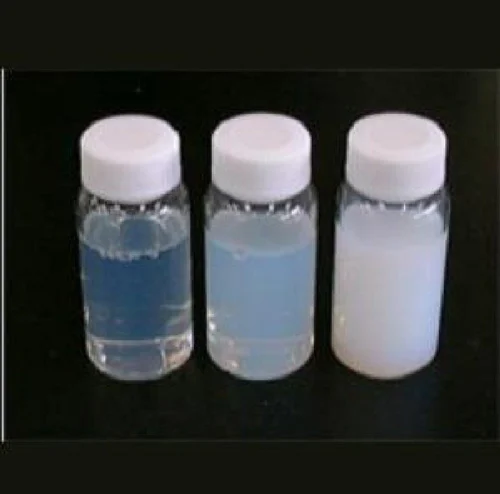
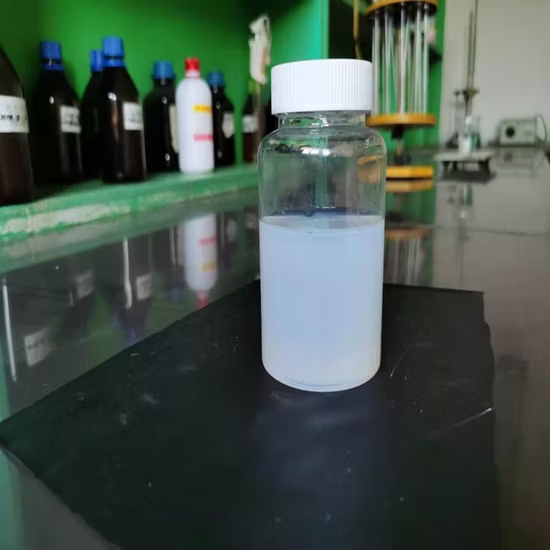
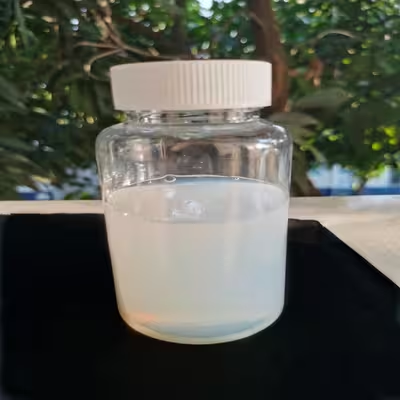
Polyurethane dispersions are waterborne polymers based on polyurethane chemistry. They form stable colloidal dispersions in water and can coalesce into tough, flexible films when the water is removed. They are widely used as coatings, adhesives, and binders across industries due to their balance of performance and low VOC.
Key concepts and terminology
- Waterborne polyurethane dispersion (PUD): an emulsion of polyurethane particles stabilized in water, typically containing ionic or nonionic stabilizers.
- Soft and hard segments: the polymer chain contains flexible soft segments (often polyether or polyester polyols) and rigid hard segments (diisocyanate and chain extender derived).
- NCO content: the percent isocyanate groups remaining; controls crosslinking potential and final film properties.
- Crosslinking: Post-dispersion crosslinking can improve chemical resistance and block resistance, using blocked isocyanates or other crosslinkers.
- Aliphatic vs aromatic: refers to the diisocyanates used. Aliphatic PUDs offer better UV stability; aromatic PUDs are typically cheaper but may yellow with light exposure.
Key types of PUDs
- Aliphatic PUDs: use aliphatic diisocyanates (e.g., IPDI, HDI) for superior UV stability and non-yellowing films; favored for outdoor and outdoor automotive applications.
- Aromatic PUDs: use aromatic diisocyanates (e.g., MDI, TDI) and are generally lower in cost but can yellow over time with UV exposure.
- Polyether vs polyester PUDs: soft segments can be polyether (excellent hydrolysis resistance and flexibility) or polyester (often higher chemical resistance and hardness).
How PUDs are made (high-level)
- Prepolymer method: create an NCO-terminated polyurethane prepolymer, disperse it in water with stabilizers, and then perform chain extension in the aqueous phase to form dispersed particles.
- Solvent-assisted (injection) methods: dissolve the polyurethane in a water-miscible solvent or use a phase inversion technique to form a dispersion, followed by solvent removal.
- Chain extension and stabilization: during dispersion, amine-functional chain extenders or neutralizing agents create ionic groups that stabilize the particles in water.
Common formulation components
- Polyol component: polyether polyols (excellent hydrolytic stability) or polyester polyols (often higher strength).
- Diisocyanate: aliphatic (HDI, IPDI) for UV stability; aromatic (MDI, TDI) for cost performance.
- Chain extenders: short diols or diamines that link hard segments and build molecular weight.
- Dispersion stabilizers: ionic groups (carboxylate, sulfonate) or nonionic surfactants to keep particles suspended.
- Rheology modifiers: help with leveling and film formation.
- Coalescing aids and additives: facilitate film formation at ambient temperature and improve final properties.
- Crosslinkers: blocked isocyanates, melamine-formaldehyde, or other functional groups for post-UV or thermal crosslinking.
Key properties and performance
- Low VOC and environmental friendliness compared with solvent-based systems.
- Film formation at room temperature with good gloss, clarity, and elasticity.
- Weather and chemical resistance: highly dependent on soft/hard segment balance and whether aliphatic diisocyanates are used.
- Hydrolytic stability: polyether PUDs typically resist water better than some polyester-based systems.
- Color and clarity: aromatic PUDs may yellow under UV exposure; aliphatic PUDs maintain color better.
Applications
- Wood coatings: furniture, flooring, and cabinetry finishes requiring a balance of hardness and flexibility.
- Textile and leather coatings: resins and binders for durable finishes.
- Paper coatings: barrier properties and printability improvements.
- Clear coatings and topcoats: for automotive and architectural uses with good clarity and UV resistance.
- Adhesives and laminating binders: for papers, films, and composites.
Advantages and limitations
- Advantages
- Low VOC and safer handling compared with solvent-borne systems
- Good adhesion to diverse substrates
- Excellent flexibility and abrasion resistance with the right formulation
- tunable properties via soft/hard segment ratio and crosslinking
- Limitations
- Potential hydrolysis or moisture sensitivity in some formulations
- Aliphatic PUDs are typically more expensive
- Storage stability and dispersion stability can be challenging for some high-solids formulations
- Isocyanate-related safety considerations require proper handling and ventilation
Formulation considerations and guidance
- Particle size and solids content: typical particle sizes range from tens to a few hundred nanometers; solids content often 20–60% depending on application.
- pH and ionic stabilization: maintaining a stable pH (often near 7–9) helps preserve dispersion stability; ionic groups aid in stabilization.
- Crosslinking strategy: decide between external crosslinkers or blocked isocyanates for enhanced water and chemical resistance.
- Substrate compatibility: consider whether the coating will encounter humidity, cleaners, or UV exposure, and select polyol type and diisocyanate accordingly.
- Coatings performance targets: gloss, hardness, adhesion, chemical resistance, and weatherability will guide the choice between aliphatic vs aromatic, and polyether vs polyester soft segments.
Quick comparison table
| Aspect | Aliphatic PUD | Aromatic PUD |
|---|---|---|
| UV stability | Excellent, non-yellowing | Moderate, potential yellowing over time |
| Cost | Higher | Lower |
| Color retention | Very good | Can yellow with time |
| Typical uses | Outdoor finishes, automotive topcoats | General coatings, interiors, lower-cost applications |
| Common diisocyanates | HDI, IPDI | MDI, TDI |
Sustainability and safety
- PUDs reduce VOC emissions compared with solvent-based systems, contributing to better indoor air quality and regulatory compliance.
- Handling diisocyanates requires proper ventilation and protective equipment to minimize exposure.
- Increasing interest in bio-based polyols and lower isocyanate content systems to improve sustainability.
If you’d like, I can tailor this overview to a specific application (for example wood coatings or textile binders), or provide a simplified starter formulation outline with typical component ranges. Would you like to dive into a particular use case or discuss recent trends in PUD technology?


Reviews
There are no reviews yet.