

Description
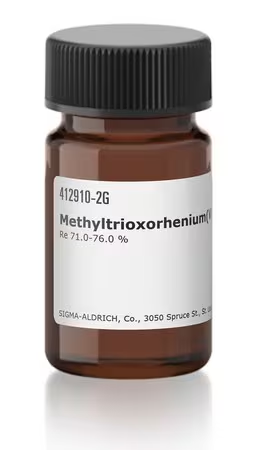
Methyltrioxorhenium (MTO)
What it is
- Methyltrioxorhenium, abbreviated MTO, is a stable organometallic compound with the formula CH3ReO3.
- It features a rhenium(VII) center bound to three oxide ligands and one methyl group (ReO3Me). It is commonly written as ReO3Me.
Key properties
- Oxidation state: +7 at rhenium.
- Typical use: a versatile catalyst for oxidation reactions in organic synthesis.
- Handling: generally used under standard organometallic safety practices; handle with appropriate PPE and in a well-ventilated area.
Common preparation and availability
- MTO is commercially available from chemical suppliers.
- In the lab, it can be prepared or used via literature procedures that involve methylation or oxidation steps starting from rhenium oxides or related rhenium compounds. Exact procedures vary, so consult detailed synthetic references if you need to prepare it yourself.
Primary applications
- Catalyst for oxidations with oxidants such as hydrogen peroxide (H2O2) or tert-butyl hydroperoxide (TBHP).
- Widely used in:
- Epoxidation of alkenes (often with TBHP or H2O2 in appropriate solvents).
- Oxidation of alkanes to alcohols and ketones under suitable biphasic conditions.
- Oxidation of various functional groups in organic substrates, often with good chemoselectivity.
- Both homogeneous (in solution) and heterogeneous forms exist, including MTO supported on silica or other supports for improved robustness and potential recyclability.
What helps to know about its mechanism (at a high level)
- The catalytic cycle typically involves in situ formation of reactive peroxo or oxo species from MTO in the presence of the oxidant.
- The Re center cycles between oxidation states as substrates are oxidized.
Safety and handling notes (general)
- Use standard inorganic/organometallic safety practices.
- Avoid inhalation or ingestion; work in a fume hood.
- Rhenium compounds are not among the most toxic organometallics, but always handle with care and proper disposal.
Quick takeaway
- MTO is a foundational oxidation catalyst in organic synthesis, enabling selective epoxidations and other oxidations using common oxidants like H2O2 and TBHP. It is available commercially and also studied in supported forms for practical applications.
If you’d like, I can provide a short literature-style summary of typical reaction conditions (solvent, temperature, oxidant, substrate scope) for MTO-catalyzed epoxidations or alkane oxidations.
Reviews
There are no reviews yet.