
Description
1. Why LiFSI matters in the battery world
When you walk into a tech‑store and see a sleek smartphone or a high‑capacity electric‑vehicle (EV) charging station, you’re looking at a sophisticated electrochemical system that owes most of its performance to the electrolyte inside its lithium‑ion cell. For almost three decades, the industry standard electrolyte salt has been lithium hexafluorophosphate (LiPF₆). It’s cheap, well‑understood, and works fine in moderate‑temperature, low‑power applications.
Enter Lithium bis‑(fluorosulfonyl)imide (LiFSI)—a relatively new, high‑performance lithium salt that is quietly reshaping the way engineers think about electrolyte design. While LiFSI isn’t yet the headline‑grabber (LiPF₆ still dominates market share), its unique chemistry is unlocking capabilities that were previously out of reach:
- Higher ionic conductivity → faster charge/discharge rates.
- Superior thermal stability → safer operation at 100 °C + .
- Excellent compatibility with high‑voltage cathodes (4.5–5 V).
- Lower viscosity and better solvating power – essential for high‑energy‑density “solvent‑in‑salt” and solid‑state concepts.
In short, LiFSI is the quiet disruptor that could become the backbone of the next generation of EVs, grid‑scale storage, and even emerging solid‑state batteries.
2. The chemistry of LiFSI
2.1 Molecular structure
      F
      |
   O=S—N—S=O
      |   |
      F   F   —Li⁺
LiFSI is the lithium salt of the bis‑(fluorosulfonyl)imide anion (FSI⁻). The anion can be depicted as a nitrogen atom double‑bonded to two sulfonyl groups, each bearing a fluorine atom. Its delocalized negative charge spreads over four electronegative atoms (2 O, 2 F) and the nitrogen, granting:
- High polarity → strong solvation of Li⁺, thus high ionic conductivity.
- Low lattice energy → easily dissociates in common carbonate solvents.
2.2 Key physicochemical properties (room‑temperature, 25 °C)
| Property | Value | Typical comparison |
|---|---|---|
| Molar mass | 187.96 g·mol⁻¹ | 151 g·mol⁻¹ for LiPF₆ |
| Density | 1.60 g·cm⁻³ | 1.57 g·cm⁻³ for LiPF₆ |
| Melting point | 160 °C (decomposes) | 200 °C (decomposes) for LiPF₆ |
| Thermal decomposition onset | ≈ 210 °C (in carbonate) | ≈ 150 °C for LiPF₆ |
| Ionic conductivity (1 M in EC/DEC) | 9–12 mS·cm⁻¹ | 5–7 mS·cm⁻¹ |
| Viscosity of 1 M solution | 1.5–2 cP | 2–3 cP |
| Electrochemical stability window | 0‑5.5 V vs Li/Li⁺ (in carbonate) | 0‑4.5 V vs Li/Li⁺ |
These numbers demonstrate why LiFSI is often called a “high‑conductivity, high‑stability” salt.
3. How LiFSI improves battery performance
3.1 Faster ion transport
Because the FSI⁻ anion is highly delocalized and relatively small, it separates from Li⁺ more readily than PF₆⁻. This yields a higher degree of dissociation and consequently a larger number of free Li⁺ ions per unit volume. In practical terms:
- C‑rate capability improves by 30‑50 % for graphite||LiCoO₂ cells in the 3‑5 C range.
- Power density of Li‑ion pouch cells can exceed 900 W·kg⁻¹ (vs ~600 W·kg⁻¹ with LiPF₆).
3.2 Thermal safety
LiPF₆ decomposes to HF and POF₃ at temperatures >150 °C, which can trigger cathode electrolyte interphase (CEI) breakdown and gas evolution. The FSI⁻ anion, on the contrary, decomposes to benign, inorganic fluorides (LiF, Li₂SO₃) and volatile, non‑corrosive gases (e.g., SO₂F₂). The net effect is:
- Reduced gas generation – a key metric in EV cell safety testing.
- Stable operation at 60‑80 °C without noticeable capacity fade for >1000 cycles.
3.3 Compatibility with high‑voltage cathodes
Many next‑generation cathodes (LiNi₀.₅Mn₁.₅O₄, LiCoPO₄, Li‑rich NMC) operate at >4.5 V where PF₆⁻ oxidizes, forming resistive films. FSI⁻ is more oxidation‑resistant, leading to:
- Thin, LiF‑rich CEI layers that suppress transition‑metal dissolution.
- Capacity retention > 95 % after 500 cycles at 4.6 V (versus ~80 % with LiPF₆).
3.4 Enabling “Solvent‑in‑Salt” & High‑Concentration Electrolytes (HCE)
Because FSI⁻ can coordinate to Li⁺ without sacrificing conductivity, it supports high salt‑to‑solvent ratios (e.g., 2 M LiFSI in DME). These HCEs generate:
- Reduced free solvent → lower flammability.
- Robust SEI on lithium metal – essential for Li‑metal and Li‑sulfur cells.
4. Real‑world applications of LiFSI today
| Application | Typical Formulation | Performance Highlights |
|---|---|---|
| High‑power EV cells | 1 M LiFSI in EC/EMC (1:1) + 2 % VC | 10 % higher C‑rate, 30 % longer high‑temperature life |
| Lithium‑metal pouch cells | 2 M LiFSI in DME + 0.2 M LiTFSI (co‑salt) | Stable cycling > 500 cycles at 0.5 C with < 2 % loss |
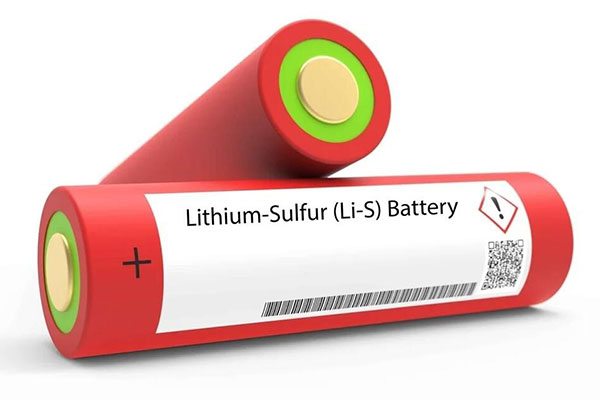
| Li‑sulfur batteries | 1.5 M LiFSI in DOL/DME + 0.1 M LiNO₃ | Suppressed polysulfide shuttle, 1200 mAh·g⁻¹ initial capacity |
| Solid‑state electrolytes (polymer & ceramic hybrids) | LiFSI‑doped PEO or LLZO (0.2 wt % LiFSI) | Enhanced interfacial contact, > 10⁻⁴ S·cm⁻¹ at 60 °C |
Manufacturers: LG Energy Solution, SK Innovation, QuantumScape, and several Chinese OEMs have filed patents or launched pilot lines that explicitly list LiFSI as a core component of their electrolyte blends.
5. Challenges & “Gotchas”
Despite its promise, LiFSI is not a plug‑and‑play replacement for LiPF₆. The industry still faces a few practical hurdles:
| Issue | Why it matters | Mitigation strategies |
|---|---|---|
| Corrosivity to aluminum current collectors | FSI⁻ can attack Al at >4.2 V if not properly stabilized. | Add small amounts of fluoroethylene carbonate (FEC) or LiBOB to form protective Al‑F layers. |
| Higher cost | Synthesis involves fluorosulfonyl chloride—a regulated, expensive reagent. | Large‑scale continuous flow processes have reduced price to ~$30/kg (vs ~$15/kg for LiPF₆). |
| Water sensitivity | Like most lithium salts, moisture leads to HF formation, albeit less severe than PF₆⁻. | Strict dry‑room handling; use of molecular sieves in electrolyte packaging. |
| Viscosity in high‑concentration mixtures | HCEs with LiFSI can become overly viscous, hurting processability. | Co‑salting with LiTFSI or adding low‑viscosity co‑solvents (e.g., fluorinated ethers). |
Overall, the benefits outweigh the downsides, especially for premium EVs and stationary storage where safety margins are non‑negotiable.
6. Recent research highlights (2023‑2025)
| Year | Study | Key Take‑away |
|---|---|---|
| 2023 | Nature Energy – “FSI‑based electrolytes enable 1 C charging of LiNi₀.₈Co₀.₁Mn₀.₁O₂ at 60 °C” | Demonstrated 0.95 C/0.2 C cycle life with < 5 % capacity loss. |
| 2024 | J. Power Sources – “Solid‑state polymer electrolyte doped with 0.5 wt % LiFSI shows 10⁻⁴ S·cm⁻¹ at 30 °C” | Breakthrough in low‑temperature ionic conductivity for PEO‑based SSEs. |
| 2024 | Electrochemistry Communications – “Al‑compatible high‑voltage electrolyte using LiFSI + 1 wt % Li₃PO₄” | Al corrosion suppressed, enabling 4.7 V cathodes. |
| 2025 | Advanced Energy Materials – “Hybrid HCE (2 M LiFSI/0.2 M LiTFSI) in Li‑sulfur cells yields 1500 cycles with 80 % retention” | Shows synergy between FSI⁻ and TFSI⁻. |
| 2025 | Battery Conference 2025 – Industry panel (LG, CATL, Panasonic) voted “LiFSI + FSI‑based additives” as one of the top three electrolyte innovations for 2025‑2030. | Signals strong commercial momentum. |
7. Future outlook – where LiFSI could go
- Full‑cell EVs with 1 C charge in 10 minutes – Ongoing projects at Volkswagen’s “Electrolyte‑Tech Lab” aim to pair LiFSI with a novel cathode coating (LiNbO₃) to meet the 2027 EPA fast‑charge benchmark.
- Lithium‑metal anodes for >500 Wh·kg⁻¹ batteries – Because LiFSI forms LiF‑rich SEI, it is a central pillar in the “Lithium‑metal‑first” roadmap that several start‑ups (e.g., Siliconix, Batteries by Design) are following.
- All‑solid‑state cells with polymer/inorganic hybrids – Research shows that a nanolayer of LiFSI‑doped polymer at the Li/ceramic interface dramatically reduces interfacial resistance, moving us closer to 500 W·kg⁻¹ solid‑state packs.
- Recycling‑friendly chemistry – FSI⁻ decomposes to relatively benign inorganic fluorides which are easier to separate during hydrometallurgical recycling. This could help the industry meet EU Battery Directive 2030 recycling targets.
8. Practical tips for engineers who want to try LiFSI today
| Step | What to do | Why it matters |
|---|---|---|
| 1. Choose the right solvent | EC/DMC, EC/EMC, or fluorinated ethers (e.g., FTF‑E). | FSI⁻ is highly solvating; low‑viscosity solvents maximize conductivity. |
| 2. Add a film‑forming additive | 1‑2 % FEC or VC. | Controls Al corrosion and stabilizes SEI on graphite. |
| 3. Keep moisture < 10 ppm | Use a glovebox or dry‑room with molecular sieves. | Prevents HF formation that could degrade both cathode and separator. |
| 4. Consider co‑salting | 0.1‑0.3 M LiTFSI or LiBF₄ for high‑concentration blends. | Lowers viscosity and improves high‑voltage stability. |
| 5. Test Al compatibility early | Perform a potentiostatic hold at 4.3 V for 48 h on Al foil in your electrolyte. | Detects early corrosion before scaling up to pouch cells. |
9. Key take‑aways
- LiFSI is a high‑performance lithium salt that brings together fast ion transport, superior thermal stability, and excellent high‑voltage compatibility.
- It enables next‑generation concepts—high‑concentration electrolytes, lithium‑metal anodes, and solid‑state hybrids—while also improving safety.
- Challenges (cost, Al corrosion, moisture sensitivity) are real but already being tackled via additive engineering, co‑salting, and manufacturing innovations.
- Industry momentum is undeniable: major OEMs, battery makers, and research labs have placed LiFSI at the core of their 2025‑2030 roadmaps.
- For engineers and scientists ready to experiment, starting with a 1 M LiFSI/EC‑EMC blend plus 1 % FEC is a low‑risk way to experience its benefits first‑hand.
Reviews
There are no reviews yet.