
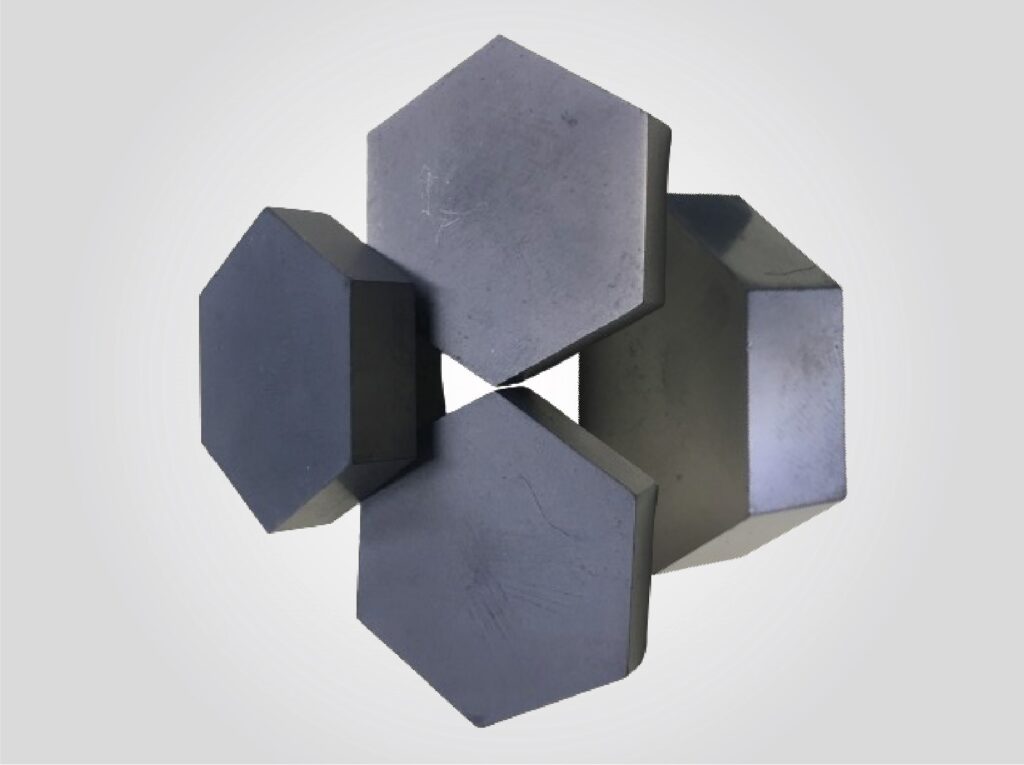
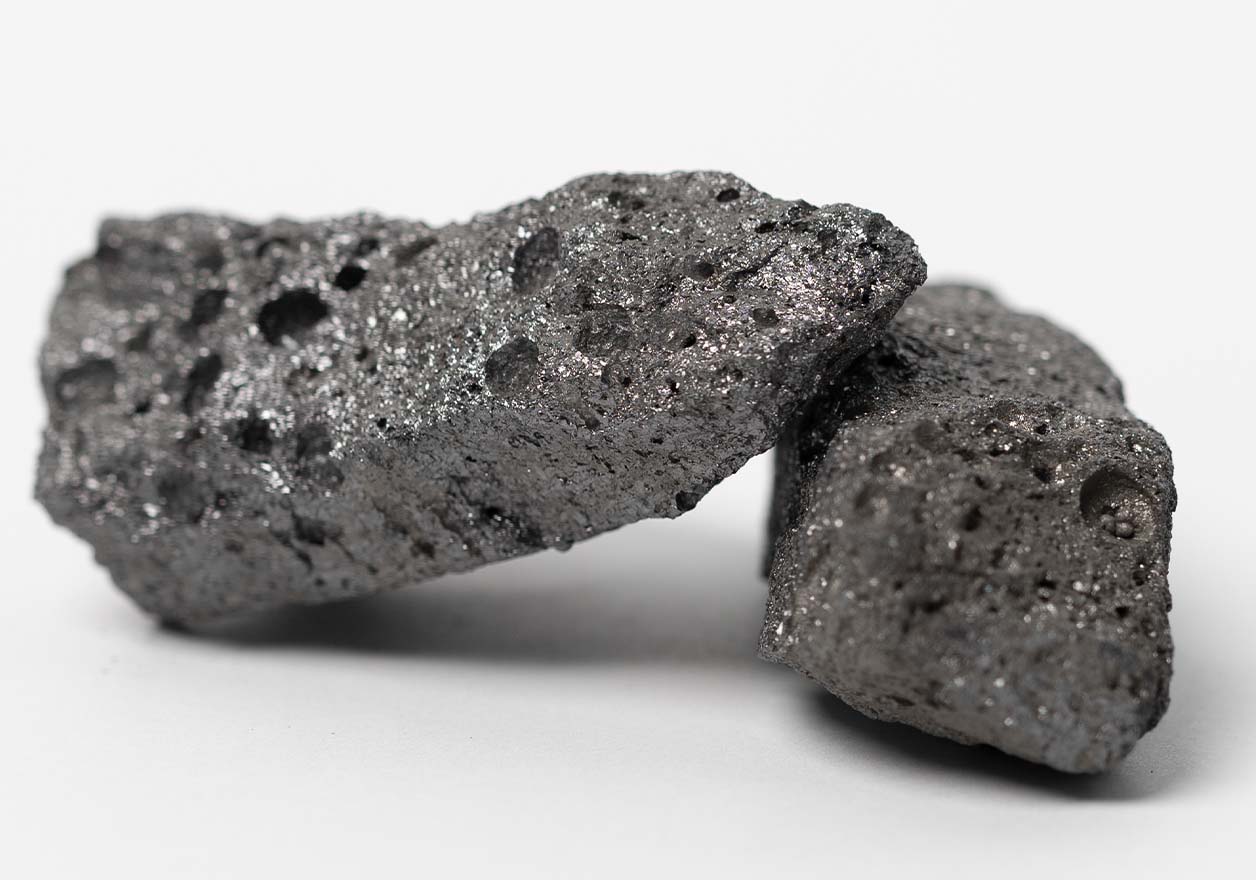
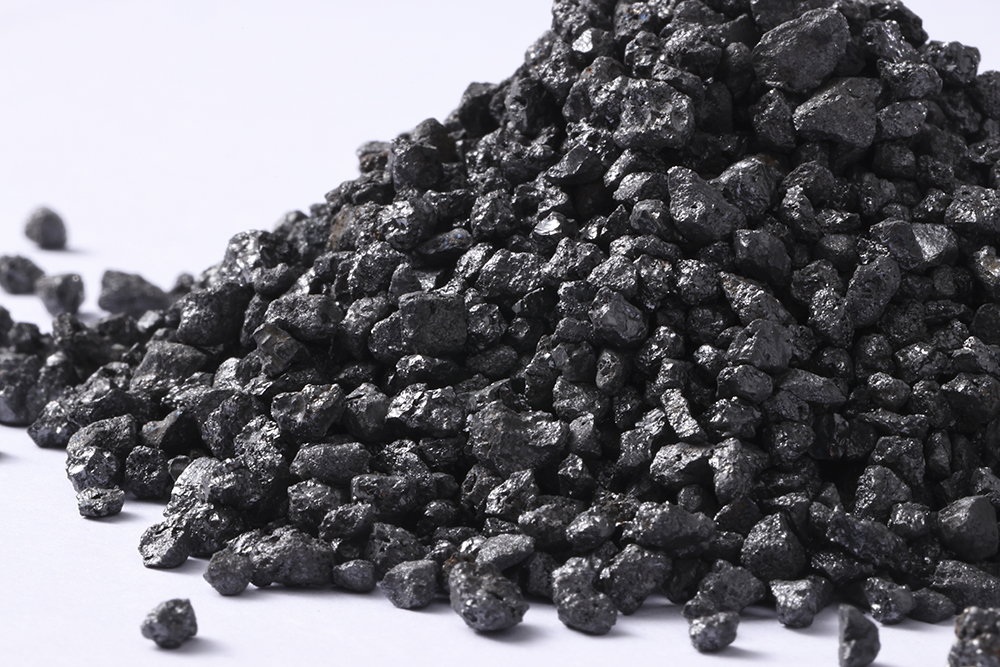
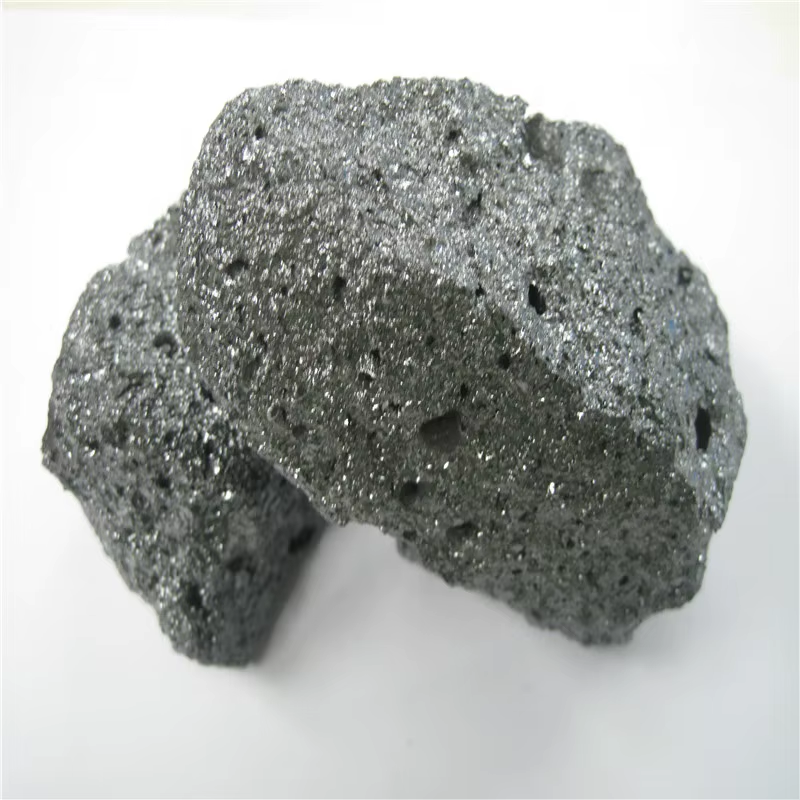
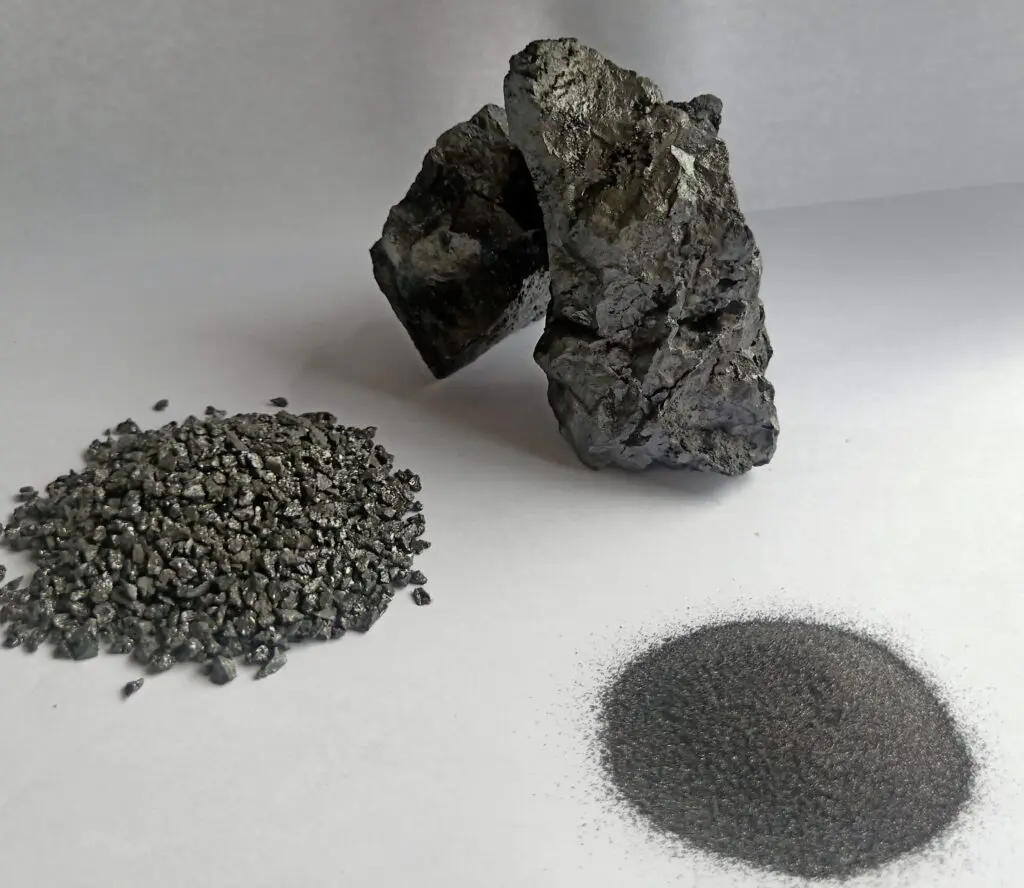
Description
Boron Carbide (B₄C): The “Black Diamond” That’s Changing Industries
*If you’ve ever heard the phrase “hard as a rock,” you’ve probably thought of quartz, diamond, or even concrete. In the world of advanced materials, there’s another heavyweight that rarely gets the spotlight: boron carbide (B₄C). Known among engineers as the “black diamond,” this ceramic compound blends extreme hardness, low density, and a surprising chemistry that makes it a star in everything from armor to space exploration. Let’s dive into what makes B₄C so special, how it’s made, where it’s used, and what the future may hold.*
1. What Is Boron Carbide, Anyway?
- Chemical formula: B₄C (often written as B₁₂C₃ to highlight its icosahedral structure)
- Crystal structure: A rhombohedral lattice built from B₁₂ icosahedra linked by three‑atom carbon chains. This architecture gives B₄C its remarkable combination of hardness and toughness.
- Physical traits:
- Hardness: 9.5–9.9 on the Mohs scale (just shy of diamond’s 10).
- Density: ~2.52 g cm⁻³ – about half the density of steel, making it a “light‑weight armor” material.
- Melting point: ~2,400 °C (4,350 °F).
- Thermal conductivity: ~30–40 W m⁻¹ K⁻¹ (good for dissipating heat in high‑temperature environments).
Because it’s a ceramic, B₄C is brittle under certain loads, yet its icosahedral framework gives it a fracture‑toughness that’s surprisingly high for a material this hard.
2. A Brief History: From Laboratory Curiosity to Battlefield Shield
- Late 19th century: First synthesized by French chemist Henri Moissan (who also isolated elemental fluorine).
- World War II: Recognized for its high hardness and low weight; used in early abrasive powders and as a component in protective coatings.
- Cold War era: Adopted in nuclear reactors as a neutron absorber (boron’s high neutron capture cross‑section) and in ballistic armor for aircraft and ground vehicles.
- 21st century: Emerging in additive manufacturing, thermo‑electric generators, and spacecraft shielding—the material has finally found a place in cutting‑edge tech.
3. How Do You Make Boron Carbide?
| Method | Key Steps | Typical Products |
|---|---|---|
| Carbothermic reduction | Mix boron oxide (B₂O₃) with carbon; heat to >1500 °C in an inert or reducing atmosphere. | Fine powder or bulk sintered blocks. |
| Chemical vapor deposition (CVD) | Flow boron‑containing gases (e.g., BCl₃) and hydrocarbons (CH₄) over a heated substrate (≈800–1200 °C). | Thin films for protective coatings. |
| Self‑propagating high‑temperature synthesis (SHS) | Initiate an exothermic reaction between elemental B and C; the generated heat sustains the reaction. | Rapid production of dense powders. |
| Reactive hot‑pressing | Press B₄C powder with a small amount of binder at 2100–2400 °C under high pressure. | Near‑full‑density bulk components (e.g., armor plates). |
Pro tip for hobbyists: If you’re curious about small‑scale synthesis, the carbothermic route using a high‑temperature furnace and a sealed quartz tube can yield a modest quantity of B₄C powder—just be sure to work in a fume hood and wear proper PPE (boron compounds can be toxic if inhaled).
4. Why Engineers Love B₄C
- Hardness + Light Weight
- Perfect for personal and vehicle armor where every kilogram matters.
- Used in tank armor, military helmets, and ballistic panels for aircraft.
- Neutron Absorption
- Boron‑10 (^10B) captures thermal neutrons, making B₄C ideal for reactor control rods, radiation shielding, and neutron detectors.
- Abrasion Resistance
- Widely employed as an abrasive in lapping compounds, polishing wheels, and grinding media for silicon wafers.
- Chemical Stability
- Inert under most acids, bases, and oxidizing environments (except at >800 °C in oxygen).
- Great for high‑temperature crucibles and protective coatings on turbine blades.
- Thermoelectric Potential
- B₄C exhibits a Seebeck coefficient of 300–400 µV/K. When paired with a p‑type material, it can harvest waste heat from engines or spacecraft.
5. Real‑World Applications
| Sector | Application | Benefit of B₄C |
|---|---|---|
| Defense | Armor plates, helmet liners, vehicle shields | Hardness + low weight = higher mobility & protection |
| Nuclear | Control rods, radiation shields | High neutron capture, minimal activation |
| Aerospace | Thermal protection on re‑entry vehicles, lightweight structural inserts | Resist ablation, reduce mass |
| Automotive | High‑performance brake pads, wear‑resistant coatings | Longer life under high friction |
| Electronics | Abrasive polishing of Si, GaAs wafers | Ultra‑fine finish, minimal contamination |
| Energy | Thermoelectric generators, solid‑state batteries (as a conductive additive) | Convert waste heat → electricity |
| Industrial | Grinding media, polishing compounds, wear plates | Extended service life, consistent performance |
6. The Dark Side: Safety & Environmental Considerations
- Toxicity: Fine B₄C dust can be inhaled and cause respiratory irritation. Always use respirators, local exhaust ventilation, and wet‑handling techniques.
- Fire Hazard: While B₄C itself is non‑flammable, the carbon content can ignite at very high temperatures in oxygen‑rich environments.
- Disposal: Being chemically inert, B₄C waste can usually be landfilled, but regulatory guidelines for ceramic powders should be consulted.
- Sustainability: Production is energy‑intensive. Emerging electro‑reduction routes and recycling of spent armor are being explored to lower the carbon footprint.
7. Future Directions: Where Is B₄C Going Next?
- Additive Manufacturing (3D‑Printing)
- Researchers are blending B₄C powders with photopolymers for stereolithography (SLA) and with metal matrices for selective laser sintering (SLS). The goal? Complex, near‑net‑shape armor components without costly machining.
- Hybrid Composites
- Embedding B₄C particles in graphene, carbon nanotube, or aluminum matrices could combine hardness with ductility, opening doors for light‑weight structural panels in drones and electric cars.
- Space Radiation Shielding
- NASA’s Artemis program is evaluating B₄C‑reinforced polymer panels to protect astronauts from galactic cosmic rays—its neutron‑absorbing nature is a perfect match for deep‑space missions.
- High‑Temperature Thermoelectrics
- By doping B₄C with silicon or gallium, its electrical conductivity can be tuned, making it a candidate for thermoelectric generators that operate at >800 °C, such as on turbine exhausts.
- Biomedical Uses?
- Early studies suggest that B₄C nanostructures may serve as boron delivery agents for BNCT (boron neutron capture therapy) in cancer treatment. The challenge is ensuring biocompatibility and controlled clearance.
8. Quick “Did You Know?” Nuggets
- Boron’s Superpower: Boron-10’s neutron capture releases an alpha particle and a lithium nucleus—exactly what makes BNCT possible.
- Hardness Record: B₄C held the title of the hardest known ceramic until the discovery of some ultra‑dense carbon nitrides in the 2010s.
- Colorful Chemistry: Pure B₄C is a deep black, but when doped with certain rare‑earth elements it can glow under UV light—useful for forensic markers.
9. Bottom Line: Why B₄C Deserves a Spot on Your Radar
Boron carbide may not have the flash of graphene or the hype of perovskite solar cells, but its unique blend of extreme hardness, low density, and neutron‑absorbing capability makes it an indispensable workhorse across a surprisingly broad spectrum of high‑tech fields. Whether you’re a defense engineer designing next‑gen armor, a materials scientist exploring additive manufacturing, or a space‑enthusiast dreaming of radiation‑protected habitats on Mars, B₄C is a material that quietly powers progress while staying under the radar.
10. Want to Learn More or Get Your Hands on B₄C?
- Suppliers: Companies like Momentive, Saint‑Gobain, and Advanced Ceramtech offer powders, bulk plates, and coating services.
- Further Reading:
- “Boron Carbide: Structure, Properties, and Applications” – a 2022 review in Materials Today.
- “Additive Manufacturing of Ceramic‑Based Composites” – chapter 8 in the Handbook of Ceramic Processing (2023).
- DIY Experiment (for the lab‑savvy): Try a small‑scale carbothermic synthesis in a muffle furnace with a B₂O₃/C mixture. Remember: safety first!
Reviews
There are no reviews yet.