
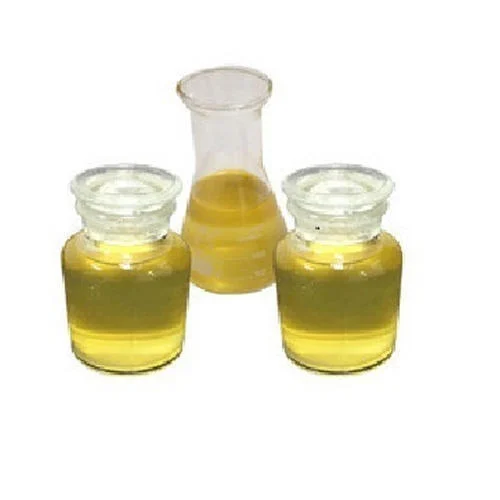
Description
Isophorone diisocyanate (IPDI)
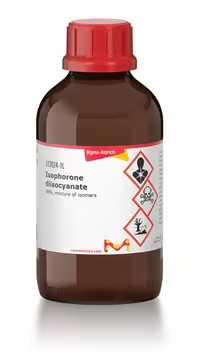
Isophorone diisocyanate (IPDI) is an aliphatic diisocyanate widely used in polyurethane (PU) chemistry. It is derived from isophorone and contains two reactive isocyanate (-NCO) groups that enable chain extension with polyols to form polyurethanes.
Key points
- Type: Aliphatic diisocyanate based on an isophorone-derived ring
- Reactivity: Two -NCO groups allow formation of polyurethane networks with polyols
- Isomer content: Usually supplied as a mixture of isomers; may be marketed as cis/trans or other isomeric forms depending on supplier
Structure and isomers
- IPDI features a cycloaliphatic skeleton with two isocyanate groups
- It is commonly available as technical grade mixtures containing several isomers
- Some grades offer purified cis or trans isomers, depending on the application needs
Properties (typical considerations)
- Weathering and color stability: Superior to aromatic diisocyanates, with better UV resistance and lower color formation
- Color: Generally low color formation, contributing to lighter PU products
- Processing: Suitable for coatings, elastomeric systems, and flexible foams; can be formulated with a range of polyols
- Storage: Handle as a reactive monomer, moisture sensitive; store in sealed containers away from moisture and heat
Common applications
- Coatings: Clear or pigmented polyurethane coatings with good outdoor durability
- Elastomeric systems: Flexible/moderate-hardness PU elastomers
- Adhesives and sealants: PU adhesives with good UV stability
- Foams: Flexible and semi-rlexible PU foams in specialty applications
Why choose IPDI over aromatic diisocyanates?
- Better UV and light stability, leading to longer-lasting, lighter-colored products
- More favorable color retention in outdoor or high-visibility coatings
- Lower potential for yellowing compared with aromatic diisocyanates like TDI or MDI
Safety and handling (high level)
- IPDI is a hazardous chemical; avoid inhalation, ingestion, and skin or eye contact
- Reacts with moisture to release CO2, so maintain dry handling conditions
- Use appropriate PPE (gloves, goggles, respirator if needed) and work in a well-ventilated area
- Store away from oxidizers and heat sources in properly labeled, sealed containers
- Follow the supplier’s Safety Data Sheet (SDS) for detailed handling, exposure limits, and first aid
Quick comparison with related diisocyanates
| Property | IPDI (aliphatic) | TDI (aromatic) | MDI (aromatic) |
|---|---|---|---|
| Weathering/UV stability | Excellent | Moderate to low | Moderate |
| Color stability | Very good | Prone to yellowing | Prone to color change |
| Odor | Usually milder | Stronger odor | Moderate to strong |
| Typical uses | Coatings, elastomers, specialty foams | Flexible foams, coatings, adhesives | Flexible and rigid foams, coatings |
| Reactivity with polyols | Good balance of reactivity and processing | Higher reactivity, faster cure | Balanced reactivity, widely used |
Summary
Isophorone diisocyanate is a versatile aliphatic diisocyanate favored for PU systems requiring good outdoor durability, light stability, and lighter color. It is available as mixtures of isomers and can be formulated to achieve a range of flexible to moderate-hard PU materials. As with all diisocyanates, proper safety practices are essential during handling and processing.
If you’d like, I can tailor this to a specific application (eg, a coating formulation or a particular polyol type) or provide a short comparison with a supplier’s IPDI grade.


Reviews
There are no reviews yet.